

Q&A with Lauren Truby: New pathways for cardiac transplant outcomes
Lauren Truby is a fellow in cardiovascular disease at Duke University Medical Center. She is the lead author of a new publication that uses proteomic profiling to identify a specific protein as a biomarker of primary graft dysfunction after a heart transplant.

Genetic Discovery in Rare Diseases pilot grant awardees announced
The Duke School of Medicine Precision Genomics Collaboratory and the Duke Center for Combinatorial Gene Regulation, an NIH Center of Excellence in Genome Sciences, offered pilot grants to investigators to study the role of whole exome and whole genome sequencing in human cohorts with rare diseases.
Precision Genomics Collaboratory Graduate Student Pilot Grants Announced
The Duke University School of Medicine Office of Biomedical and Graduate Education (OBGE) and Precision Genomics Collaboratory awarded 10 pilot grants of $2,000 each to SOM Biomedical PhD students. The goal of these grants is to support our students in scientific and educational efforts to bolster their graduate training experiences. These awards will help further research in a broad array of topics including into diseases like Prader-Willi Syndrome, prostate cancer, rhabdomyosarcoma and influenza.
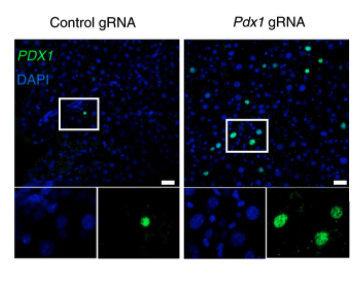
New Mice Enable CRISPR-based Epigenome Editing in Living Animals
A CRISPR-Cas9 variant with deactivated DNA-cutting function – known as “dCas9” - is a powerful tool to help researchers understand what genes do when their expression is dialed up or down, but it has some limitations.

Children With Mild or Asymptomatic COVID Have Strong Antibodies Months Later
Children and adolescents who had mild to asymptomatic cases of COVID-19 were found to have robust antibody responses up to four months after infection, according to a study of 69 children tested at Duke Health.
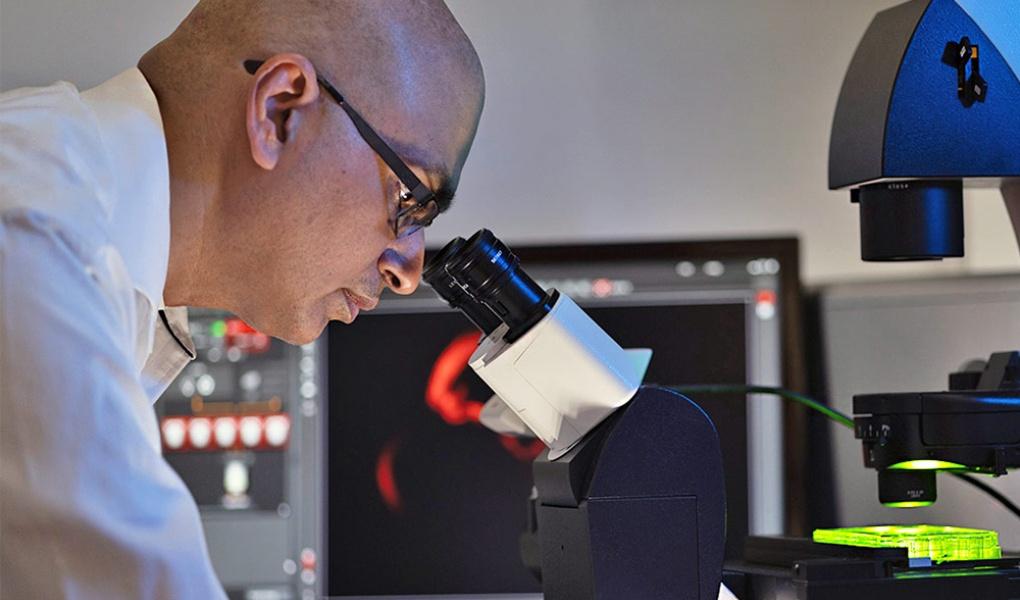
Sandeep Dave featured in Magnify: Getting Personal with Blood Cancers
For most cancers, advances in genomics haven’t changed treatment strategies very much. Sandeep Dave, MD, MS, envisions making personalized treatment a reality for more patients, by developing and making better use of tools that already exist.

Metabolomics Lab's Analysis Finds Near-meat and Meat Not Nutritionally Equivalent
a Duke University research team’s deeper examination of the nutritional content of plant-based meat alternatives, shows they’re as different as plants and animals.

Bringing Back Helpful Gut Worms
William Parker, associate professor of surgery at Duke University School of Medicine, was a guest on Constant Wonder, a podcast from BYU Radio. He discussed intestinal worms and how not all bacteria is harmful; some may actually help us.
Listen to the podcast on BYU Radio

Cancer treatment startup started by Duke faculty raises $70M
ilis, Inc., a pioneering company using its MicroOrganoSphere (MOS) technology to guide precision therapy for cancer patients and accelerate drug discovery and development, today announced the close of a $70 million Series A financing.

Cerebral Cavernous Malformation: Moving Away From Surgery, Exploring Alternate Treatments
In a paper published in Nature, a cancer-like mutation was linked to cerebral cavernous malformations (CCMs), a condition in which blood vessels in the brain are formed abnormally. Currently, the condition can only be treated by means of surgery however the discovery of the mutation has the potential to develop novel therapeutic strategies.