
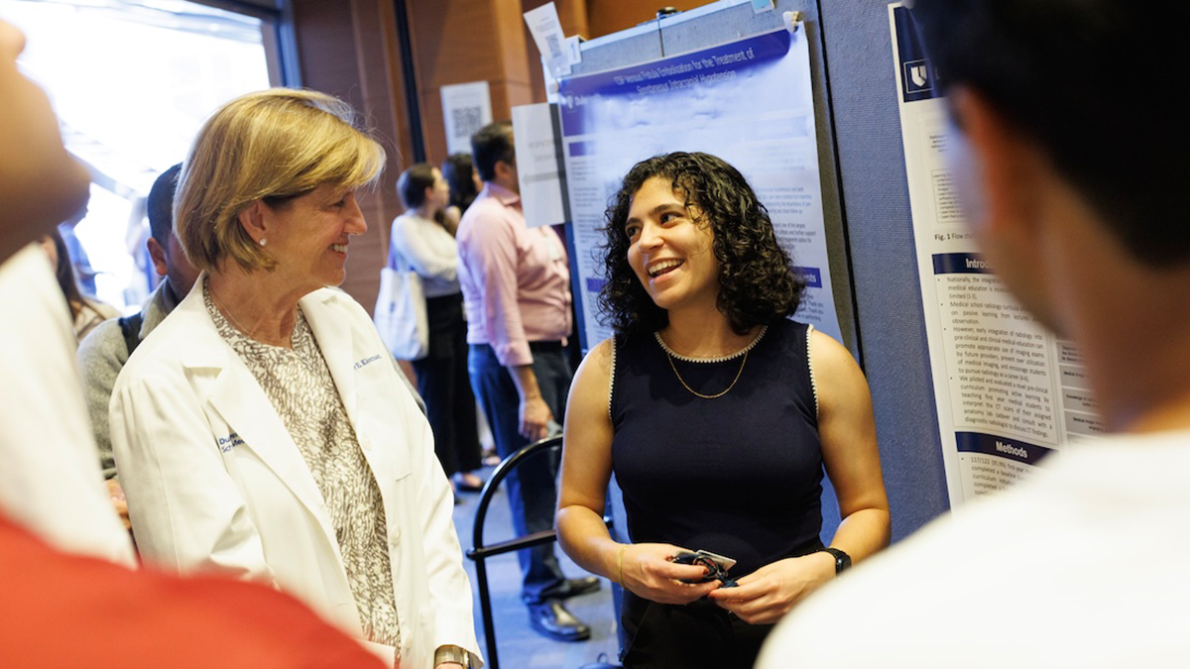
As Duke University School of Medicine third year students gathered to share their research during the annual Medical Student Research Symposium, held Aug. 6-7, the posters lining the room told one story. The conversations surrounding them told another.
Students fielded questions about their findings on creating replacement heart valves for transplant, estrogen use and urinary tract infection, and caregiver quality of life, as faculty mentors stood nearby offering support, and classmates moved from poster to poster, engaging with the science.
For Mary E. Klotman, MD, dean of the Duke School of Medicine, the scene reflected something larger than the research itself.
“The quality and breadth of the research were impressive,” Klotman said, “What stood out most to me was the curiosity, passion, and dedication our students bring to advancing health. We have extraordinary students, supported by outstanding faculty mentors, and I’m excited to see where their work leads.”
The symposium showcases the unique curriculum at Duke, where students gain invaluable research experience while pursuing their medical degrees.
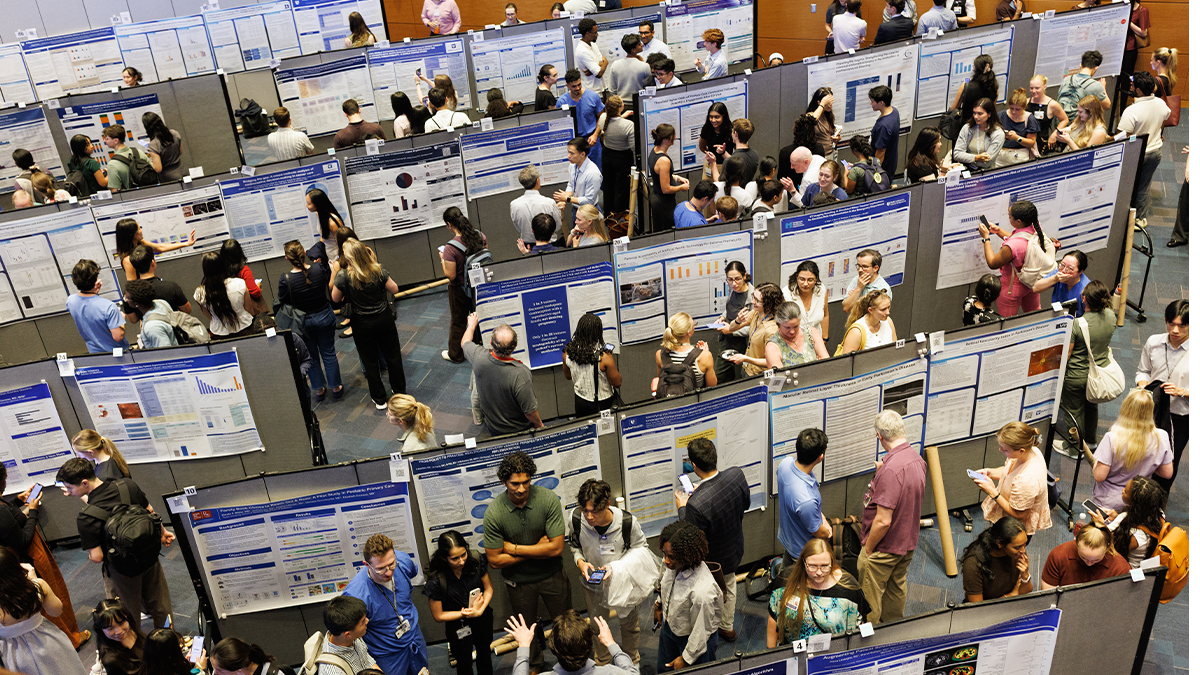
In 1959 Duke introduced a third year scholarly research experience lasting 10 months or longer. Initially focused on laboratory-based research, the program has since evolved to encompass a wider range of student interests.
Students presented their research findings through platform and poster presentations.
Each year, faculty and mentors are actively involved in judging, reviewing, and discussing research results ranging from public health initiatives such as the impact of bystander CPR to biomedical research investigating how small RNA molecules regulate harmful inflammation and oxidative stress that contribute to heart disease.
During the curriculum address, Aditee Narayan, MD, MPH, vice dean for medical and health professions education, used the occasion to show appreciation to the Third Year Leadership team and to describe how Duke's medical education program is evolving and what values are driving those changes.
At the center, she said, is a commitment to partnership.
"We truly believe that partnership is important," Narayan said. "That is a partnership across students, faculty and staff."
That philosophy shapes everything from curriculum design to program evaluation.
Throughout her remarks, Narayan emphasized that Duke continually asks a central question when considering educational changes: How will this help physicians better serve patients?
For Duke leaders, the answer points toward prevention, community-based care, and helping future physicians address chronic disease before patients reach the hospital.
One example is an expanded nutrition curriculum that now spans all four years of medical school. The curriculum incorporates experiential learning, nutrition counseling, motivational interviewing, and evidence-based approaches informed by a national JAMA consensus statement.
Students learn not only the science behind nutrition and disease, but also how to have effective conversations with patients about lifestyle changes.
Those conversations, Narayan said, are becoming increasingly important as physicians seek new ways to prevent disease and promote health.
Duke is also expanding its approach to artificial intelligence.
The School of Medicine is building a coordinated strategy for incorporating AI into teaching, learning, and program administration.
Narayan acknowledged the rapid pace of AI innovation and the excitement surrounding new technologies already being used throughout the health system. But she also stressed the need for thoughtful implementation.
"The tool we have today is going to be adapted and changed tomorrow," she said.
For Duke educators, the challenge is making sure students develop fundamental clinical skills before becoming dependent on technology.
"We are training you to practice anywhere, not just resource-high settings like Duke," Narayan said. "We want our graduates to be able to practice in resource-poor settings, in communities."
Allan Chen, a fourth-year medical student and president of the Davison Council, said Duke's learning environment has a sense of connection. “I’ll pick up the phone to call a consult, and one of my friends is on the other line,” he said. “It feels like I’m just calling a friend for help.”
Chen said the culture is rooted in a shared commitment to learning. “Faculty are willing to learn from students. Everyone wants to learn from their patients.”
Peer-to-peer support is one of Duke's greatest strengths, said Daniel Laskowitz, MD, professor of neurology and chair of the third year research program. “Whether in anatomy lab, the simulation center, clerkships, review sessions, or on the wards, our peers play an essential role in helping one another learn and grow.”
Peer Educator Excellence Awards
- Michael Aiduk
- Natasha Andreasen
- Olivia Fehrmann
- Andrea Gorodezky
GlaxoSmithKline Awards
- Alexa LaVergne
- Kerry Gao
- Lindsey Reynolds
Vice Dean Awards
- Gene Moon
- Alexandra Damron