

From Data to Decisions: A Model for Returning Individual Results to Research Participants
A team of Duke researchers led by Svati H. Shah, MD, MS, Ursula Geller Distinguished Professor of Research in Cardiovascular Diseases, and Neha Pagidipati, MD, MPH, associate professor of medicine, have developed a model using the Project Baseline Health Study (PBHS) for how to effectively communicate results to patients and help empower them towards their health and medical choices.

Cymfenee Dean-Phifer Receives Scholarship
Cymfenee Dean-Phifer, a student in the Computational Biology and Bioinformatics program, received a scholarship to attend the Bruce Weir Summer Institute in Statistical Genetics at Georgia Tech.
This summer institute was founded in 1995 and is open to all students, post-docs, instructors, industry, and government employees who wish to learn about aspects of statistical and quantitative genetics from leading researchers. Dean-Phifer will be taking modules on genetics and genomics, quantitative genetics, and epigenetics and gene regulation.

Gregory Crawford Honored with Distinguished Professorship
Computational biology and bioinformatics faculty member Gregory Crawford, PhD, has been named the Wilburt C Davison Distinguished Professor of Pediatrics.

Carlson Named 2025 Bass Chair
CBB Director of Graduate Studies David Carlson, PhD, named 2025 Bass Chair.
Read more

Honey, I Shrunk the Proteins
An AI tool that redesigns proteins is just one of Rohit Singh’s inventions intended to accelerate drug discovery.
Read more
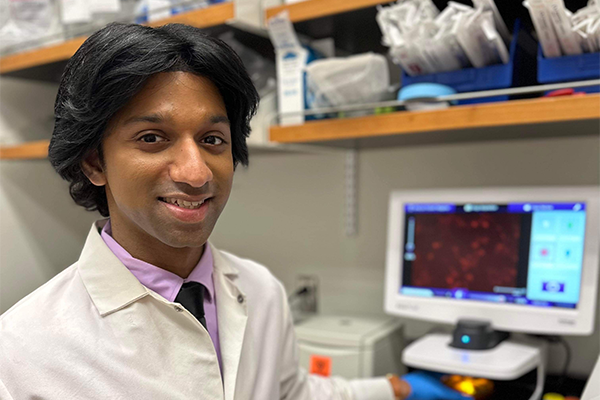
Making Progress with Alexander Disease
After outreach from the parent of a child with a rare neurodegenerative disease, Pranam Chatterjee, PhD, is closing in on the causes, and the findings may also have implications for Alzheimer’s disease.
Read more

CBB Student Ben Neubert Finalist at Duke's Startup Showcase 2025
CBB Student Ben Neubert is a finalist at the Duke's Startup Showcase 2025 on April 10, 2025, at the Fuqua School of Business. Duke I&E's premier event celebrates student entrepreneurship. Ben's project is titled Toilemetry. Toilemetry is an NIH-funded medical technology venture developing a smart toilet that automates urine output tracking in hospitals, providing real-time, accurate data to improve patient outcomes and streamline workflows.
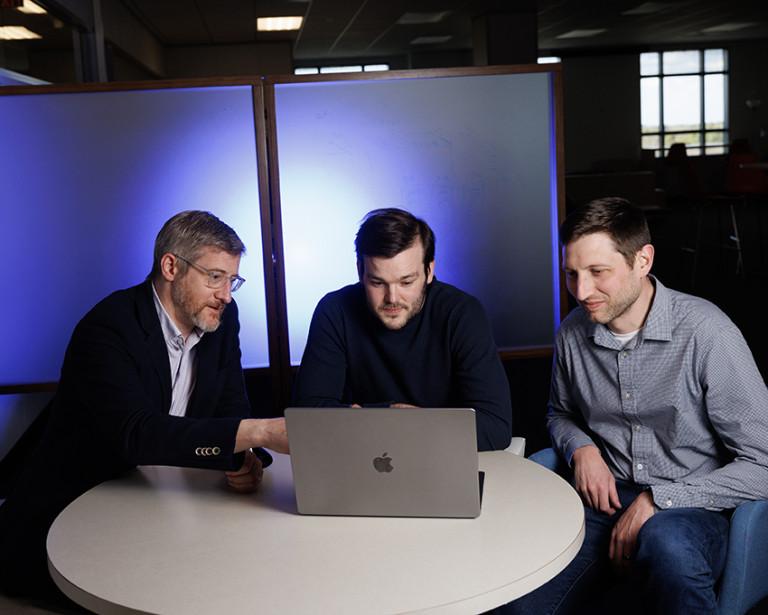
AI Model Predicts Risks and Potential Causes of Adolescent Mental Illness
An artificial intelligence model developed by Duke Health researchers accurately predicted when adolescents were at high risk for future serious mental health issues before symptoms became severe.

Kalyani Kottilil Secures NIH F31 Grant
A 4th year student in the Shah lab, Kottilil has secured a 2 year NIH F31 grant to support her PhD studies. The purpose of the grant is to support promising predoctoral students in developing into productive, independent research scientists by providing mentored research training during their dissertation research.

Donald Reflects on Decades of AI Research, Emphasizing Its Long-Term Evolution
Bruce Donald, PhD, the James B. Duke Distinguished Professor of Computer Science, plays a significant role in the narrative of AI development at Duke University. Donald has been involved in AI research since the late 1970s and has witnessed the evolution of the field.