

Susanna Naggie receives Oswald Avery Award for Early Achievement
The Infectious Diseases Society of America (IDSA) has presented its 2018 Oswald Avery Award for Early Achievement to the DCRI’s Susanna Naggie, MD, MHS, for her novel research on the treatment of patients co-infected with HIV and hepatitis C virus (HCV).

Brenda Armstrong, MD, Renowned Pediatric Cardiologist and Community Hero, Dies
Whether coaching Durham Striders student athletes on the track field, caring for her patients, or recruiting and mentoring Duke University medical students, Brenda Armstrong, MD, was passionate about people, especially young people, and she committed her life to helping ensure every person was valued, treated with respect, and offered opportunities to learn and prosper.

Nobel Prize Winner George P. Smith Completed Early Award-winning Research at Duke
Duke missed the Nobel Prize this year, but we can at least claim a share of the reflected glory.
George P. Smith, one of three winners of the 2018 Nobel Prize for Chemistry, did some of the early work for his award-winning research at Duke University.
Clinical Research Update - October 2018
OnCore Community News
iRIS Community News
Research Community News
DOCR News
Did You Know?
Training Opportunities
Clinical Research Employee Highlights
Partner Resources
OnCore Community News
REDCap Day 2018
The Duke Office of Clinical Research (DOCR) hosted the first Duke REDCap Day on Wednesday, September 26th. REDCap Day was a chance for members of the Duke community using REDCap, or interested in using REDCap, could learn more about how REDCap can help teams manage and collect all types of data.
The Department of Medicine and Scholars@Duke will partner to offer another profile photo day next month.
When: Tuesday, November 13 - 1:45 p.m. to 5 p.m
Where: Chaplin Family Lounge (Brodhead Center, Room 247)
Who: Free and open to all Duke faculty and anyone with a Scholars profile who needs/wants a new photo. (Duke Health clinical staff and those University faculty without a Scholars profile should continue to use the Duke Health and PDC process, or your school’s or department’s current photo protocol.)

Duke Hosts 15th Precision Medicine World Conference
What role should artificial intelligence play in patient diagnosis? How can we best prepare the next generation to make sense of enormous amounts of health-related data?

Researchers Find How Natural Killer Cells Regulate Protective HIV Antibodies
In the quest to develop a vaccine that triggers the immune system to prevent HIV infection, researchers have focused on identifying and eliciting a particular type of antibody that is capable of neutralizing the virus.
These broadly neutralizing antibodies, or bnAbs, eventually arise naturally in about half of HIV-infected people, but they develop too late to be effective, long after the virus has repeatedly mutated and inserted itself into the genome of host cells.
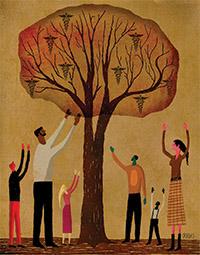
Reaching for Equity
In the 1950s, Kimberly Johnson’s maternal grandmother was diagnosed with metastatic cervical cancer and ultimately lost her life to the disease. Since then, her family has always wondered whether the situation might have had a different outcome if her grandmother had had access to today’s health care.
“We talk about how things are different now, and if she’d lived today she might have lived longer and better, especially if she had good insurance and a good income,” says Johnson, MD, MHS, associate professor of medicine.

From Innovation to Impact
When four Duke researchers developed an innovative technique for exploring the non-coding genome—the 98 percent of our DNA that does not encode protein sequences, often called the genome’s “dark matter”—the implications were clear. Their approach, using technologies including CRISPR gene editing to shed new light on gene regulation, has enormous potential to guide development of new drugs to combat a host of genetic diseases.