

Faculty Profile: George Parkerson's Life and Longtime Career in Family Medicine
Never believing in retirement, George R. Parkerson, Jr., M.D., MPH, has worked full time at the Duke University School of Medicine for the past 43 years. His work has been instrumental to the Department of Community and Family Medicine as he helped develop some of the first family medicine educational programs at Duke and served as chair of the department from 1985 to 1994.
Registration Open for Gopen Writing Seminars
Writing from the Reader’s Perspective
Registration open for faculty only until August 6
Registration will open to all others on August 7
Presented by: George D. Gopen, JD, PhD, Professor Emeritus of the Practice of Rhetoric, Department of English
When/Where:
Session 1: Thursday October 19; 1-5pm in the Duke South Amphitheater
Session 2: Thursday, October 26; 1-5pm in the Duke South Amphitheater
Session 3. Thursday November 2; 1-5pm in the Duke South Amphitheater
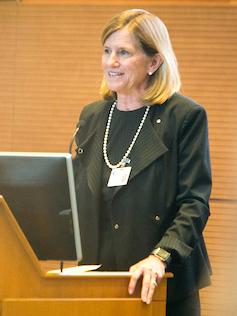
Dean Klotman’s Meet and Greet Reception
Close to 200 faculty, staff and students from across Duke Health and Duke University campus welcomed Mary Klotman, MD, to her new role as dean of the Duke University School of Medicine during a reception in the Trent Semans Center on August 1.
LACTATION ROOMS OFFER SUPPORT FOR NEW MOMS
Original Working@Duke Article
PUBLISHED JULY 31, 2017 IN WORKING@DUKE, CAMPUS
LACTATION ROOMS OFFER SUPPORT FOR NEW MOMS
Duke’s 22 lactation rooms provide privacy for mothers returning to work with breastfeeding needs
BETH HATCHER @WORKINGATDUKE
Like many new moms, Dr. Claire Siburt strives to balance work and family.
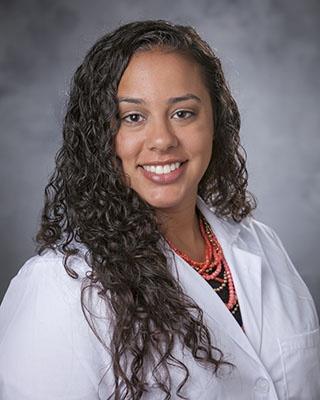
Second-Year Family Medicine Resident Alexa Mieses Elected the Resident Representative to AAFP
Duke Family Medicine second-year resident Alexa Mieses, M.D., MPH, was elected to be the resident representative to the Board of Directors of the American Academy of Family Physicians (AAFP) for 2017-18.
Elections were held at the 2017 AAFP National Conference of Family Medicine Residents and Medical Students in Kansas City, Mo., last week.
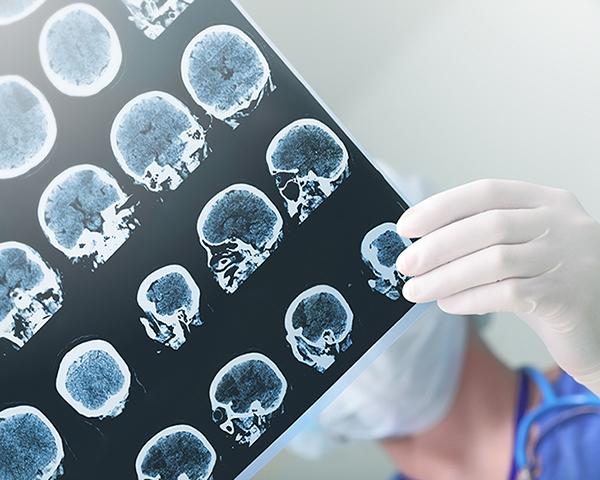
Scientists Use New Data Mining Strategy to Spot Those at High Alzheimer’s Risk
Method could group similar Alzheimer’s patients for more precise drug trials
The push to develop treatments for Alzheimer’s disease has been a promising and disappointing endeavor over the past two decades, yielding a greater understanding of the disease yet still failing to generate successful new drugs.
To blame are the many undefined subtypes of mild cognitive impairment, a precursor to Alzheimer’s disease.


Not Your Basic Bench: Zebrafish Reveal Secrets of the Developing Gut
Our intestine is a highly complex organ – a tortuous, rugged channel built of many specialized cell-types and coated with a protective, slimy matrix. Yet the intestine begins as a simple tube consisting of a central lumen lined by a sheet of epithelial cells, which are smooth cells that lie on the surface of the lumen. These intestinal epithelial cells are central players in many human diseases.
New Vaccine Production Could Improve Flu Shot Accuracy
A new way of producing the seasonal flu vaccine could speed up the process and provide better protection against infection.
For decades, vaccine manufacturers have used chicken eggs to grow the flu virus strains included in the seasonal flu shot. But because these human strains frequently mutate to adapt to their new environment in eggs, the resulting vaccine is often an imperfect match to the actual virus that it is supposed to protect against.

Duke Center for Applied Genomics and Precision Medicine Welcomes Inaugural T32 Post-Doctoral Fellows
The Duke Center for Applied Genomics and Precision Medicine is pleased to announce the first two post-doctoral fellows supported by an NIH training award (T32) in genomic medicine: Carolyn Baloh, MD, and Cory Stingl, MD. Both fellows are from the Department of Pediatrics. Dr. Baloh will be working with Dr. Sandeep Dave, Professor, Department of Medicine, Division of Hematologic Malignancies & Cellular Therapy. Dr.