
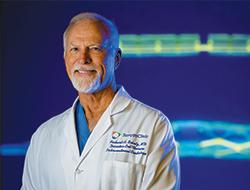
Estate Gift Will Expand Opportunities
Richard Schatz, MD’77, was in California, just days away from returning to New York to begin his senior year as an undergraduate at the State University at Buffalo, when the phone rang and changed everything.
“It was Duke,” says Schatz, who is now research director of cardiovascular interventions in the Heart, Lung, and Vascular Center and director of cell therapy at the Scripps Clinic in La Jolla, California. “They said, ‘You’re on the wait list for medical school, and a spot just opened up. You have to be here in three days.’”
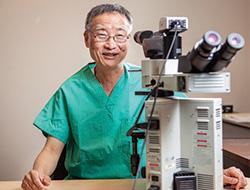
Reunion Gift Opens Doors for Students
When it was time for Tai-Po Tschang, MD’72, to decide where to go to medical school, the choice could hardly have been easier. Duke, in fact, made it for him.
“I applied to nine medical schools, and Duke was the only one that accepted me,” says Tschang. “I didn’t have any other choice. The others turned me down because I only had three years of college, but at Duke that was the requirement, as long as you had all the prerequisites. I was very happy they took me.”
Making a Difference for Lung Transplant Patients
Duke is internationally recognized as a leader in clinical lung transplant and lung transplant research. Investigators at Duke have advanced our understanding of lung transplant rejection and developed more effective strategies to prevent infections after lung transplantation.
Buying Time to Save Sepsis Patients
With sepsis, time is of the essence. Left untreated, the illness—a runaway immune response to infection—can quickly become life-threatening. Hours, and even minutes, can mean the difference between life and death for this condition, which strikes more than 1.5 million people and kills more than 250,000 Americans each year.
Because sepsis is nonspecific, there is no single definitive sign, symptom, or test that identifies a patient as having it. That’s a huge challenge for providers, who need to assess patients as quickly as possible.
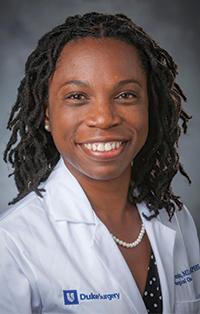
Fine-tuning Treatments for Breast Cancer
National cancer databases provide a ton of valuable information for researchers, but institutional data is often more granular, including details such as specific chemotherapy regimens, radiation doses, treatment durations, and recurrence rates. The Duke Breast Database (DB2), a big data initiative, is invaluable for health researchers like Oluwadamilola “Lola” Fayanju, MD, assistant professor of surgery and the principal investigator for the database.
Training Computers to Improve Cardiovascular Care
The Duke Division of Cardiology is using big data to help physicians analyze images from coronary angiograms more quickly and accurately.
A team led by Manesh Patel, MD, chief of the Division of Cardiology and co-director of Duke Heart, is creating computer algorithms that can analyze angiogram images in real time to identify significant blockages and abnormalities and help guide treatment decisions.
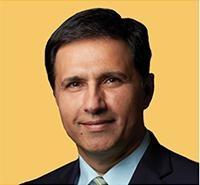
2019 Distinguished Alumnus Award - Mark Humayun, MD’89, HS’90-’93
Mark Humayun, MD’89, HS’90-’93 is a 2019 recipient of Duke Medical Alumni Association's Distinguished Alumnus Award. He is an internationally known pioneer in vision restoration who has literally allowed the blind to see. He is a retinal surgeon, engineer, scientist, and innovator whose accomplishments have been so distinguished in his field that he is the only ophthalmologist elected to both the National Academy of Medicine and the National Academy of Engineering.

2019 Distinguished Alumna Award - Caroline Philpott, AB’83, MD’87
Caroline Philpott, AB’83, MD’87 is a 2019 recipient of Duke Medical Alumni Association's Distinguished Alumna Award. She is one of the most respected international leaders in the biochemistry and cell biology of iron metabolism. She has made groundbreaking discoveries in iron metabolism that deciphered the human intracellular iron trafficking mechanism.

2019 Distinguished Alumnus Award - William Stead, AB’70, MD’74, HS’73-’77
William Stead, AB’70, MD’74, HS’73-’77 is a 2019 recipient of Duke Medical Alumni Association's Distinguished Alumnus Award. He is a pioneer in the application of communication and information technology to improve the practice of medicine. He is considered a founder of the field of biomedical informatics and a contemporary thought leader.

2019 Honorary Alumnus Award - E. Arthur Palumbo, AB’49
Arthur Palumbo is the 2019 recipient of Duke Medical Alumni Association's Honorary Alumnus Award. He is among the most dedicated friends of Duke University School of Medicine and the Department of Pediatrics. His philanthropic support for the school’s students and faculty has touched the lives of thousands of patients.