

COVID tested the resilience of Duke's research
Duke researchers shared their reflections on the struggles and insights the process of research shutdown and reboot has had within their labs during a Virtual Research Town Hall.

Duke Human Vaccine Institute to partner with RTI International as Coordinating Center for newly established NIAID-funded Emerging Infectious Diseases Network
The Duke Human Vaccine Institute in partnership with RTI International have been named the coordinating center for the newly established Centers for Research in Emerging Infectious Diseases (CREID) network, sponsored by the National Institute of Allergy and Infectious Diseases (NIAID). The coordinating center will serve as the network’s operational hub to streamline and accelerate research response to emerging infectious disease outbreaks.

Duke Clinical Research Update
SUPPORT OFFICE HOURS
REDCap Office Hours
Email redcap-docr@duke.edu to schedule a virtual session at one of the times indicated below.
Tuesdays 10 AM, virtual sessions
Wednesdays 10 AM, virtual sessions
Thursdays 2 PM, virtual sessions
Fridays 10 AM, virtual sessions
SlicerDicer Office Hours
Thursdays, 1 PM, via WebEx

Duke Clinical Research Update September 2 2020
Research Community News
iRIS/OnCore Updates
DOCR News
Recruitment Innovation Corner
Training Opportunities
Partner Resources
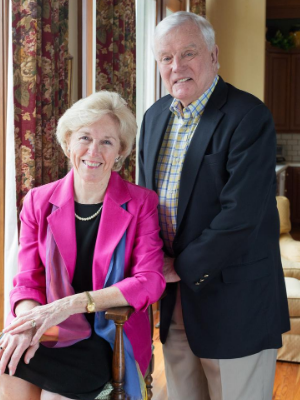
Giving Back to the Next Generation of Duke Cardiologists
In 1972, when William H. Spencer III, AB’61, MD’65, HS’69-’72, P’89, P’89, P’89,’93, completed his fellowship in cardiology at Duke University Medical Center and headed to work in a private practice in Houston, Texas, his mentors cautioned him about the new career path he was about to start.
“Before I left Duke, they said to me, ‘You can’t make a living doing heart catheterizations,’” says Spencer, professor emeritus of cardiology at the Medical University of South Carolina. “It turned out to be the opposite.”

After 45 Years, Devoted Duke Medical Alumnus Reunites with Pilot Whose Arm He Saved
As an Air Force surgeon stationed at Wright-Patterson Air Force Base in Dayton, Ohio, during the height of the Vietnam War, Robert Green, AB’56, MD’60, saw a lot of badly injured servicemen cross his operating table. But one of them in particular stuck with him, a wounded young pilot whose journey from the skies over North Vietnam to Dayton was especially remarkable.

A Lifelong Commitment to Duke and Women’s Health Care
Growing up on a large farm near Toccoa, Georgia, Winnifred Allen “Al” Addison, AB’56, MD’60, HS’60-’65, HS’71-’72, P’83, GP’14, GP’18, was interested in anatomy from a very early age. He dissected a stillborn calf at his farm when he was just 13 years old. “I wanted to see what the inside of an animal looked like,” says Addison, the Walter L. Thomas Distinguished Professor Emeritus of Obstetrics and Gynecology.

Remembering a Founding Father of the Field of Free Radicals
Biochemist Irwin Fridovich, the James B. Duke Professor Emeritus of Medicine and a familiar figure on the Duke campus for more than 60 years, died on November 2, 2019, at the age of 90. Fridovich was internationally known for his work on the body’s responses to “free radicals,” dangerously corrosive oxygen molecules that would cause serious damage to tissues if left unchecked.

A Tribute to a Duke Great: Frederic M. Hanes, MD
When Wilburt C. Davison, MD, the founding dean of Duke University School of Medicine, was looking for a candidate to serve as the school’s inaugural chair of the Department of Medicine, the first name that came to mind was that of Frederic M. Hanes, MD.

Scent-sensing cells have a better way to fight influenza
Influenza researchers have long focused most of their efforts on the epithelial cells lining the lungs because these are the cells that become infected and killed while producing new copies of the virus.
But other cells lining the upper airways are exposed to viruses in the same amounts and somehow aren’t as likely to be killed by infection. Is it because of something the virus does, or something those cells do?