
New Duchenne Muscular Dystrophy drug shows benefit in Duke trial
A new drug offers hope for young boys with the progressive neuromuscular disease Duchenne muscular dystrophy (DMD) by potentially offering an alternative to high-dose glucocorticoids that have significant side effects.
Interim results from a 24-month clinical trial at Duke Health and other institutions suggest that the drug, vamorolone, may retain or improve the effects of current steroid treatments but reduces health risks associated with long-term steroid use.
School of Medicine launches new recruitment resources
The School of Medicine Office of Communications, in close collaboration with colleagues across Duke Health, has created new digital resources for the recruitment of students and trainees. These resources can also be used for faculty and staff recruitment and to share with visitors, alumni, donors, government officials, etc. All units in the School of Medicine are encouraged to use these resources when communicating with their audiences. Contact the Office of Communications with specific questions.

Diao Receives $3 Million Grant from 4D Nucleome Consortium
Yarui Diao, Ph.D. received a U01 grant, totaling $3 million in research funding for 5 years, from 4D Nucleome Consortium

Flu and COVID: why public trust in vaccines is so critical
Trio of Duke experts address threat of a 'twindemic' and development of a COVID vaccine

Rosalynn Carter Institute Teams Up with the Duke University
The Rosalynn Carter Institute for Caregiving (RCI) has teamed up with Duke researchers to better understand the needs of unpaid caregivers across America. Over the course of two years, the partnership – which is funded by Bristol Myers Squibb Foundation – will yield recommendations on how to better prepare and support caregivers, and measure outcomes from RCI programs.

Wilson Center for Science and Justice tackles criminal justice reform with $5 million grant
The gift will expand the center’s work over the next six years in three signature areas: accuracy of evidence in criminal cases, the role of equity in criminal outcomes, and the mental and behavioral health treatment needs of people in the justice system.
Duke University has received a $5 million grant to bolster legal and scientific data-driven research at Duke Law School that specifically addresses criminal justice reform, President Vincent E. Price announced today.

Duke Clinical Research Update
SUPPORT OFFICE HOURS
REDCap Office Hours
Email redcap-docr@duke.edu to schedule a virtual session at one of the times indicated below.
Tuesdays 10 AM, virtual sessions
Wednesdays 10 AM, virtual sessions
Thursdays 2 PM, virtual sessions
Fridays 10 AM, virtual sessions
SlicerDicer Office Hours
Thursdays, 2 PM, via WebEx

Duke Clinical Research Update September 16 2020
Research Community News
iRIS/OnCore Updates
DOCR News
Recruitment Innovation Corner
Training Opportunities
Clinical Research Employee Highlights
Partner Resources
Real neurons are noisy. Can neural implants figure that out?
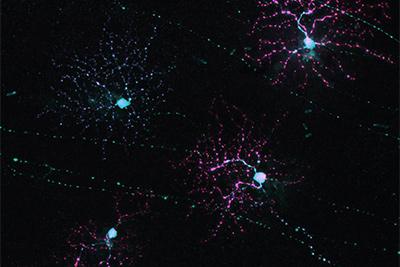
The brain has adaptive noise filters that change with conditions, making signals 20 – 100 percent more accurate
If human eyes came in a package, it would have to be labeled “Natural product. Some variation may occur.” Because the million-plus retinal ganglion cells that send signals to the human brain for interpretation don’t all perform exactly the same way.
Academic New Faculty Orientation series
Registration open for SOM Academic New Faculty Orientation 2020-2021
The 2020-2021 School of Medicine Academic New Faculty Orientation (NFO) will be structured as a series of virtual seminars held over the course of six months, beginning in September. It will address the following topics: