
Longevity unlocked: The science of healthy aging
Aging is often thought of as a process of decline that begins at about 60- 65 and then relentlessly carries us toward our end, diminishing our capabilities as it goes. It is inevitable, immutable, and inexorable.
Biomedical scientists now consider almost everything about that concept wrong. Aging is increasingly seen as a lifelong process that we can influence and alter to a remarkable degree. Researchers are learning more every day about the complex metabolic, cellular, and molecular processes within us, and they are using that knowledge to develop new ways not only to live longer, but to live better.
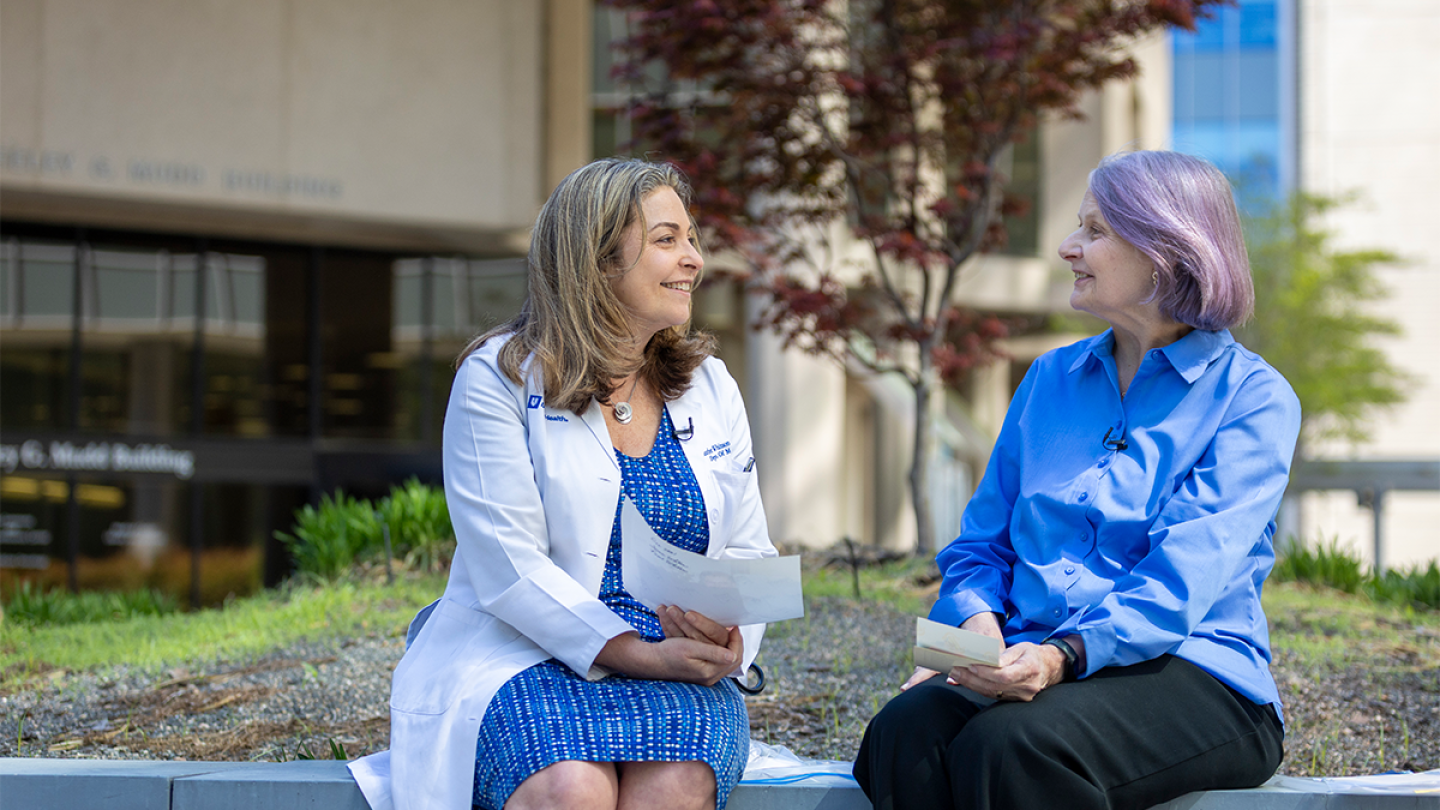
Duke University School of Medicine is at the forefront of this new frontier of innovation and promise, which aims to add healthy years to life. With pioneering research, compassionate care, and a long history in the field, Duke scientists and clinicians are reshaping how we understand, improve, and extend the human lifespan.
“The natural aging process is not just something that happens in late life,” said Heather Whitson, MD, School of Medicine Distinguished Professor in Neuroscience, director of the Duke Center for the Study of Aging and Human Development, and co-director of the Duke-UNC Alzheimer’s Disease Research Center (ADRC). “It begins before we draw our first breath, and it continues as we undergo molecular and cellular changes throughout our entire lives. If we can understand those changes well enough, we can engineer interventions that will slow or even reverse the pace of biological aging.”
Whitson is working with Christopher Newgard, PhD, the W. David and Sarah Stedman Distinguished Professor of Nutrition in the Department of Pharmacology and Cancer Biology, and Manesh Patel, MD, the Richard Dean Stack, MD Distinguished Professor of Medicine, to coalesce Duke’s research, education, and clinical care activities in a unified effort to reshape how we age.
Duke is uniquely positioned to bring evidence- based credibility to the growing public interest in healthspan science. The Duke Aging Center was the nation’s first interdisciplinary academic aging program and remains among the best. Duke is one of the very few institutions that is home to two National Institutes of Health flagship centers of excellence in aging: the ADRC and the Duke Claude D. Pepper Older Americans Independence Center. The School of Medicine’s track record makes this a natural place to push the boundaries of healthspan.
“The expertise we have at Duke in numerous aspects of biological age measurement, cellular and metabolic science, and clinical expertise is unmatched,” said Newgard, director of the Sarah W. Stedman Nutrition and Metabolism Center and founding director of the Duke Molecular Physiology Institute. “There are other institutions that have some of these pieces. But not many, if any, have all of them and are in a position to synergize across these domains.”
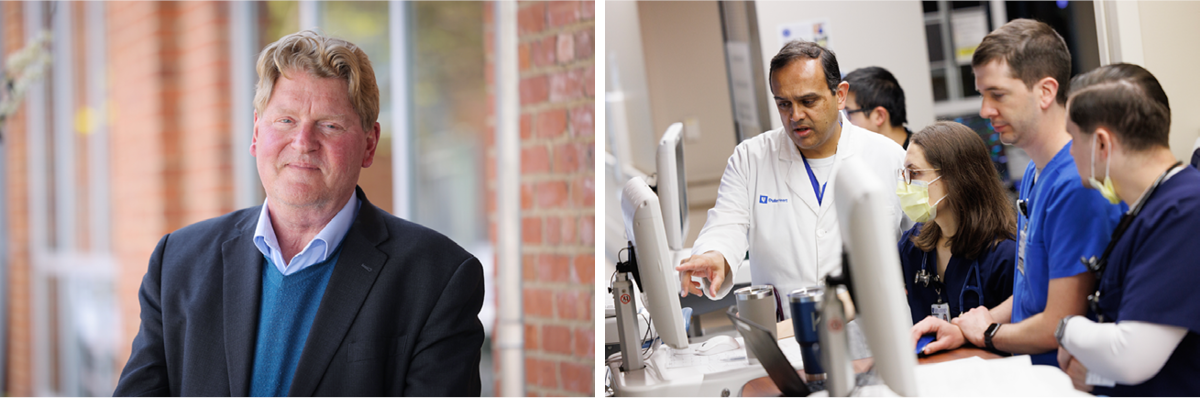
The mutually beneficial alignment of research and clinical care at Duke is creating a new paradigm where aging is embraced as a dynamic phase of life.
“Duke has well-established excellence in all these relevant areas: cardiovascular disease, neurodegeneration, metabolism and nutrition, orthopaedics, and others,” said Patel, chief of the Division of Cardiology. “These disciplines are often regarded as separate and not necessarily related. But aging happens everywhere, and all these systems are interconnected. Our opportunity is to bring all these fields together in a holistic and evidence-based way to extend wellness and health.”
One key to this ambitious effort is the recognition that aging isn’t something that suddenly begins when we turn 60 or 65. That’s why the ADRC, virtually alone among major Alzheimer’s disease research institutions, focuses on understanding changes in the brain in young adults with a family history of Alzheimer’s, years before symptoms ever appear.
“If we only study people who already have memory loss from Alzheimer’s disease, we’re too late,” Whitson said. “By then we’re trying to slow a process that has already wreaked havoc on the brain. Our best chance to stop this disease is to understand the molecular changes that happen in the brain before the hallmarks of Alzheimer’s manifest.”
Another key is based on the crucial distinction between chronological and biological age. Chronological age is based on the calendar. Biological age is a measure of how rapidly your cells and other biological systems are aging. Duke’s Avshalom Caspi, PhD, Edward M. Arnett Professor of Psychology & Neuroscience, and Terrie Moffit, PhD, Nannerl O. Keohane University Professor of Psychology, have laid the foundations for this work by creating a transformational “epigenetic clock” known as DunedinPACE, the most reliable measure yet developed for measuring the rate of biological aging.
“We’re focused on understanding the molecular levers and other processes that determine the pace of biological aging,” Patel said. “If we can do that, our goal is to re-engineer more youthful biology. That’s the opportunity we have.”
See these related stories:
-
The wisdom of the gut: Diego Borhorquez explores a previously unknown sensory pathway
-
Making joints young again: Duke researchers seek to regenerate joints damaged by osteoarthritis
-
Easing the “inflammatory hangover”: Leah Acker studies how the stress of surgery can accelerate cognitive aging
-
Fueling better outcomes in heart failure: Senthil Selvaraj sheds new light on the surprising role of ketones
-
Inside the GLP-1 revolution: Duke scientists unveil the mysteries behind new weight-loss drugs
-
Young minds tackling old questions: School of Medicine students make important contributions to the study of aging
This story originally appeared in the Spring 2026 print edition of Magnify Magazine