
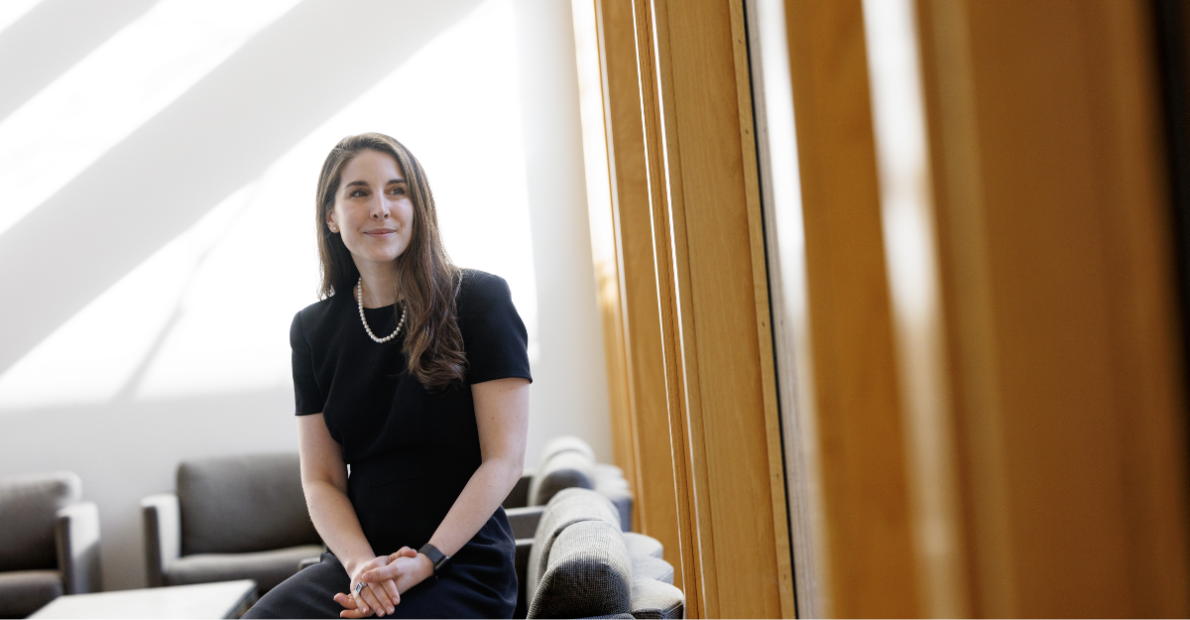
A “hangover” brings to mind a long night followed by an unpleasant morning. For Leah Acker, MD, PhD, a practicing neurosurgical anesthesiologist and director of Duke University’s Anesthesiology, Cognitive Neuroscience, and Engineering Research (ACkER) Lab, a hangover is more subtle — and far more consequential.
Acker and her research team study how repeated inflammatory stress subtly accelerates cognitive aging in healthy adults. Her lab incorporates wearables, brainwave recordings, functional brain imaging, noninvasive nerve stimulation, even qualitative analysis focused on older patients’ lived experiences, to study how the brain, heart, and immune system communicate to support recovery and long-term brain health.
The goal is to help older adults recover from physiological stress more quickly, think more clearly, maintain independence, and preserve their quality of life as they age.
Acker has coined the term “inflammatory hangover” to describe a lingering, cumulative impact of repeated inflammatory stress on brain function, which may accelerate cognitive aging before, during, and after surgery in some individuals.
In November she received one of two 2025 Innovator Awards in Cognitive Aging and Memory Loss from the McKnight Brain Research Foundation and the American Federation for Aging Research, one of the most prestigious awards in neuroscience for early to mid-career faculty, to further investigate her emerging concept, “Inflammatory Hangover and Cognitive Aging."
What makes the study distinctive is its focus on highly functional older adults undergoing minor procedures, rather than critically ill patients facing major operations. Acker and her team are enrolling people in their 60s and 70s who are still working or volunteering — patients who may go home the same day after surgery, but who notice subtle cognitive changes — slower information processing, mental fog, or forgetfulness — that are initially easy to dismiss.
“Each episode may be small,” Acker explains, “but they add up until you eventually fall off a cliff.”
To test the hangover hypothesis, Acker and her team are enrolling patients undergoing two joint surgeries. After the first procedure, cognition is tracked through blood draws that measure inflammatory markers. Before the second procedure, patients will receive a novel intervention; a noninvasive vagus nerve stimulator that gently clips to the ear.
The stimulator is designed to enhance communication between the brain, heart, and immune system. Preliminary data shows the device significantly reduces preoperative anxiety, with patients reporting they felt calmer on the day of surgery than they had a week earlier.
Even more intriguing, brain recordings suggest the stimulation shifts people out of a hypervigilant stressed state into a more adaptive mode of thinking, a calmer brain state that supports healthier inflammation recovery — and ultimately protects cognitive function as humans age. “People are living and working longer,” says Acker. “We want them functioning at their best for as long as possible. After about age 30 or 40, people diverge dramatically. That’s why I truly believe age is just a number.”
Her goal is not just survival but quality of life. Understanding what drives aging divergence is key.
To understand why some individuals’ brains seem to be more vulnerable than others, the Acker team is using advanced brain electrical recordings and functional brain imaging to identify fragile neural circuits and compensatory pathways before surgery to predict the risk of cognitive change.
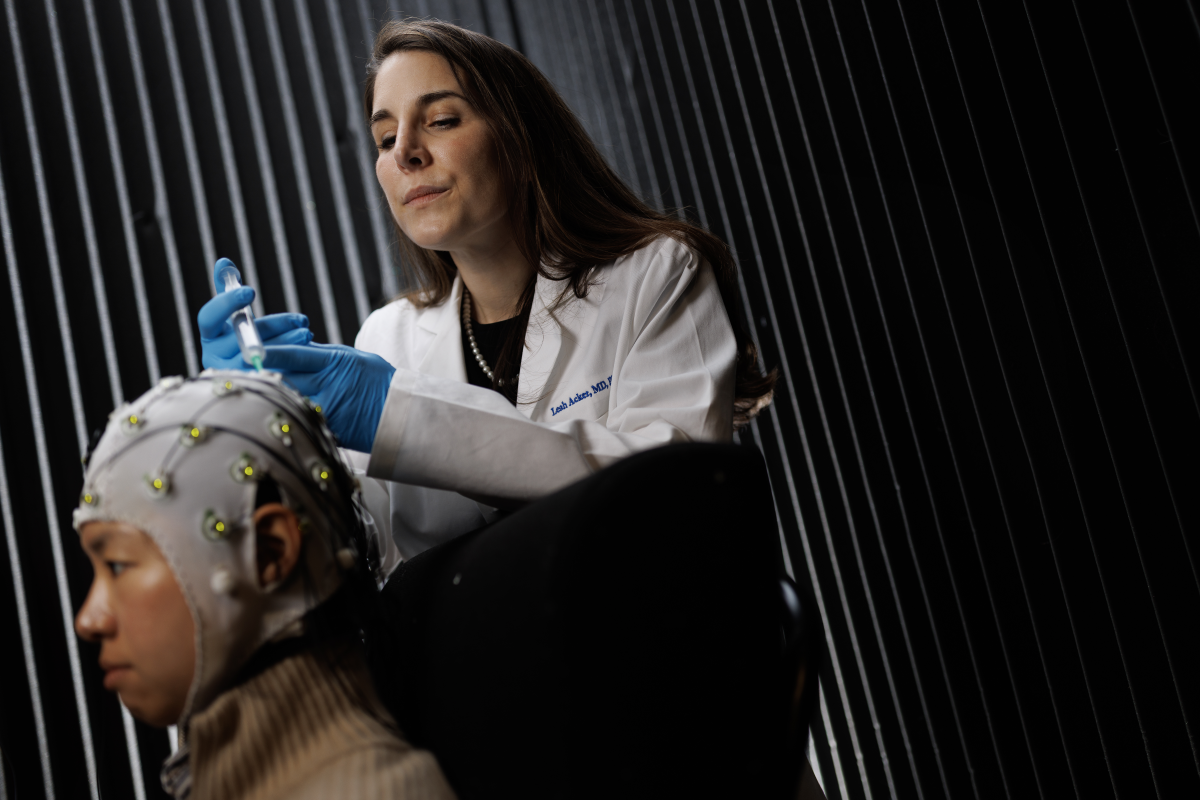
The Acker Lab is pioneering the use of other wearable technology for older adults as well, including those with mild cognitive impairment.
In one recent study on monitoring, the team showed that patients in rural North Carolina can reliably send data from home, findings that support the future of remote monitoring that would allow clinicians to track their patients’ activities in real-world settings.
In one of the most in-depth studies on pre-surgery stress in the general geriatric population, published in January 2026 in the journal Anesthesiology, Acker showed that many older adults underestimate how stressed they are — and how much it affects recovery.
“When patients say something is a problem,” Acker says, “that’s our window to intervene. This isn’t just about detecting disease. It’s about optimizing health as we age.”
This article first appeared in the Spring 2026 print edition of Magnify Magazine