
The Difference is Discovery

Most patients who experience heart failure or other common cardiac conditions will seek treatment at the nearest clinic, or the one they’re most familiar with. And in most cases, regardless of where they go, they will receive appropriate, competent care.
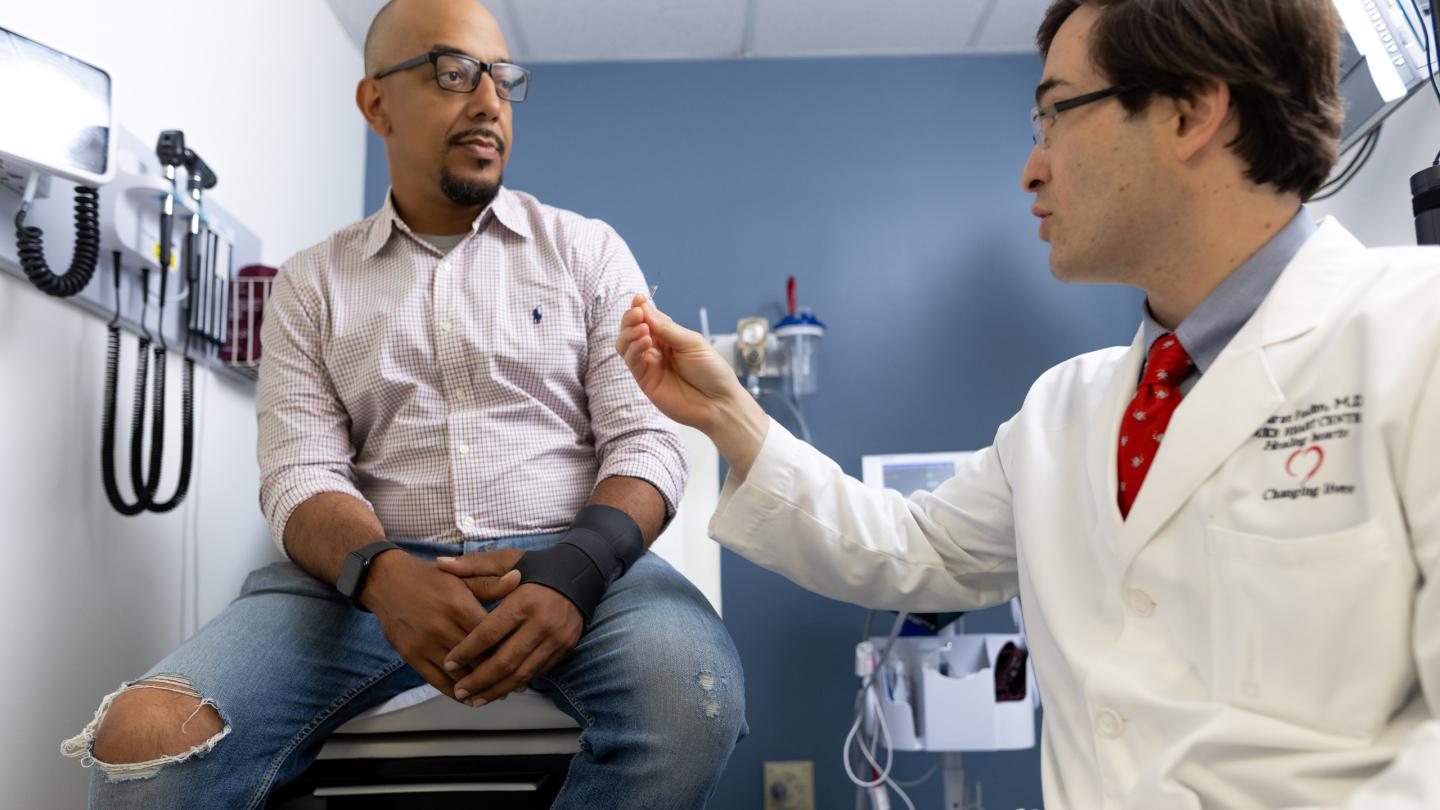
“The world of medicine has become so standardized that clinical practice does not vary that much,” said Marat Fudim, MD, MHS’19, HS’15-’20, associate professor of medicine. “If you have a heart attack, your care and outcome are likely to be very similar at any major medical center. For most people, we tend to reach the limits of what medicine can currently do for you pretty quickly.”
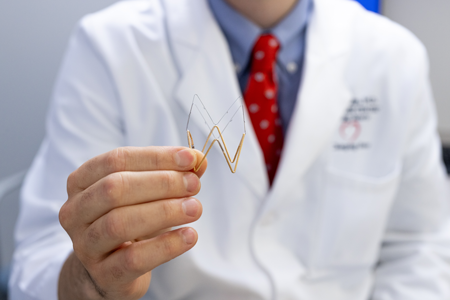
The Duke difference, Fudim said, lies in the quality and quantity of the research it conducts dedicated to expanding those limits. Fudim directs one of the nation’s largest cardiovascular clinical research units, overseeing a portfolio of more than 60 active studies at any one time, spanning gene therapy, device innovation, drug development, and digital health.
“What differentiates us is our science,” Fudim said. “We have the top scientists in the country in this institution, specifically for cardiovascular medicine and heart failure. Our portfolio of clinical trials is likely second to none. When you combine the volume and quality of our research, there are very, very, few institutions that can rival us.”
Fudim and his colleagues are working at the intersection of clinical care and research, focusing on the vast majority of heart failure patients who don’t receive highly specialized interventions like transplants. Progress beyond standard care for these patients depends on access to clinical research trials and innovation.
Duke’s cardiovascular research unit focuses on complex, early-phase trials that serve as a proving ground for potential new therapies.
Among those studies are a series of ongoing trials Fudim is leading to develop and fine-tune a process developed at Duke known as splanchnic nerve denervation.
During exertion or stress, accumulated blood in the abdominal cavity moves into the heart to help it meet the increased demand. In many cases of heart failure, the heart can’t pump the built-up blood back out again, and pressure rises, resulting in pulmonary hypertension.
“We thought, ‘Wait, let’s look at the nervous system’s role in this process,’” Fudim said. “How does the belly know to shift blood to the heart? It turns out it’s the splanchnic nerve. If we interrupt that signal, can we improve the pressure on the heart and lungs? Can we help people feel better? Can we keep them out of the hospital?”
He and colleagues are testing various methods of blocking the nerve, either temporarily or permanently. Results thus far are promising for specific subsets of patients — which highlights another critical factor Duke emphasizes: matching individual patients to the right interventions.
His team conducts “deep phenotyping,” conducting detailed assessments of each patient to identify which potential therapies or trials are appropriate for each individual. Cardiovascular medicine done properly, Fudim said, is a matter of precision matching, not a one-size-fits-all approach.
“We do a lot of swiping before we match you,” he said, likening the process to a dating app. “We do a lot of up-front testing. That can seem like a burden. But the benefit is that we don’t treat you like everyone else. We will match you to the right therapy for you.”
Any successful therapy for heart failure only benefits patients who can access it. Currently, Fudim said, only up to 5% of eligible cardiac patients are using a remote monitoring tool that can alert their care team when problems arise, and less than 15% of patients take all of their indicated medications.
Fudim and his fellow researchers at Duke are working hard to develop new approaches to ensure that more patients get the diagnosis and care they need: more convenient remote monitoring technologies, better patient-centered management strategies, and other tools.
“We are getting closer to the point where we’ll be able to eradicate entire disease states in cardiovascular medicine with gene therapies and other approaches,” Fudim said. “It’s only a matter of time before we’ll be able to give you a shot in your 20s or 30s that will prevent the onset of disease decades later, rather than taking a pill every day after the disease has been diagnosed. But that only works if we can develop the shot and match you to it. We’re making great progress, and there’s a lot of work left to do.”