
Duke Cardiologist Manesh Patel Takes the Helm of the American Heart Association

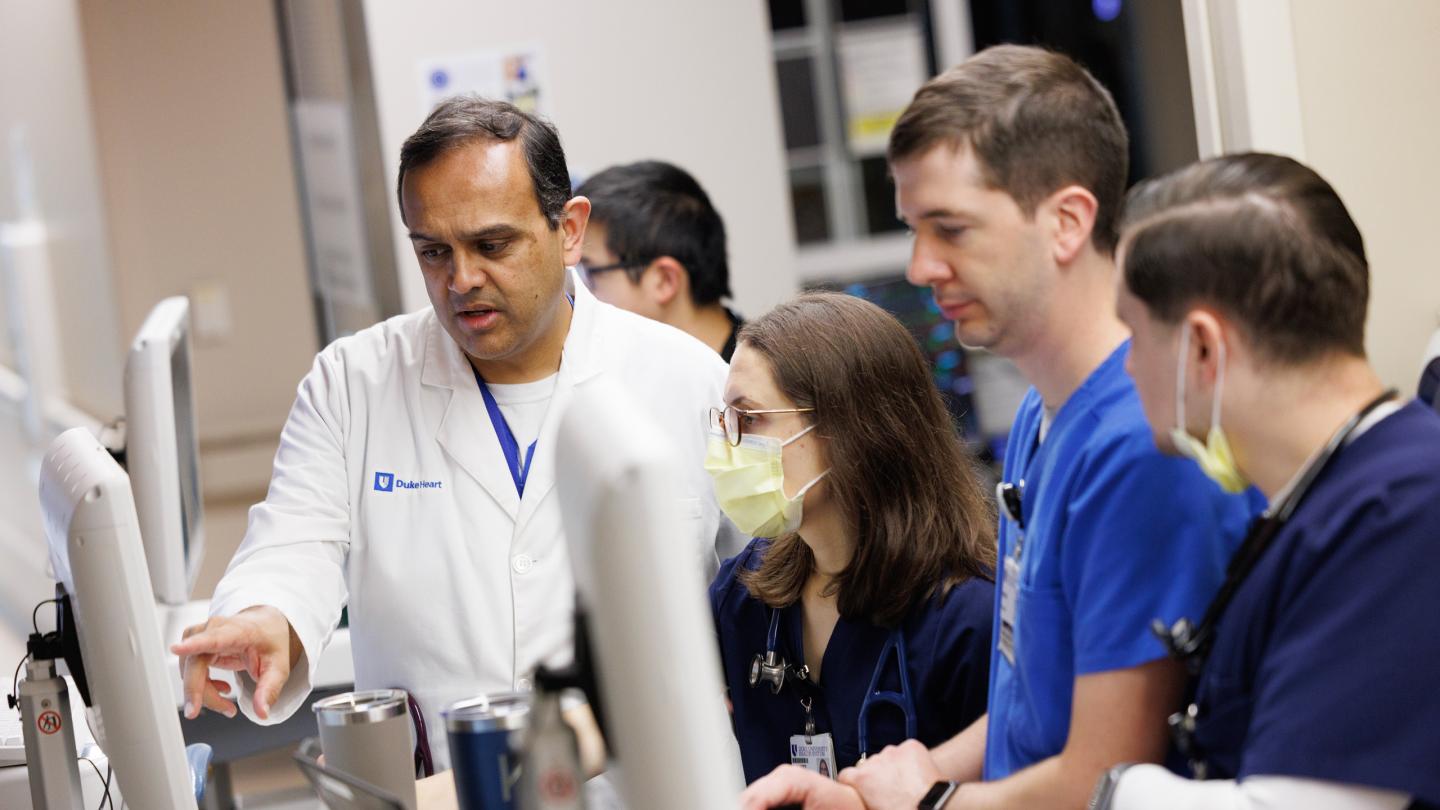
Manesh Patel, MD, chief of cardiology at Duke, is serving as the volunteer president of the American Heart Association, becoming the first South Asian leader in the organization’s 102-year history. The role places Patel at the forefront of efforts to shape the future of cardiovascular science and care.
Patel’s career has been defined by a curiosity-driven approach to solving clinical problems. Early in his faculty career at Duke University School of Medicine, he noticed that many patients whose stress tests suggested blocked coronary arteries did not actually have blockages when examined with cardiac catheterization. Analyzing national data, he found that nearly 60% of such patients had no obstructive disease. The discovery led to influential research and landmark clinical trials comparing traditional stress tests with cardiac CT scans. He has also worked with teams to evaluate different anti-thrombotic strategies for cardiovascular disease, leading to new preventive strategies. These studies have changed practice and informed future research in the field. Over nearly three decades at Duke, he has built a reputation as a clinician, researcher, and leader who bridges scientific discovery and patient care. Patel has contributed to advances in cardiovascular imaging, interventional cardiology, and vascular medicine while leading Duke Health’s cardiology division and heart and vascular service line.
As AHA president, Patel plans to focus on what he calls the “last-mile problem” in science: ensuring proven medical advances reach patients more quickly and equitably. He believes tools including artificial intelligence can help by reducing administrative burdens, improving decision-making, and extending access to evidence-based treatments.
“Technology can close some gaps,” Patel said, “but this will move at the speed of science and trust, and humans must be in the loop.”
A longtime AHA volunteer and board member, Patel sees the organization as uniquely positioned to accelerate both scientific discovery and its delivery to communities. His leadership begins at a pivotal moment when advances in AI, data science, and cardiovascular medicine are transforming healthcare.