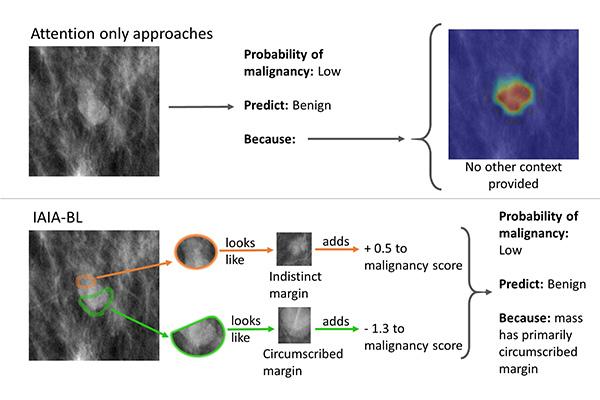
Duke University School of Medicine is home to multiple initiatives and centers aimed at advancing the frontiers of artificial intelligence and machine learning in medicine and healthcare. The School encompasses a broad array of multidisciplinary collaborations in AI for healthcare focused on discovery science, clinical research, patient care, community engagement, governance, and education and training.
Duke AI Health
Duke AI Health’s core mission is to advance research, training, and education in artificial intelligence, machine learning, and data science applications for health and healthcare. A multidisciplinary, campus-spanning initiative housed in the Duke University School of Medicine, AI Health harnesses expertise and insights across multiple schools, centers, and institutes at Duke to bring to bear the power of AI, machine learning, and related quantitative fields on medicine, healthcare delivery, and the health of individuals and communities.
Duke Health AI Evaluation and Governance (E&G) Program
The Duke Health AI Evaluation & Governance (E&G) Program fosters continuous advancement in research and framework development related to responsible health AI. The program is committed to supporting initiatives that ensure the reliable selection, development, deployment, and utilization of AI technologies. E&G connects experts across Duke and engages in internal, national, and international collaborations.
Discovery AI
Discovery AI, housed in the Duke University School of Medicine and spanning multiple schools, departments and institutes across campus, advances the integration of artificial intelligence with fundamental biological research. The Center’s core mission is to fundamentally transform how biological systems are interrogated and engineered across all scales, from molecular to cellular to tissue.
AI in the News

Economou-Zavlanos Named Director of New Duke Health AI Evaluation & Governance Program

One Way Your Brain Beats AI: Learning Motor Tasks

Duke Experts Discuss the Potential of AI to Help Prevent, Detect, and Treat Disease

Spark Initiative for AI in Medical Imaging Officially Launches at Duke

Health and Human Services Officials Visit Duke, Discuss Responsible Health Care AI

Artificial Intelligence in Health Care: Promise and Pitfalls

Vanderbilt and Duke Awarded Moore Foundation Grant to Improve Oversight of AI Technology in Health Care Systems
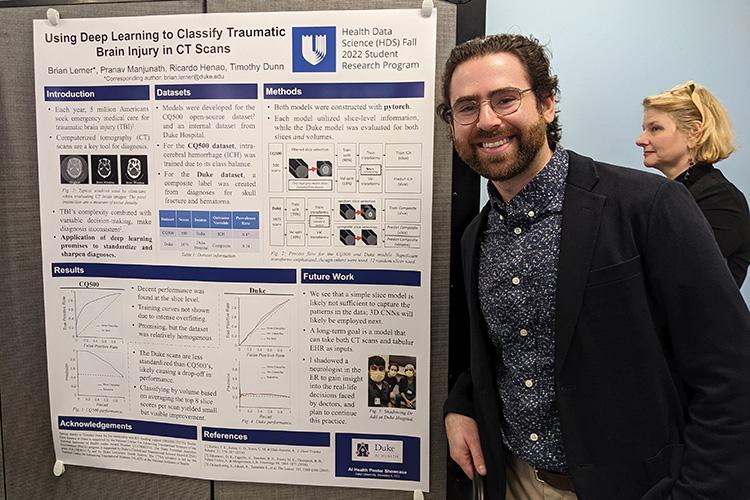
Student Researchers Share What They Know About AI and Health

FDA Commissioner Talks Opioid Crisis, Health Disparities, AI Risks