

Human Evolution Wasn't Just Sheet Music
Brain, gut and immune system were fine-tuned after split from common ancestor of chimpanzees

Helping patients live longer and healthier with ONE Team
To bridge the communication and coordination gap and break down the care siloes, Duke population health scholars Leah Zullig and Kevin Oeffinger from the Duke University School of Medicine developed ONE TEAM.

Svati Shah Receives Genomic and Precision Medicine Mentoring Award
Svati Shah, MD, associate dean for genomics and professor of medicine, received the Genomic and Precision Medicine Mentoring Award from the American Heart Association.

Newly Developed Gene Classifier Identifies Risk of Breast Pre-Cancer Progression
A team of researchers mapping a molecular atlas for ductal carcinoma in situ (DCIS) has made a major advance toward distinguishing whether the early pre-cancers in the breast will develop into invasive cancers or remain stable.

Graduate School Fellowship Snapshots 2022
School of Medicine students featured in the Graduates School's 2022 Snapshots

Duke Study Launches into Space Aboard Artemis I
Dr. Tim Hammond, professor of medicine at Duke, and co-investigator Dr. Holly Birdsall created the “Fuel to Mars” study to identify genes and gene pathways that fuel-producing algae use to survive deep space.
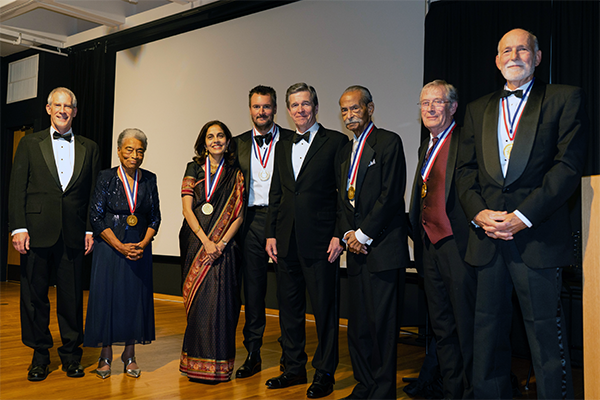
Priya Kishnani Receives 2022 North Carolina Award for Science
Priya Kishnani, MD, MBBS, Chen Family Distinguished Professor of Pediatrics and chief of the Division of Medical Genetics at the Duke University School of Medicine, received one of North Carolina’s highest civilian honors, the North Carolina Award for her contributions to science.

ALS Community Joins Together to Endow Duke’s First ALS Professorship
Led by three families who mobilized their personal networks and ultimately generated support from more than 500 donors, the Duke ALS community raised $3.5 million to establish the Stewart, Hughes, and Wendt Endowed Professorship in the Department of Neurology.
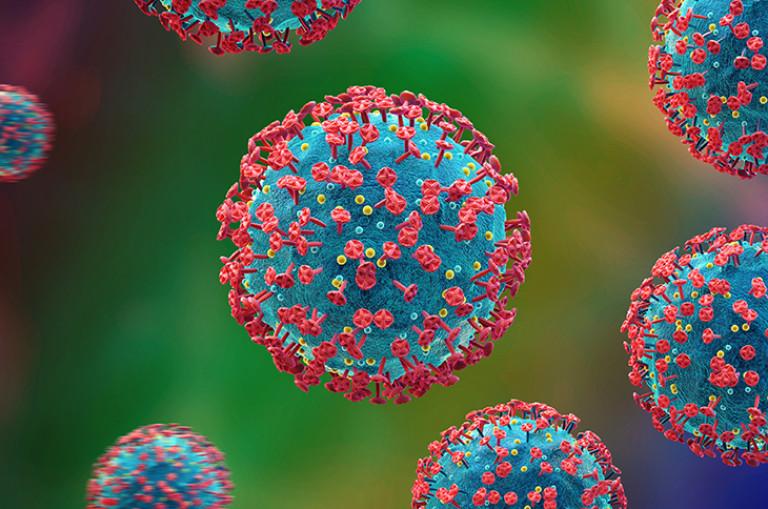
Study Identifies How Stealthy HIV Evades Drugs and Immunity
An immune response that likely evolved to help fight infections appears to be the mechanism that drives human immunodeficiency virus (HIV) into a latent state, lurking in cells only to erupt anew, researchers at Duke Health report.
Duke’s Most-Cited — The Scholars Other Scientists Look To
Thirty Duke scientists — including no fewer than 21 with appointments in the School of Medicine — are on Clarivate's global Most Cited Scientists list, which tracks researchers whose publications are among the top 1 percent of citations in their field.