
Researchers at Duke University School of Medicine, working in collaboration with scientists at University of California, San Francisco, and University of California, Berkeley, have developed a new approach that could expand the reach and accessibility of CAR-T cell therapy. The findings were published in Nature.
CAR-T cell therapy, which reprograms a patient’s immune cells to recognize and attack disease, has transformed treatment for certain cancers and is showing promise for autoimmune disorders. Traditionally, the therapy requires removing T cells from a patient, genetically modifying them, and then reinfusing them back into the body. More recently, several research groups and biotech companies are developing strategies to directly modify these T cells in the body instead.
“CAR-T cell therapies for cancer and autoimmune disease have taken the medical world by storm,” said Aravind Asokan, PhD, professor in surgery. “But the current approach is logistically challenging. Our goal was to find a way to generate CAR-T cells directly inside the patient.

Asokan partnered with researchers in the laboratory of Justin Eyquem, PhD, who works on developing CAR-T platforms alongside Jennifer Doudna, PhD, Nobel Laureate in Chemistry, whose group has developed engineered delivery vehicles (EDVs). These EDVs are virus-like enveloped carriers that can deliver CRISPR proteins into cells, allowing them to make precise cuts at predetermined locations in the genome. They do not, however, deliver new genetic material.
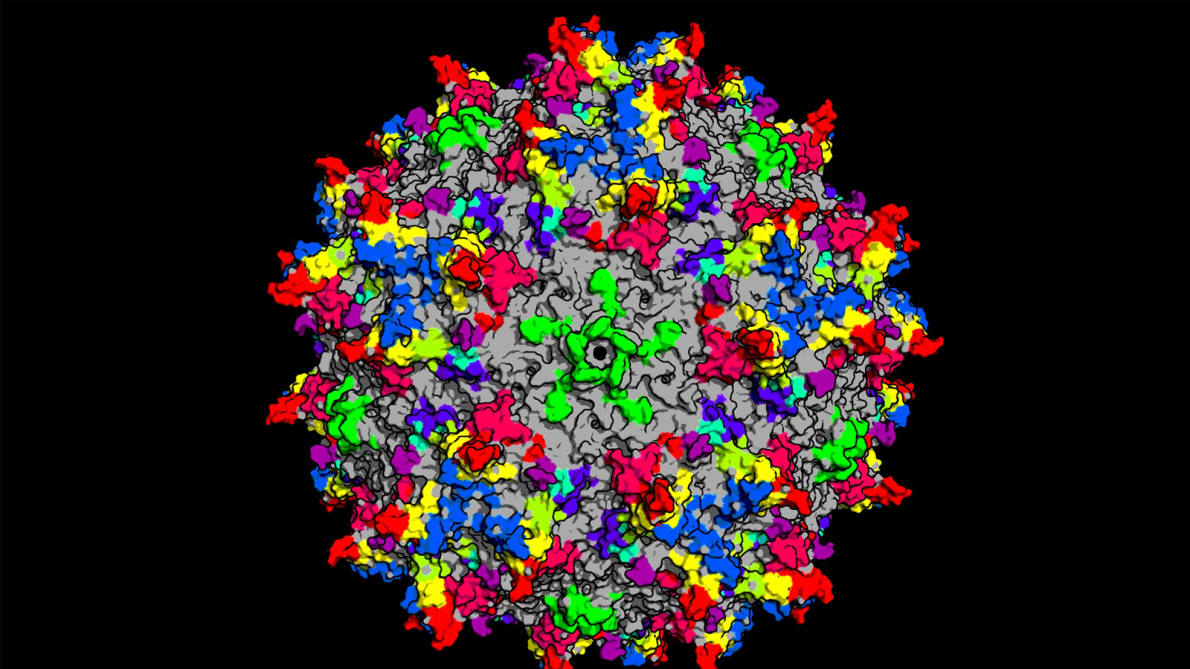
Asokan’s research uses adeno-associated viruses (AAVs), which can insert DNA into cells. “The question became why not try both platforms, EDV plus AAV,” Asokan said, “and then maybe we can get the CRISPR/EDVs to cut at a specific site and AAVs to insert DNA at that site.”
The approach worked in the lab, but in living organisms, the challenge became specificity: EDVs and AAVs naturally travel to many tissues, with AAVs often accumulating in the liver.
So, while Doudna’s team worked on EDV targeting, Asokan’s team engineered millions of AAV variants, put them in one pool, and let evolution take over.
“Nature does this over hundreds of thousands of years through slow mutation,” Asokan said. “We accelerated the whole process and made them all in one pot.”
Through repeated rounds of survival of the fittest, the Eyquem and Asokan labs identified an AAV variant that could efficiently enter T cells by using the CD7 receptor. This allowed them to precisely target the immune cells needed for CAR-T therapy.
This system allows EDVs to enter T cells and create a precise genomic cut. The engineered AAV then delivers the CAR gene to that exact location, creating CAR-T cells directly inside the body.
Asokan thinks this strategy could be applied not only to liquid cancers, but also autoimmune diseases, and fibrotic conditions, significantly broadening the scope of CAR-T–based treatments.
“This is a step toward what we think of as programmable medicine,” Asokan said. “Instead of manufacturing cells outside the body, we can program the immune system directly, using carefully designed biological tools.”
While the Eyquem group continues to refine the approach and explore new genetic cargoes with the long-term goal of translating the technology into clinical applications, Asokan’s group is looking into engineering AAVs to deliver DNA to other immune cell subsets, which may open up interesting new avenues to further develop these programmable medicines.