
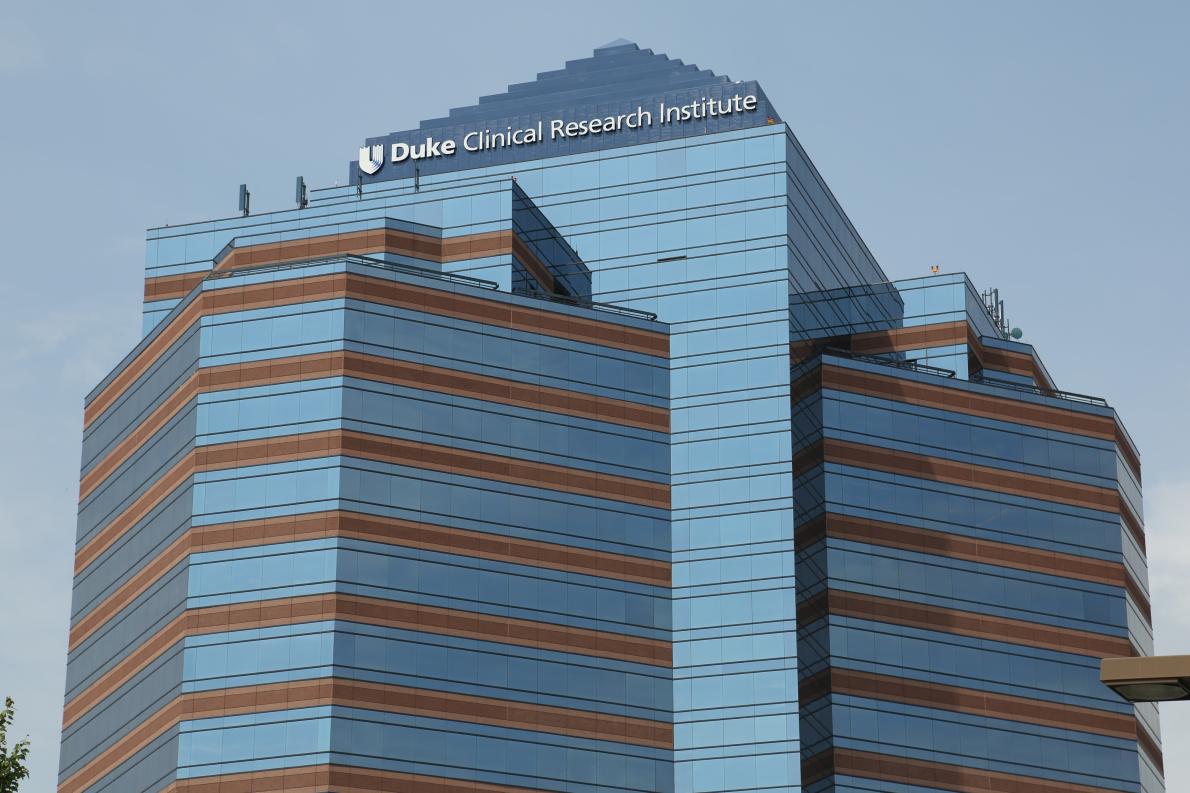
The Antibacterial Resistance Leadership Group (ARLG), based at the Duke Clinical Research Institute, was prominently featured at the European Society of Clinical Microbiology and Infectious Diseases (ESCMID) Global Congress 2026, with two of its multicenter studies selected for a special late-breaking session.
Of the four studies chosen for the high-profile session, two were conducted through ARLG, highlighting the group’s growing global influence in advancing evidence to address the escalating crisis of antibiotic-resistant infections.
“These selections reflect more than individual trials — they reflect a decade-long commitment by the ARLG to rigorously test new approaches and generate practice-changing evidence,” said Vance Fowler, MD, principal investigator of the ARLG and professor of medicine at Duke University School of Medicine.
“Being featured at ESCMID alongside other landmark studies shows how collaborative, publicly funded research can directly inform patient care worldwide,” he said.
Rapid testing speeds care but does not improve survival
One of the featured studies, FAST (Fast Antimicrobial Susceptibility Testing for Gram-Negative Bacteremia) was presented April 18 and published the same day in the Journal of the American Medical Association (JAMA), reinforcing a complicated picture of rapid diagnostics: speed helps but may not be enough on its own.
The randomized clinical trial, led by Ritu Banerjee, MD, PhD, a pediatric infectious disease specialist at Vanderbilt University Medical Center, found that rapid antibiotic susceptibility testing from positive blood cultures did not improve overall patient outcomes compared with standard testing in patients with dangerous Gram-negative bloodstream infections.
The study enrolled more than 800 hospitalized patients in Greece, India, Israel, and Spain, countries with high levels of antibiotic resistance. After 30 days, patients who received rapid testing were no more likely to be alive without serious complications than those whose care relied on standard laboratory methods.
The rapid test did speed clinical decision-making, allowing doctors to adjust antibiotics about 14 hours sooner and sharply cutting delays to effective treatment in patients with highly drug-resistant infections.
Still, faster diagnostics did not improve survival in the global fight against antibiotic resistance.
In a pre-specified subgroup of patients with carbapenem-resistant infections, rapid testing substantially shortened the time to effective therapy and was associated with fewer patients still hospitalized after 30 days— highlighting potential benefit in patients with highest risk.
A step toward personalized treatment of serious Staph infections
Also presented at ESCMID and published April 18 in JAMA Network Open, an ARLG study provides new insight into how well a two-dose dalbavancin regimen performs in patients with serious bloodstream infections.
This secondary analysis of the DOTS (Dalbavancin as an Option for Treatment of Staphylococcus aureus Bacteremia) clinical trial included 97 patients with detailed pharmacokinetic data. Researchers analyzed more than 600 blood samples to better understand how dalbavancin moves through the body and how drug exposure varies across patients. They found that drug clearance differed meaningfully based on kidney function, body weight, age, and albumin levels.
As part of this analysis, researchers examined how dalbavancin drug exposure relates to patient outcomes at days 42 and 70 after treatment. Among patients who were stable and free of complications early in therapy, about three in four were successfully treated by day 70. The study found that those who maintained higher drug levels about three weeks into treatment were significantly more likely to achieve successful outcomes—without an increase in serious side effects.
This study moves beyond confirming that a two-dose regimen can work and addresses a more important clinical question: does it provide sufficient drug exposure for every patient over the full course of therapy? While most patients achieved adequate exposure, some did not—suggesting that a one-size-fits-all approach may not be optimal.
Serious bloodstream infections like Staphylococcus aureus bacteremia often require weeks of intravenous antibiotics, which can be costly, inconvenient, and associated with complications. Dalbavancin offers a simplified alternative with just two doses, but these findings suggest that some patients, particularly those who clear the drug more quickly, may benefit from more individualized treatment strategies, such as an additional dose or tailored dosing approaches.
“These findings support a move toward more individualized treatment,” said lead study author Tom Lodise, MD, PharmD, PhD, professor and endowed research chair at Albany College of Pharmacy and Health Sciences who serves as the ARLG Network’s Pharmacokinetic Scientific Lead.
“In the future, clinicians may be able to identify patients who are at risk of having lower dalbavancin exposure and adjust therapy accordingly. This approach could improve cure rates while still preserving the convenience and safety advantages of a long-acting antibiotic.”
A decade of global collaboration and impact
Founded in 2013 with funding from the National Institute of Allergy and Infectious Diseases of the National Institutes of Health, ARLG brings together more than 165 experts to prioritize, design and execute research addressing unmet needs in the prevention, diagnosis, and treatment of antibiotic-resistant infections.
Facilitated by DCRI, the group has initiated more than 65 studies across 165 clinical trial sites worldwide, involving 28,000 participants in 19 countries. ARLG has published more than 330 manuscripts, including 250 with ARLG mentee co-authors, which reflects its dual mission of scientific advancement and workforce development.
“ARLG studies are intentionally designed to answer real-world clinical questions,” Fowler said. “Sometimes the most important outcome is not showing that a new drug works as well as an existing one, but providing high-quality evidence that guides smarter, safer use of the tools we already have.”
The research was funded by the National Institute of Allergy and Infectious Diseases of the National Institutes of Health under NIAID Award No. 5UM1Al104681.