

Inside the Class: Formation for Service IV
OTD 604, Formation for Service IV, is the fourth installment in a series of courses in which Duke Occupational Therapy Doctorate (OTD) students explore pathways to professional development as colleagues, community members, and change-makers.
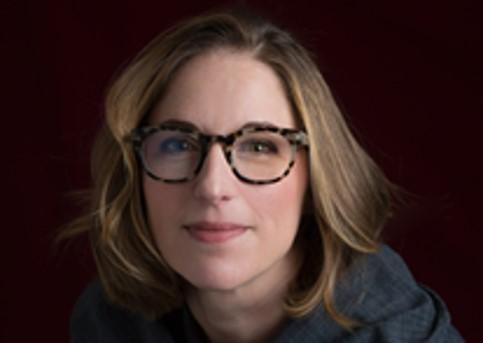
Say the Hard Things: An Evening with Bestselling Author Jessica Lahey in Recognition of Suicide Prevention Month
Bestselling author Jessica Lahey spoke to a group of students, staff and faculty interested in wellbeing on September 26, 2024, toward the end of National Suicide Prevention Month. Espousing a “deep disdain for euphemisms,” Lahey spent an hour sharing her own personal experiences – ranging from growing up in the secrecy of a family afflicted by disordered alcohol use to confronting her own alcohol use disorder to challenging implicit and explicit consider
Closing in on the Causes of a Dangerous Bleeding Disorder
Hereditary hemorrhagic telangiectasia (HHT) is an inherited disorder in the blood vessels that can lead to a range of complications. Treatment options are limited and don’t address the cause of the disease, but a new study points the way toward strategies for developing more targeted and effective treatments.

Spotlight on Dalia Antunez, MSW
As a leader with the employee resource group, ¡DALHE!, Dalia Antunez is helping to build community and expand professional networks for Duke’s Hispanic/Latiné employees and allies.
Spotlight on Dalia Antunez, MSW
As a leader with the employee resource group, ¡DALHE!, Dalia Antunez is helping to build community and expand professional networks for Duke’s Hispanic/Latiné employees and allies.
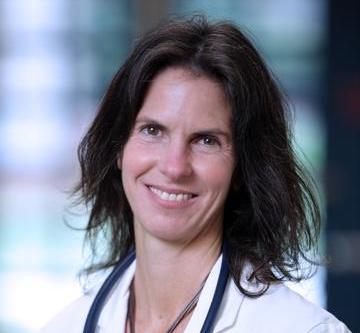
Lori Orlando Part of New NIH-funded Genomics Initiative Award
Duke University, in collaboration with the Veterans Health Administration (VA), has received one of six awards from a new $27 million initiative from the National Institutes of Health to establish a genomics-enabled Learning Health System (G-LHS) network
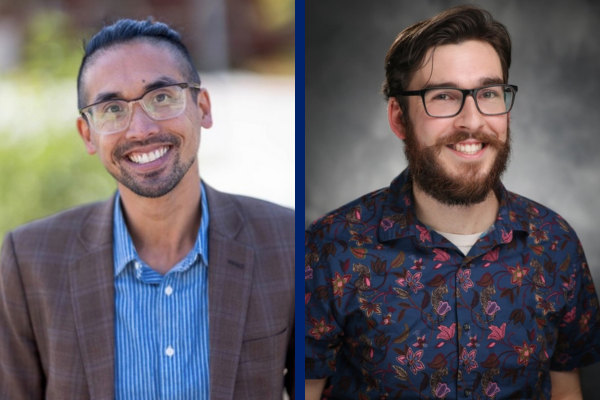
Gut microbes may help chew your food
Duke researchers are exploring how the human gut microbiome affects digestion and fecal particle size.
The study, led by Jeff Letourneau, PhD, while in the lab of Lawrence David, PhD, associate professor of molecular genetics and microbiology, examined how chewing efficiency and food processing impact the microbiome and fecal particle size in humans.
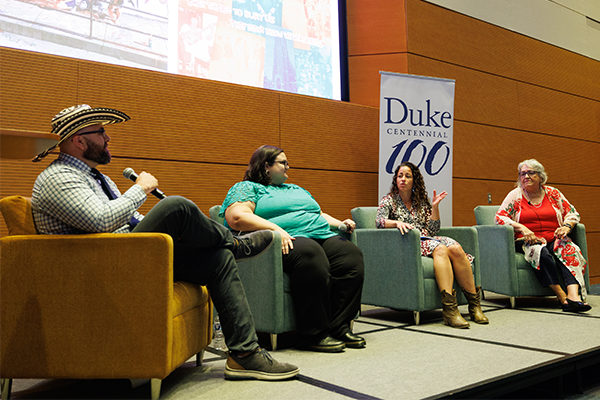
Hispanic Heritage Month: Uncovering Latino History in the South
At Duke University School of Medicine’s annual ¡DALHE! Hispanic Heritage Month event, attendees came together to reflect on the often-overlooked history of Latinos in the South.

Kicking Off the Interdisciplinary Rehabilitation Research Seminar Series for 2024–2025
The Duke Doctor of Physical Therapy and Occupational Therapy Doctorate programs kicked off the 2024–2025 Interdisciplinary Rehabilitation Research Seminar Series on August 28.

Latiné/Hispanic Employee Resource Group Creates Connection Over Coffee
¡DALHE! often hosts Virtual Cafecitos, which are an opportunity to create and maintain open dialogue for Duke’s Latiné and Hispanic staff and allies around topics of leadership, networking, mentorship, inclusion, professional development and more.