
Duke Establishes First Hand Transplant Program in North Carolina
Duke Medicine has launched the first hand transplant program in North Carolina, becoming one of a small number of transplant centers in the country to offer the life-altering procedure.
DART Protein Shows Potential as Shock-and-Kill Strategy Against HIV
A unique molecule developed at Duke Medicine, the University of North Carolina at Chapel Hill and MacroGenics, Inc., is able to bind HIV-infected cells to the immune system’s killer T cells. It could become a key part of a shock-and-kill strategy being developed in the hope of one day clearing HIV infection.
New Mouse Brain Connection May Illuminate Origins of Mental Illnesses
Scientists at Duke University have released a highly detailed model of connections in the mouse brain that could provide generations of neuroscientists new insights into brain circuits and origins of mental illness, such as depression and schizophrenia. The findings are published in the journal Cerebral Cortex.
School of Medicine announces new Center for Statistical Genetics and Genomics
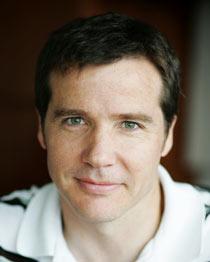
The School of Medicine has launched the new Center for Statistical Genetics and Genomics. The center, led by Andrew Allen, PhD, professor of Biostatistics and Bioinformatics, will bring together quantitatively-oriented scientists from various disciplines on the Duke campus to address the computational and statistical challenges associated with efforts to use genomics to improve patient care.
Duke faculty, alumni and students elected to AOA Medical Honor Society
The Alpha Omega Alpha (AOA) Medical Honor Society elects a small number of students, faculty and alumni each year who exemplify the qualities of scholastic performance, leadership, fairness in dealing with colleagues, compassion for others, integrity of character, and service to the school and community at large.
Membership in AOA is a distinction that accompanies a physician throughout his or her career.
Ginsburg named director of School of Medicine-Pratt School partnership
Geoffrey Ginsburg, MD, PhD, has been named director of MEDx (Medicine and Engineering at Duke), it was announced today by Nancy C. Andrews, MD, PhD, Dean, School of Medicine; Tom Katsouleas, PhD, Vinik Dean of the Pratt School of Engineering; and George Truskey, PhD, Incoming interim Dean of the Pratt School of Engineering. Dr. Ginsburg will serve as director for an initial three-year term.

Structures Reveal Basis of Recurring Urinary Tract Infections
While the best antibiotics can wipe out most of the bacteria that cause notoriously difficult urinary tract infections, a few “sleeper cells” often remain. These “persisters,” as they are called, survive by going dormant, essentially sleeping through the attack that kills off their more active brethren.
A new study has shown that a protein called HipA acts as a kind of molecular Sandman, putting bacterial cells to sleep so they can live another day. The Duke researchers behind the finding say understanding HipA may give them a way to combat drug-tolerant infections.
Huang named new chair of Department of Pathology
Jiaoti Huang, MD, PhD, has been named the new chair of the Department of Pathology, effective January 1, 2016. Dr. Huang is currently professor of Pathology and Urology, the Frances and Albert Piansky Endowed Chair, chief of Surgical Pathology and director of Urologic Pathology at the David Geffen School of Medicine at UCLA. He is also a member of UCLA’s Jonsson Comprehensive Cancer Center and Broad Center of Regenerative Medicine and Stem Cell Biology.
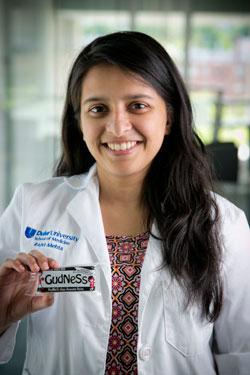
Duke Medical Student Spreads 'GudNess' to Roll Back Anemia in India
When an illness from iron deficiency anemia threatened to derail her studies at Brown University, Rajvi Mehta wasn't satisfied with just following the doctor's prescription. She wanted to know more, and what she learned was the basis of an effort that has helped thousands back home in India.
Now a second-year medical student at Duke, Mehta continues to build upon her 2011 initiative in India that is succeeding where many previous anemia educational efforts have failed.
Read more

Study Links Success in Adulthood to Childhood Psychiatric Health
Children with even mild or passing bouts of depression, anxiety and/or behavioral issues were more inclined to have serious problems that complicated their ability to lead successful lives as adults, according to research from Duke Medicine.