

Nearly New Shoppe closes its doors
After more than half a century and millions of dollars raised to support student scholarships in the Duke University School of Medicine and School of Nursing, the Nearly New Shoppe thrift store ceased operations at the end of August 2020.
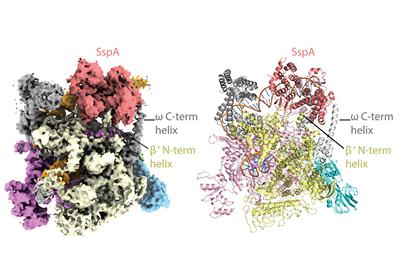
Researchers peer inside deadly pathogen's burglary kit
Structural insights about a deadly bacterium’s tools point to ways to block it
The bacterium that causes the tick-borne disease tularemia is a lean, mean infecting machine. It carries a relatively small genome, and a unique set of infectious tools, including a collection of chromosomal genes called ‘the pathogenicity island.’

School of Medicine faculty recognized on ‘Highly Cited’ list
Duke’s leading scholars are once again prominently featured on the annual list of “Most Highly Cited Researchers.”
Thirty-seven Duke faculty were named to the list this year, based on the number of highly cited papers they produced over an 11-year period from January 2009 to December 2019. More than half of them (22) are from the School of Medicine. Citation rate, as tracked by Clarivate’s Web of Science, is an approximate measure of a study’s influence and importance.

Senior PhD students receive Chancellor’s Award for Excellence in basic science research
Six senior PhD students in the School of Medicine were awarded the Chancellor’s Award for Research Excellence for outstanding accomplishments in basic science research. Elizabeth Fleming, Kyle Gibbs, Siqi Li, Morgan Parker, Atul Kaushik Rangadurai, and Amy Webster were recognized at a virtual ceremony on Monday, November 16, 2020, and also received an engraved plaque with a cash award of $1,500.

Duke University’s aggressive COVID testing and surveillance minimized infections
Infection prevalence among students was lower than in the surrounding community
Digital health innovator Mark Sendak named STAT Wunderkind
One of 26 early-career scientists recognized by the Boston publication this year

Astrocytes identified as master 'conductors' of the brain
In the orchestra of the brain, the firing of each neuron is controlled by two notes—excitatory and inhibitory— that come from two distinct forms of a cellular structure called synapses

Leadership and faculty from Duke Ob/Gyn meet with Congressional leaders to address Black maternal health
Leadership and faculty from Duke Ob/Gyn met virtually with the office of Rep. Alma Adams (D-NC-12) to discuss their clinical work and research to address Black maternal health and to improve health outcomes for pregnant women.

Cholesterol-lowering drugs appear to boost cancer immunotherapies
Animal studies show potential for combining an injectable cholesterol therapy with checkpoint inhibitors
An injectable drug used to reduce stubbornly high cholesterol levels appears in animal studies to also enhance the immune response of anti-cancer therapies known as immune checkpoint inhibitors, a study led by Duke Health researchers reports.

Women with autoimmune lung disease can safely give birth if closely monitored
Women with lung inflammation and scarring caused by an autoimmune disease, called interstitial lung disease, or ILD, have typically been told they should not get pregnant for fear the strain of childbearing could endanger their lives.
But a new study led by Duke Health researchers found that patients with ILD do not necessarily have to avoid or terminate pregnancies if they are closely monitored by trained specialists before, during and after pregnancy.