

Transition Your Career in Challenging Times
In this prerecorded webinar you’ll learn more about admission to the MMCi program as well as hear from a panel of alumni.
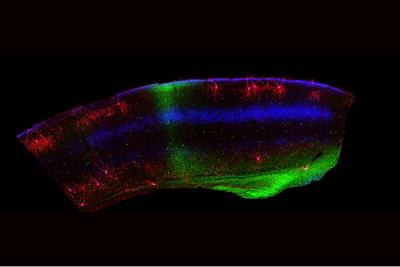
Brain clears the way for binocular vision even before eyes are open
Selective pruning of key brain connections brings two-eyed vision into focus
To prepare the brain for binocular vision and depth perception, first you have to take out some of the chandeliers.
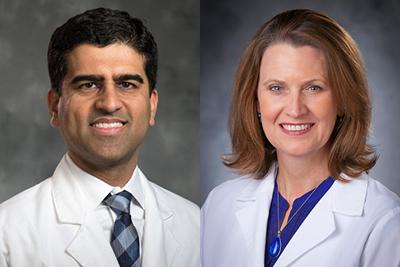
Two School of Medicine faculty selected for Fall 2020 Incubation Fund Awards
The winners of the Fall 2020 Duke Incubation Fund awards have been announced. Three projects representing early-stage innovation happening across the University are set to receive funds totaling more than $59,000. Two of the projects are by faculty from the School of Medicine.
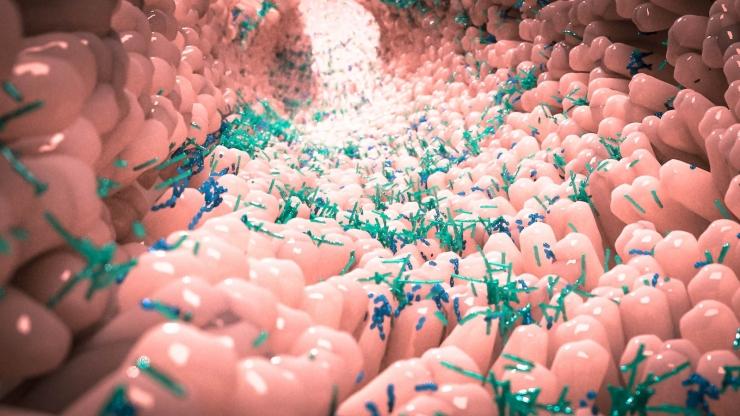
Gut Microbiome Snapshot Could Reveal Chemical Exposures in Children
Study of how semi-volatile organic compounds affect bacteria and fungi reveals new relationships and bacteria used for bioremediation in children's guts
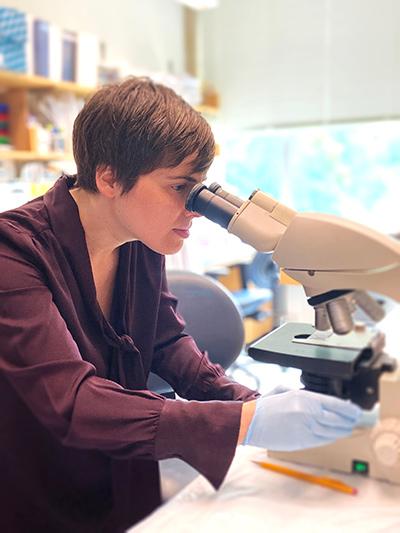
New gift to Duke continues support for early-career physician-scientists
Yvonne Mowery, M.D., Butler Harris Assistant Professor in Radiation Oncology, is one of many physician-scientists at Duke who credits the Duke University School of Medicine’s Strong Start Program for her career growth.

Duke Clinical Research Update
SUPPORT OFFICE HOURS
REDCap Office Hours
Email redcap-docr@duke.edu to schedule a virtual session at one of the times indicated below.
Tuesdays 10 AM, virtual sessions
Wednesdays 10 AM, virtual sessions
Thursdays 2 PM, virtual sessions
Fridays 10 AM, virtual sessions
SlicerDicer Office Hours
Thursdays, 2 PM, via WebEx

Duke Clinical Research Update December 2 2020
Research Community News
iRIS/OnCore Updates
DOCR News
Recruitment Innovation Corner
Training Opportunities
Clinical Research Employee Highlights
Partner Resources

The Duke Human Vaccine Institute's Denny co-authors 'How To' manual for college campuses
Testing strategies against Covid-19 aren’t the only measure, but they’re most important
Fast, frequent testing for COVID-19 can help stem the spread of the infectious disease on college campuses, according to a new report published by the National Academies on Dec. 1.
AI model uses retinal scans to predict Alzheimer’s disease
A form of artificial intelligence designed to interpret a combination of retinal images was able to successfully identify a group of patients who were known to have Alzheimer’s disease, suggesting the approach could one day be used as a predictive tool, according to an interdisciplinary study from Duke University.
The novel computer software looks at retinal structure and blood vessels on images of the inside of the eye that have been correlated with cognitive changes.
CRISPR Tagging Improves Accuracy Of Model Cells Grown From Stem Cells
Novel method identifies which master controllers of gene activity are essential to making adult cells of any type