
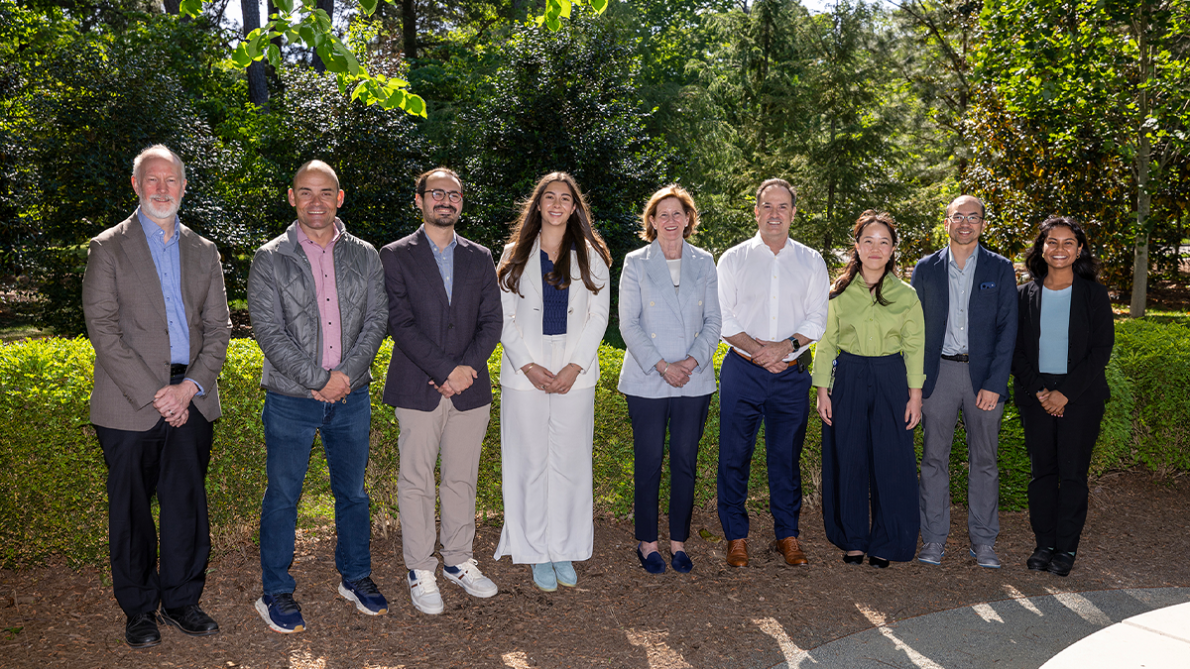
Duke University School of Medicine celebrated excellence in graduate student education and discovery science at its 2026 Office of Biomedical Graduate Education (OBGE) Graduate Student Awards ceremony, an event that was expanded this year to recognize trainees at multiple stages of their research careers.
“This event is about celebrating the breadth and depth of our graduate research community,” Beth Sullivan, PhD, associate dean for research training, said of the more than 600 students who are pursing graduate degrees. “We feel the more students we celebrate, the better.”
Those receiving the Dean’s Award for Research Excellence (DARE) Awards are pursuing efficiencies in patient care and new ways to outsmart cancer, decode Alzheimer’s disease and fight infectious disease.
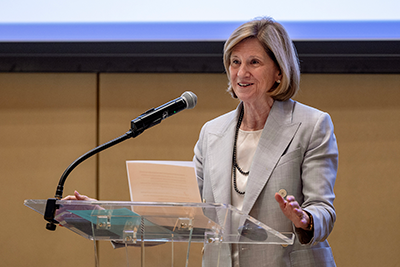
In her remarks Mary Klotman, MD, dean of the School of Medicine, emphasized the central role of research training in advancing healthcare.
“It is really one of our core missions,” Klotman said. “It is the fundamental basis of all of the discoveries that are now part of clinical care and clinical care delivery.”
She described discovery science as a long but powerful journey. “It starts with an idea that then goes through a process of scientific discovery, validation, and a long trajectory of clinical research and ultimately becoming how we deliver care to patients.”
“All of you have participated in that mission,” Klotman said.
2026 DARE Awards Recipients
The 2026 DARE Awards recognized four exceptional PhD candidates whose work exemplifies innovation and impact:
-
Odmaa Bayaraa, a graduate student in the University Program in Genetics and Genomics, conducted research in the lab of Simon Gregory, PhD, using transcriptomic approaches to decode Alzheimer’s disease and classify distinct brain cell types.
-
Trisha Dalapati, a trainee in the Medical Scientist Training Program, was honored for her research on infectious diseases through the lens of genetics. Dalapati conducts her research under the mentorship of Dennis Ko, PhD, while pursuing a medical degree.
-
Christian McRoberts Amador, mentored by Charles Gersbach, PhD, during his graduate studies in cell and molecular biology, focuses on immune cell engineering, programming T cells to recognize and fight cancer.
-
Ben Neubert, a graduate student in computational biology and bioinformatics, was nominated by Anna Bauer, PhD, on behalf of Lawrence David, PhD. Neubert’s research centers on improving health biomarker measurement, ranging from objective dietary assessments to a pilot “smart toilet” that automatically measures urine output in hospitalized patients in real time, reducing the need for manual nurse reporting.
As award recipients, each PhD candidate received a cash prize and an engraved momento. Awardees were selected by a faculty committee based on excellence in research, sholarly achievements, impact on lab trajectory, and contributions to their lab, progra or department.
In addition to the DARE Awards, Sullivan announced recipients of the 2025–2026 first- and second-year School of Medicine Dean’s Scholars, as well as the 2025–26 School of Medicine PhD student recipients of The Graduate School’s mentoring and teaching awards.
Calla Telzrow, PhD, associate director of curriculum advising and experiential learning, recognized OBGE peer mentors, OBGE professional development award winners, and OBGE administrative fellows, highlighting their critical roles in supporting graduate student success.
During the ceremony, Colin Duckett, PhD, executive vice dean for basic and preclinical science, acknowledged the dedication of Duke’s faculty mentors and praised Sullivan’s leadership in building a supportive infrastructure for discovery.
He also reflected on the changing scientific landscape and the growing influence of artificial intelligence to propel research development.
“It’s such a great journey and it’s such an amazing time to be in science,” Duckett said.