
Duke University has named the latest recipients of its Climate and Health Big Idea Grants, a program aimed at accelerating research into the growing health impacts of climate change.
The program is supported by The Duke Endowment and the Climate and Health Research Initiative Innovation Fund, which is made possible through the generous support of Duke School of Medicine Board of Visitors member John Cavalier.
The awards provide $300,000 over two years for faculty-led projects and $10,000 for one year to support trainees. The funding will advance bold, interdisciplinary research into ways climate-related exposures affect human health and help deliver real solutions for communities across North Carolina, South Carolina, and beyond.
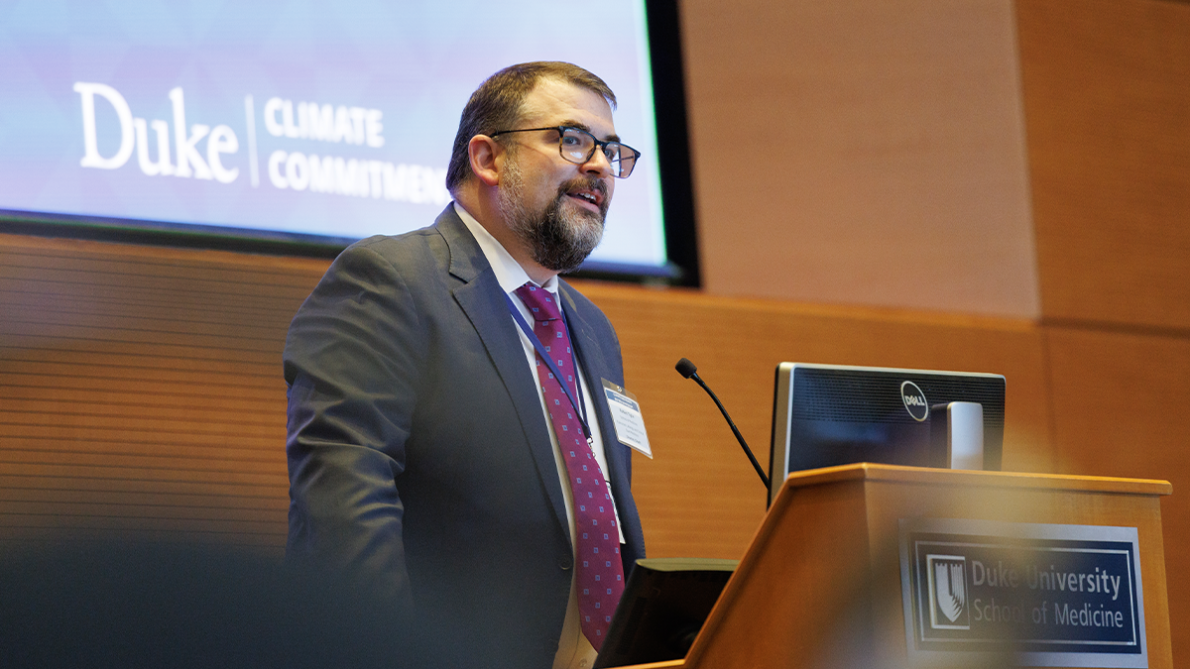
Funded projects emerged from the Climate and Health Big Idea Symposium, a campus-wide convening that brought together faculty and trainees from across Duke University. Hosted by the Climate and Health Research Initiative, the event focused on pressing climate-driven health challenges and encouraged new collaborations. It also provided a platform for teams to present “big ideas” aimed at mitigating the health impacts of climate change, particularly for vulnerable populations.
At the symposium, teams presented research concepts spanning a range of climate and health issues, including extreme heat, air quality, flooding, disease progression, and community resilience. Following a competitive selection process, the awarded projects were chosen for their innovation, rigor, and collaborative approach.
The 2026 Climate and Health Big Idea Grant awardees are expected to build on the momentum of the symposium, contributing to impactful research and actionable insights for addressing climate-related health challenges.
Awardees are:
John Rawls, PhD, James B. Duke Distinguished Professor of Molecular Genetics and Microbiology

Uncovering the Impact of Heat on the Human Microbiome
This project investigates how heat exposure influences human health by disrupting our microbiome. By integrating human studies with animal models, the team will define how heat reshapes microbiome composition and activity and how those changes affect host–microbe relationships. The work addresses fundamental gaps in understanding the biological pathways linking heat exposure to downstream health outcomes.
This multidisciplinary team brings together expertise from Molecular Genetics and Microbiology, Dermatology, and the Nicholas School of the Environment, drawing on strengths of the Duke Microbiome Center and the Environmental Exposure and Kidney Health Working Group across the School of Medicine, Pratt School of Engineering, and Nicholas School.
João Ricardo Nickenig Vissoci, MSc, PhD, Associate Professor of Emergency Medicine, Neurosurgery, Global Health and Biostatistics and Bioinformatics
Rural Carolinas Observatory for Heat Early Warning and Health Resilience
This project will establish a Rural Carolinas Heat-Health Observatory linking high-resolution climate data with emergency medical services and emergency department outcomes to improve early identification of heat-related emergencies in rural communities. By integrating data science, implementation science, and community engagement, the observatory will support timely public health responses and long-term reduction of heat-related health burdens in low-resource settings.
The team unites faculty from Emergency Medicine, Biostatistics and Bioinformatics, the Duke Global Health Institute, and the Nicholas School of the Environment, alongside policy partners including the Heat Policy Innovation Hub, NCDPH, North Carolina Emergency Management, and NC DEQ, spanning expertise in health, climate science, data analytics, policy, and implementation science.
Kate Webb, PhD, Assistant Professor in Psychiatry and Behavioral Sciences
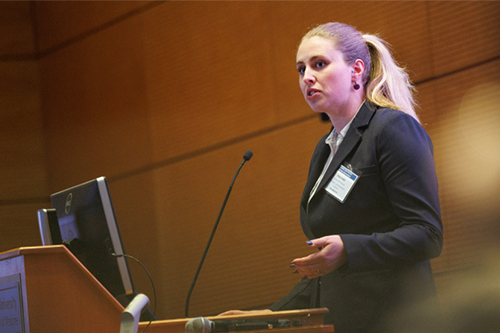
Trauma Recovery in a Changing Climate: Impacts of Extreme Heat and Air Pollution on Biological Risk for PTSD
Using innovative personal environmental monitoring methods, this study will examine how extreme heat and air pollution shape psychological and biological outcomes among recent trauma survivors in North Carolina. The research aims to identify individual- and community-level targets for evidence-based, community-informed interventions to reduce climate-related mental health risks.
This interdisciplinary team includes experts from the Duke School of Medicine, Nicholas School of the Environment, Pratt School of Engineering, and the Duke Global Health Institute, combining strengths in psychiatry, neuroscience, emergency medicine, environmental engineering, ecology, biostatistics, and epidemiology.
Sakshi Chopra, Medical Student, Dermatology
Mapping Melanoma Vulnerability in North Carolina: The Link Between UV Exposure, Temperature, and Geographic Risk
Melanoma incidence is rising, and geographic variation suggests environmental factors play a role. By developing a melanoma vulnerability index and studying factors like UV exposure and ambient temperature, we aim to elucidate hyperlocal climate drivers of advanced disease and increased incidence. This project is supported by a multidisciplinary team integrating clinical dermatology and melanoma expertise, medical student research leadership, environmental and climate science, epidemiology and biostatistics, and advanced geospatial data visualization to study environmental determinants of melanoma risk.
Rebecca Fillipo, PhD Student, Population Health Sciences
Extreme heat events and end-stage renal disease (EHE-ESRD)
Dialysis patients are especially vulnerable during heat waves. Using national health and climate data, this project will identify who is most at risk and why. The aim is to provide clinics and health systems with tools to keep patients safe as extreme heat becomes more common. Bringing together expertise across disciplines, this project is guided by a team with strengths in biostatistics and causal inference, clinical nephrology, epidemiology and health equity, qualitative health research, and environmental exposure assessment to study heat-related kidney health outcomes