
The Space Between: How Micah Luftig found a second academic home in Singapore

For 20 years, the Duke-NUS partnership has brought together researchers, educators, and clinicians across Durham and Singapore. As the partnership continues to celebrate that milestone and look ahead to its next chapter, it is a fitting time to recognize the faculty members whose work and dedication have helped define its story.
To mark this moment, the Office of Duke-NUS Affairs is launching The Space Between, a new spotlight series exploring the journeys of those who have built lasting connections through the partnership. Spanning two campuses, two countries, and countless collaborations, this series offers an inside look at the relationships, discoveries, and shared experiences that have shaped two decades of engagement between Duke University and Duke-NUS Medical School.
We spoke with Micah Luftig, PhD, Alter Geller Distinguished Professor in Immunology and vice chair, Department of Molecular Genetics and Microbiology, whose involvement with Duke-NUS spans years. Here, he reflects on the path and relationships that led him to find a second academic home in Singapore.
-
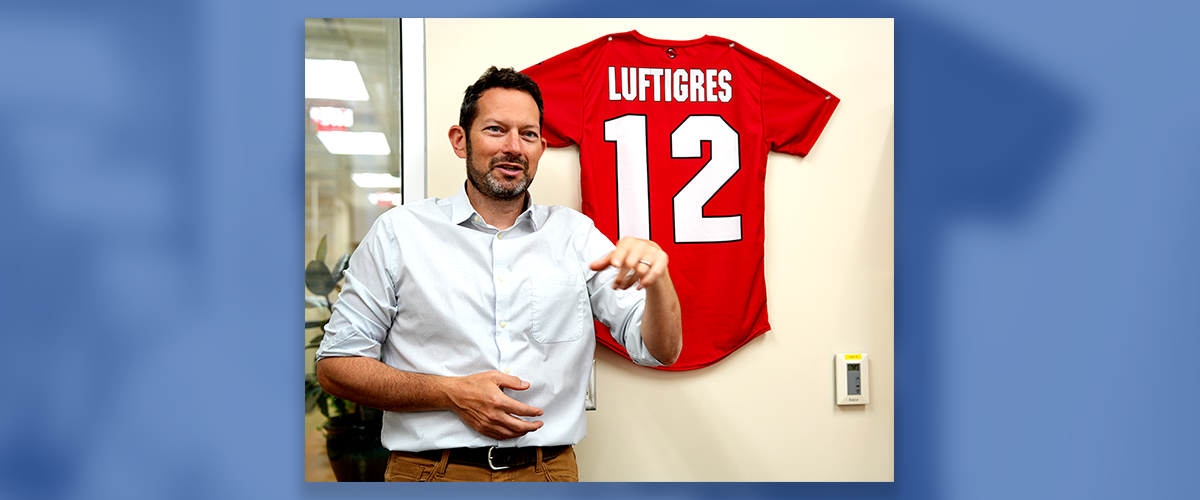 Through travel grants, pilot projects, and years of collaboration, Luftig helped build research connections between Duke and Duke-NUS.
 -
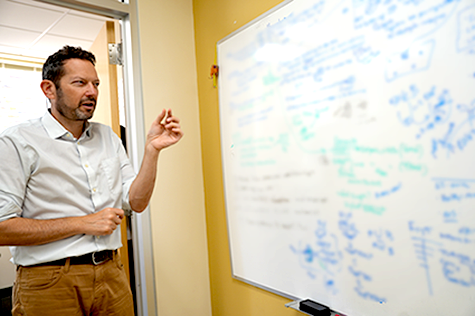
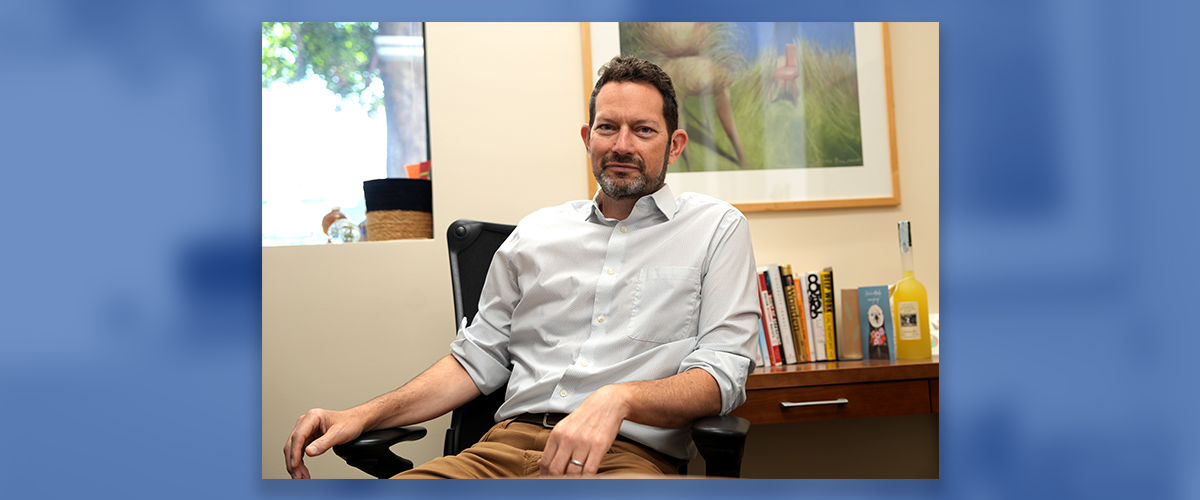 Today, Luftig's research brings together basic science, clinical insight, and the collaborative strengths of Duke and Duke-NUS.
 -
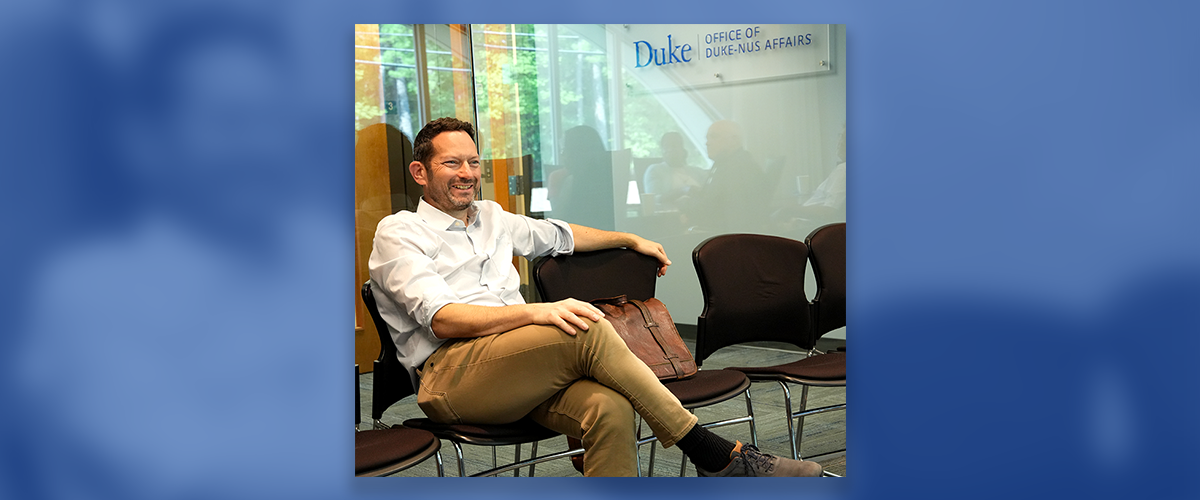 Joint faculty meetings provide an opportunity for Duke-based faculty to share experiences, strengthen connections, and explore new opportunities for collaboration across the Duke-NUS partnership.
 -
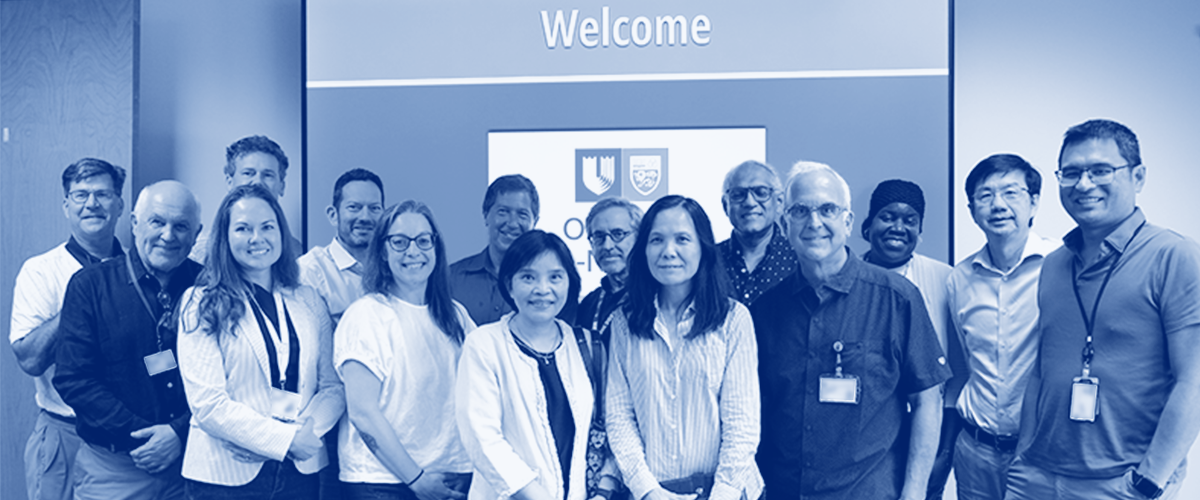 Duke-based faculty who hold appointments at Duke-NUS gather during a joint faculty meeting hosted by the Office of Duke-NUS Affairs. The partnership includes numerous joint faculty appointments that help connect expertise across both campuses.
Finding Opportunity
How were you first introduced to Duke-NUS?
My first connection to Duke-NUS came through my senior colleague and mentor, Mariano Garcia-Blanco, whose work on dengue viruses led him to establish a laboratory-based research program at Duke-NUS in the early 2010s. Around that time, he organized an East-West virology symposium in Durham that brought several Duke-NUS Emerging Infectious Diseases faculty members to campus. After meeting several of them, I was immediately struck by the idea of a Duke-affiliated medical school in Asia, bringing new perspectives to health questions of particular regional importance.
What do you remember about your first visit to Singapore?
The following year, I received a travel grant to visit Duke-NUS, give a seminar, and meet faculty. It was my first visit to Singapore, and it was both eye-opening and energizing to meet colleagues in their own scientific and clinical environment. At that stage, I did not yet know exactly what form a research collaboration might take.
When did those early connections turn into collaboration?
That began to change in 2014, when Chris Counter, a Duke faculty member and frequent visiting scientist at Duke-NUS, hosted a joint cancer biology symposium in Durham. There I met Patrick Tan, then a faculty member in Duke-NUS' Cancer and Stem Cell Biology Signature Research Programme and now dean of Duke-NUS. His group studies genomic and epigenomic changes in gastric cancer and had identified Epstein-Barr virus, or EBV, the virus my laboratory studies, in some gastric cancers. My lab had largely focused on EBV infection of lymphocytes and its role in lymphoma, so this opened a compelling new direction: understanding how EBV infects epithelial cells and may contribute to gastric cancer.
Patrick and I launched a collaboration through the Duke-NUS Research Collaboration Pilot Projects Program (RECA), later supported by the Duke Cancer Institute. That effort led to co-authored publications and pushed my group toward epithelial models of EBV infection.
What ultimately convinced you to build a presence at Duke-NUS?
By 2019, I was discussing the possibility of a sabbatical in Singapore with Pat Casey, then Duke-NUS' senior vice dean of research, and Patrick. The goal was to build more robust epithelial models through direct collaboration with Duke-NUS. COVID, however, interrupted those plans.
In 2024, after 17 years at Duke, I decided to take a different kind of sabbatical: shorter, intensive visits with collaborators around the world. I reached out to David Virshup, then director of Duke-NUS' Cancer and Stem Cell Biology Signature Research Programme, about the possibility of a mini-sabbatical in cancer and stem cell biology at Duke-NUS.
During a two-week visit, I gave a seminar and met with faculty members across Duke-NUS, SingHealth, and the broader academic medical center. Nearly one-third of those I met with were working directly on EBV-related diseases. Those conversations made it clear that there was a genuine opportunity to connect my laboratory's expertise in EBV biology with clinically relevant questions in Singapore.
I returned later that year and began arranging a fractional appointment in cancer and stem cell biology. In 2025, I opened a Duke-NUS laboratory and began building a team focused on new epithelial models of EBV infection in collaboration with colleagues across Duke-NUS, SingHealth, and A*STAR.
The work is now moving into its next phase: publishing our initial studies, pursuing grant support, and building exchanges between trainees in Durham and Singapore. For me, the partnership has developed from an early scientific introduction into a true two-way research program linking basic biology, clinical questions, and trainee development across Duke and Duke-NUS.
Building Connections
How has your perspective on Duke-NUS changed over time?
My first visit, in 2013, was genuinely eye-opening. I had met Duke-NUS colleagues in Durham, but being in Singapore allowed me to see their scientific environment firsthand: the energy of a young medical school, the strength of its research infrastructure, and the way it was already connecting basic science with diseases of particular importance in the region.
When I returned 11 years later, I saw how much that institution had matured. I was struck not only by the depth of the science, but also by the ease with which investigators, clinicians, and translational researchers could engage one another around important clinical questions. I have also come to value the cultural exchange of spending sustained time in Singapore, learning how they frame problems, and seeing where our perspectives overlap and differ.
What does your research program at Duke-NUS look like today?
I hold a joint appointment as a professor in cancer and stem cell biology. The appointment includes a laboratory and startup support that enabled me to recruit a postdoctoral fellow and establish a research program.
Our Singapore-based work focuses primarily on EBV-associated epithelial cancers, particularly nasopharyngeal carcinoma and gastric carcinoma. And our work complements, rather than duplicates, the research taking place in Durham by placing part of our program in close contact with collaborators, patient populations, and clinical questions that are especially relevant in Singapore.
How do you divide your time between the two campuses?
I have settled into a rhythm of visiting Singapore about three times a year for approximately two weeks at a time. Those visits are concentrated periods for working directly with my postdoctoral fellow, meeting collaborators, reviewing experiments, and developing new projects.
I also participate between visits through virtual lab meetings, email, and other communication channels. Periodically, I return for selected symposia and meetings, where I may present emerging findings or contribute perspective from the EBV field. The combination of in-person and sustained virtual engagement has made the appointment workable alongside my Duke responsibilities.
What makes the partnership valuable to your research today?
The partnership offers an opportunity to connect a basic science program at Duke with clinical and translational questions at Duke-NUS. That combination helps us ask better questions and design experiments informed by what is being seen in patients. The most important aspect of the partnership is the opportunity to interact closely with clinicians caring for patients. Those conversations give our laboratory a much clearer view of the clinical problems, the limitations of current approaches, and the questions that may be most consequential for patients.
It is a reciprocal relationship. My group brings a basic science perspective on EBV infection and cancer biology, while our clinical colleagues bring direct knowledge of disease presentation, patient cohorts, and unmet needs. That exchange is what makes the collaboration particularly valuable.
Can you share a research project that illustrates the value of the partnership?
A central example is our work on EBV infection of nasal basal cells, pursued with collaborators at Duke-NUS, including Mart Lamers, whose expertise in stem cell biology helped us establish new models of EBV infection. Nasopharyngeal carcinoma is a major EBV-associated epithelial cancer, but it has been difficult to develop experimentally useful models that capture how the disease develops in the nasopharynx.
Solving a problem like that requires both the right experimental systems and access to the clinicians and investigators working directly with patients, a bridge that is uniquely enabled by the Duke-NUS partnership. Through this collaboration, we combine specialized expertise in epithelial-cell biology and infection modeling with the expertise of colleagues studying nasopharyngeal carcinoma in Singapore, including Melvin Chua, Gopal Iyer, Darren Lim, and Chwee Ming Lim through the SingHealth Duke-NUS Academic Medical Centre (AMC). The AMC brings together researchers and clinicians around shared clinical challenges, making it easier to connect laboratory studies with patient populations and disease-focused programs. As a result, the scientific questions we ask are stronger because the experimental work is informed by the biology and clinical behavior of a cancer that is much more prominent in the region than it is in the United States.
How has collaboration with Duke-NUS strengthened your research?
The collaboration has given us an experimental system and clinical context that would have been far more difficult to develop in Durham alone. By working closely with Duke-NUS, SingHealth, and other clinical collaborators, we can connect fundamental questions about EBV biology with the realities of patient care. And I think this has strengthened both the science and the relevance of the work.
But the impact extends beyond a single project. Knowledge, techniques, and ideas developed through our collaborations are shared across my entire lab, influencing research taking place at both campuses. The partnership is therefore not a separate satellite activity. It has become part of the intellectual fabric of our entire laboratory.
How have collaborative grants or exchange programs played a role in your work?
An early Duke-NUS RECA grant helped launch my first collaboration project on EBV-associated gastric cancer. That work generated publications and helped move our laboratory into the important but challenging area of EBV infection in epithelial cells.
Today, that scientific direction has matured into new work at Duke-NUS focused on de novo EBV infection. We are now seeking additional support through funding mechanisms in both Singapore and the United States.
Exchange programs have also expanded opportunities for trainees to engage in collaborative work across both campuses. A student in my lab recently received a research exchange award funded by the Office of Duke-NUS Affairs and plans to travel to Singapore to conduct collaborative EBV infection studies with another student I co-mentor at Duke-NUS. Another Duke trainee focused on epithelial infection studies is considering the Duke-NUS Research Exchange Program and may spend time in Singapore next year.
Belonging
How does working with colleagues in Singapore change the way you think about healthcare or research?
Working with colleagues at Duke-NUS, the National Cancer Centre Singapore, and SingHealth has sharpened my sense of what is possible when basic science, clinical investigation, and patient care are closely connected. Discussions can move from a patient population or clinical trial to the molecular features of a tumor, and then to the experiments that might explain a finding or identify a new therapeutic opportunity.
We are now pursuing that kind of bedside-to-bench-to-bedside work in EBV-associated cancers. It is powerful to see how clinical observations can motivate mechanistic experiments, and how those experiments can, in turn, generate questions worth bringing back to the clinic.
-
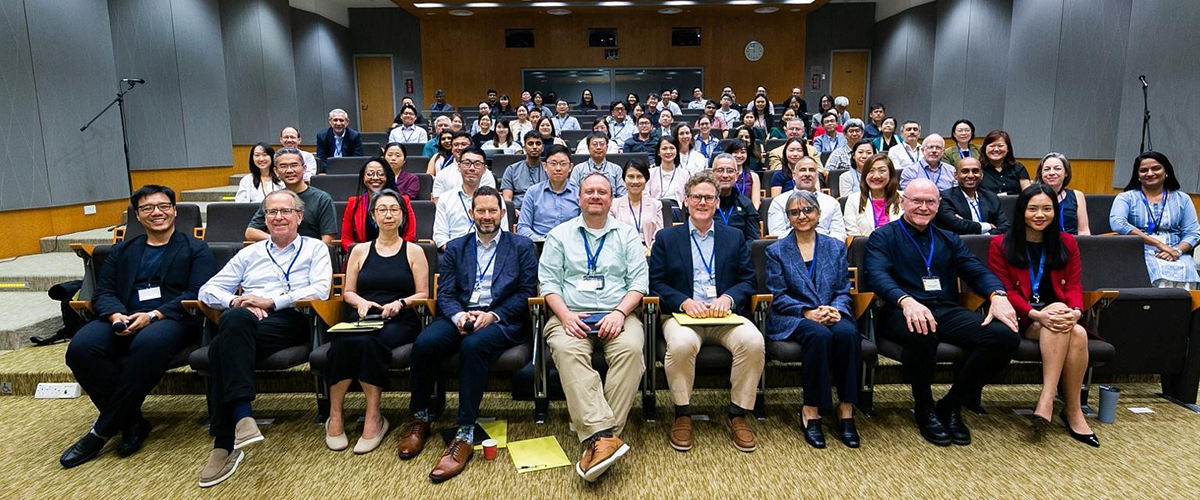 Participants gather at the Durham and Singapore Horizon (DASH) Symposium at Duke-NUS Medical School. Designed to strengthen long-term research and education collaborations between Durham and Singapore, DASH reflects the partnership’s commitment to building sustained, impactful connections across institutions. Photo courtesy of Duke-NUS.
 -
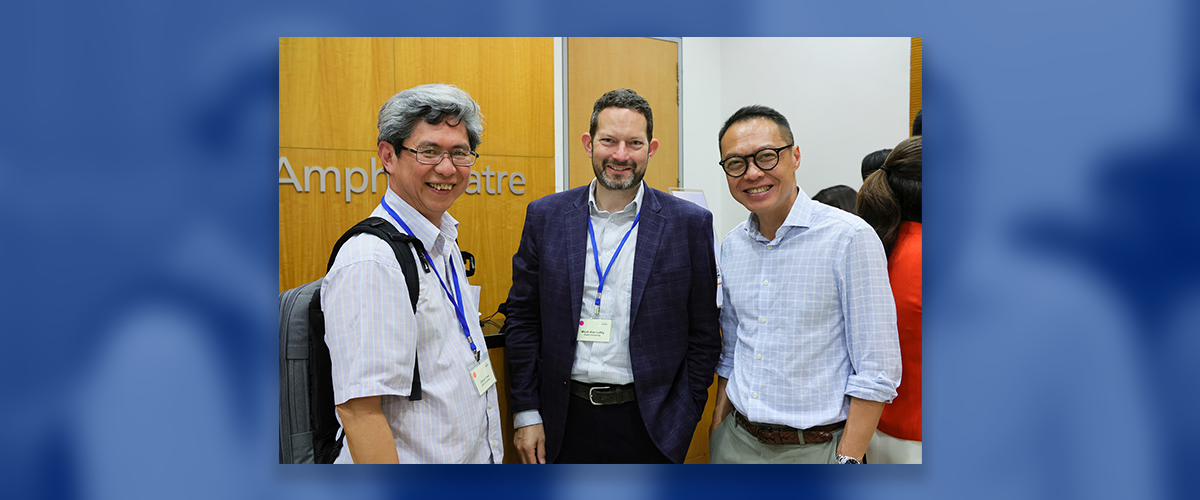 Relationships built through programs like DASH help transform shared research interests into long-term collaborations. Here, Professors Cliburn Chan, Eng Eong Ooi, and Luftig gather during the symposium at Duke-NUS Medical School. Photo courtesy of Duke-NUS.
 -
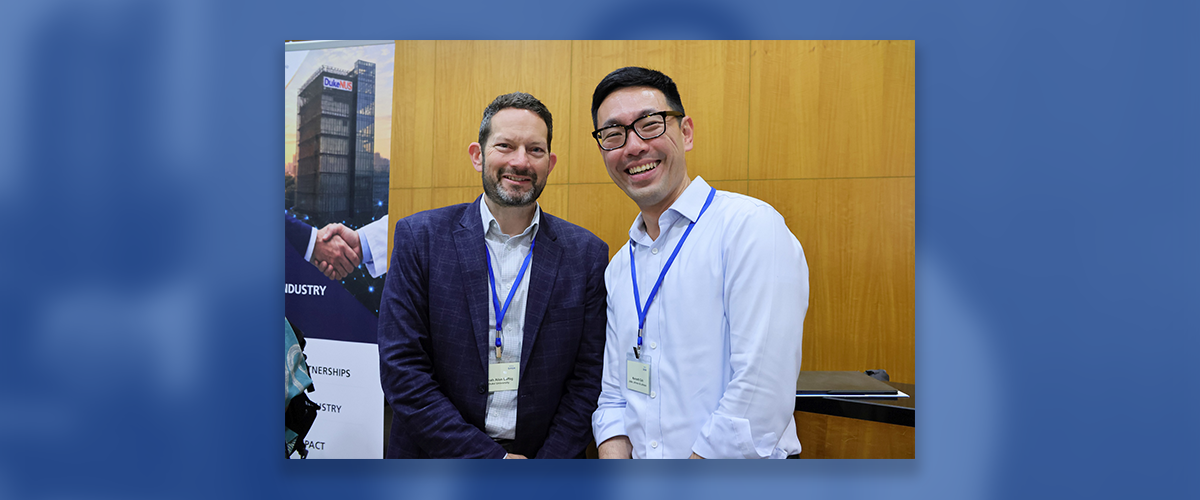 The strongest collaborations are often built through relationships that endure over time. During the DASH Symposium, Luftig reconnected with Kenneth Goh of Johnson & Johnson, a longtime colleague. Photo courtesy of Duke-NUS.
What has been the most rewarding part of holding a joint appointment?
The most rewarding part has been seeing how much interest clinicians and translational scientists have in the questions my laboratory studies and realizing that our basic science work can also help address challenges they encounter in practice.
It is also exciting to have an active laboratory embedded in a mature medical-school and clinical-research environment halfway around the world. Establishing the lab, recruiting our research staff, and watching projects begin to take shape with collaborators has been deeply rewarding. The next step is to sustain that momentum through publications, trainee exchanges, and competitive grant support.
What would you say to a Duke faculty member who is considering getting involved with Duke-NUS for the first time?
Go for it but begin thoughtfully. Start by identifying enthusiastic collaborators with a genuinely shared scientific or clinical question. Work together on a modest project first, learn each other's styles and expectations, and then decide whether there is a foundation for something larger.
The Duke-NUS Travel Grant Program is an excellent way to begin. My own first visit to Singapore gave me the chance to meet faculty, present my work, and understand the scientific and clinical environment firsthand. Those initial conversations can be the basis for durable collaborations.
The Duke-NUS Research Collaboration Pilot Projects Program is another important mechanism. It can help collaborators test an idea, generate preliminary data, and determine whether there is a compelling basis for a larger external grant.
The time difference is real and can make close coordination difficult. But if the scientific question matters to both sides and collaborators are committed, the relationship can be exceptionally productive.
I would also encourage faculty to speak with senior colleagues who have worked across Duke and Duke-NUS. They can offer practical advice about building projects, navigating institutional and grant processes, and making the most of the opportunities available through the partnership. Their experience can help shorten the learning curve and make those first collaborations more successful.
If you had to describe the Duke-NUS partnership in one sentence, what would you say?
The partnership gives scientists, clinicians, and trainees a unique opportunity to combine complementary expertise, cultural perspectives, and clinical strengths to tackle important problems in human health.
More Stories to Come
The story of a partnership is often told through milestones and agreements, but its lasting impact is found in the relationships that take shape over time. From pilot grants and research exchanges to new laboratory models and innovative collaborations, Luftig's journey reflects the many ways Duke and Duke-NUS create opportunities for discovery across both institutions. As the partnership continues to evolve, new stories of innovation and shared purpose are still being written.
Thank you for following the inaugural edition of The Space Between. Future installments will be published on the Office of Duke-NUS Affairs website and shared on LinkedIn, highlighting the people and collaborations that continue to bring the two institutions together.