
Second Year Student Blog: Sydney Senn
Push Beyond the Classroom
During didactic training, you will rarely have the opportunity to practice with a standardized patient whose disability status meaningfully factors into your medical decision-making. Disability itself cannot truly be “standardized,” because every person experiences disability differently, and every condition exists on a wide spectrum. You might have a lecture or two about working with disabled populations, but there will not be enough time to fully explore the nuance of disability and how best to support the needs of this community.
And as with anything, sitting in a classroom can never replace navigating the authenticity of a shared experience that pushes you beyond your comfort zone. Disability is something that is deeply personal to me, and I would love to show you more ways to create high-impact interactions with patients and community members.
Language Matters—but Not in the Way You Might Think
Disability is not a bad word. By shying away from mentioning disability through euphemisms like “special needs” or “differently abled,” we risk reinforcing the idea that disability is something shameful rather than a natural variation within our population.
Using clear, standardized language also makes it easier to identify and access available resources. Euphemisms can create a divide that allows people outside the disability community to view the needs of disabled people as separate from human needs as a whole. This opens the door to debate rather than the dignity every person deserves.
The reality is that anyone could become disabled at any time, and you cannot fully understand the daily barriers associated with disability unless you experience them firsthand. So, let’s talk about what you can do to become a better ally.
Get to Know Your Community and Learn How to Work Alongside Them
It’s okay to do your research first—and you should! Look for organizations that are committed to their mission and excited to share their work with you. Ideally, these organizations should partner closely with the community and have community representation in their leadership.
Here are a few Duke and Durham organizations/events I have had the opportunity to participate in:
Special Olympics
I coached a season of swimming with Special Olympics North Carolina: Durham County. We practiced every week, and I loved hearing about everyone’s goals for the day during our group stretch. Some athletes simply wanted to move their bodies in a way that felt empowering, while others were working toward time standards, relay records, or improving their butterfly technique.
At our final meet of the season, I got to celebrate alongside my athletes and their support systems. We reminisced after every medal and reflected on the hard work that had brought everyone to that moment.
People with disabilities face distinct barriers to physical activity. By cultivating positive and accessible opportunities for exercise, we can help reduce barriers to participation and promote health and well-being.
Adaptive Cooking: Lifestyle Medicine
With support from the Lifestyle Medicine Interest Group, I hosted the first adaptive cooking class at Duke’s Campference. I worked with participants ages 16–24 who were experiencing disability and chronic illness. We discussed barriers to getting involved in the kitchen and introduced adaptive equipment designed to reduce fatigue and make cooking more accessible.
We prepared snacks together, but we also talked about the lived experience of disability and shared strategies for navigating the kitchen.
Getting patients to discharge is a big deal, but it is equally important to reconsider the world they are being discharged into. The world is not designed for disabled bodies, and society itself can create additional barriers for some individuals. Everyday tasks can become incredibly arduous, but there are tools that can make them easier.
The best part is that many of these kitchen tools were designed for “convenience” and “ease” without disabled people specifically in mind. This demonstrates the value of universal design: tools and environments created to improve accessibility for disabled individuals can ultimately benefit everyone.
Triangle Disability and Autism Services
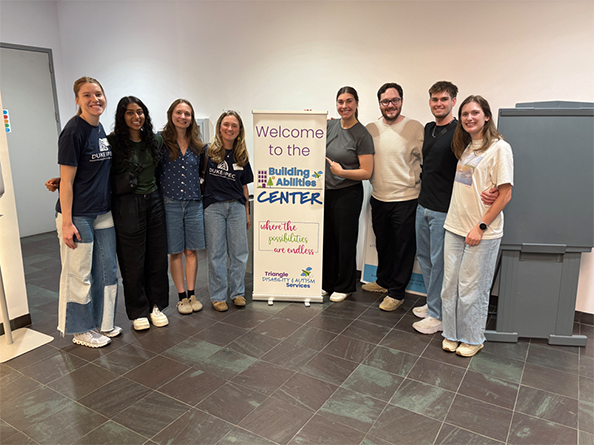
I volunteer with Triangle Disability and Autism Services to help create a safe and accessible environment for more than 30 adults with varying physical and intellectual disabilities. My favorite activity is calling bingo—and trust me when I say the prizes are always very exciting.
I also organized an event through Duke IPEC SAC to help interprofessional team members become more comfortable working with patients with disabilities. We organized games, including a very competitive round of UNO, as well as crafts, snacks, and a movie so that every participant had an activity they were excited about.
Above all, we fostered an inclusive space for social connection and community by creating opportunities for welcoming energy and conversation.
Adaptive Sports Day
Adaptive Sports Day brings together interprofessional learners and community athletes with disabilities to explore the impact of accessible fitness. Through partnerships with North Carolina Adapted Sports and the Triangle Thunder Wheelchair Basketball team, students were invited to learn the basics of adaptive sports.
While my wheelchair basketball skills need lots of improvement, it was exciting to hear directly from athletes about how accessible sports equipment can help them push their limits and participate fully in the activities they enjoy.
Nourish to Flourish
This IPEC seminar was a four-week course focused on malnutrition in patients with dementia. Diet plans are carefully constructed, vitals are diligently tracked, and labs are trended throughout hospital visits, but sometimes the root causes of malnutrition in this population are missed.
We discussed how seemingly basic actions—such as opening food containers, sitting a patient upright to eat, or making sure they have adequate lighting to focus on their plate—can make a meaningful difference.
Taking an extra second to set a patient up for success during mealtime might be all they need to improve their intake. That is something every member of the healthcare team should be looking out for.
Carrying It Over to the Clinic
According to Iezonni et al. (2021), only 40.7% of physicians reported feeling very confident in their ability to provide effective care to disabled patients, and there is a significant gap in data regarding other healthcare professions. This is why gaining exposure to disabled populations early in clinical training is so crucial.
While you will build your own clinical style over time, let’s review some of the basics.
If you need an answer to provide better patient care, don’t be afraid to ask the question. People with disabilities are experts in their own lived experiences, so make sure you are using the resource right in front of you. Not only can this improve your care, but it also shows the patient that you are motivated to tailor your clinical guidance to their individual needs.
Be conscious of—but not biased by—the label in the patient’s chart. For some symptom presentations, a patient’s disability status may be highly relevant; for others, it may not be. Check your biases at the door and continually reflect on encounters for opportunities to improve.
Ask the patient what they want, and truly listen to their answer. If the patient has brought a caregiver, speak to the patient directly and, when appropriate, find time to speak with them privately. Sometimes the treatment that is most convenient for a caregiver is not necessarily in the best interest of the patient. Your job is to advocate for your patient while finding a balance that respects everyone involved.
Your Outside Perspective Is a Strength
As my fellow and future classmates move through rotations, it can be difficult to recognize our value as learners on the medical team. Our colleagues have been comfortable in their roles for a long time, and sometimes it feels like they are all sharing the same brain that we do not have access to yet. But I encourage you to recognize your outside perspective as a strength.
One of my friends in the program shared a story with me that sums this up beautifully. Her team was discussing seemingly poor treatment adherence in a patient who was missing blood glucose checks. They considered everything from starting new medications to revisiting the original diagnosis. While all of those possibilities sound complex, the answer was simple.
She pointed out that the patient had a visual impairment and likely could not see the numbers on the glucometer.
When I write it out, I am sure it seems obvious. But she considered it because of her experience working with disabled populations, while no one else on her team had mentioned it.
That is accessible patient care.
As our medical knowledge grows, I encourage you to revisit the real-life experiences you had as a foundation for PA school. Those experiences are not separate from your clinical education. They are part of it.
In a world full of questions, sometimes the answer can be found in the people and communities who have already taught us where to look.
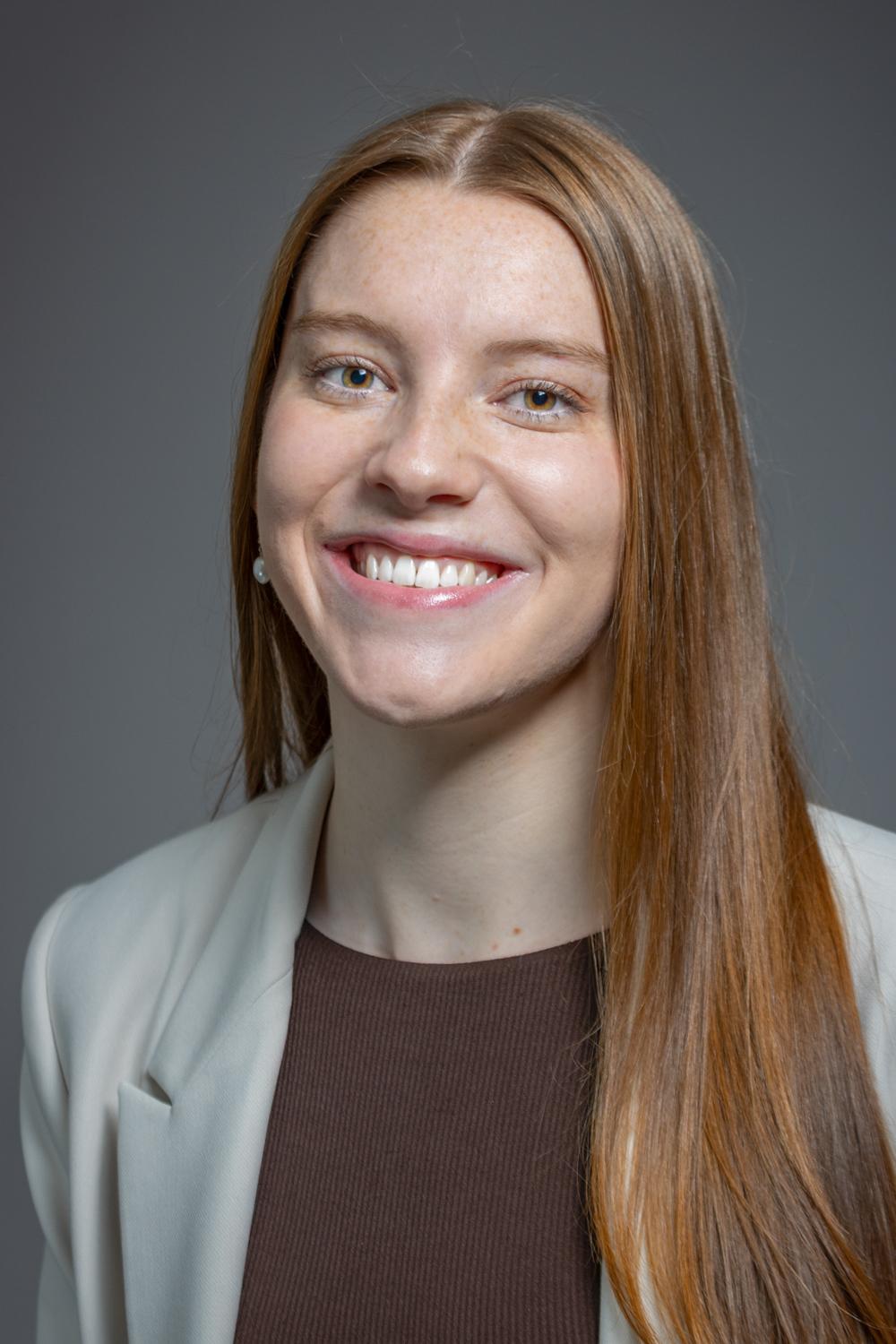
Sydney Senn is a second-year student with the Duke Physician Assistant Program. Email sydney.senn@duke.edu with questions.
Editor’s note: Duke Physician Assistant Program students blog monthly. Blogs represent the opinion of the author, not the Duke Physician Assistant Program, the Department of Family Medicine and Community Health, or Duke University.