
Second Year Student Blog: Hamed Akrami
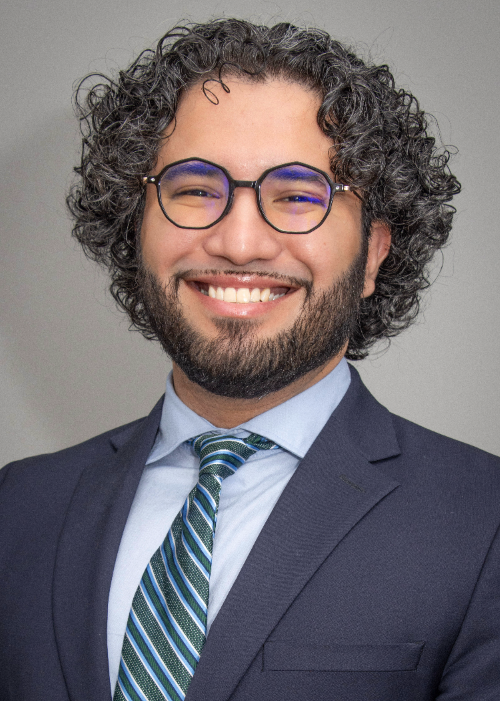
While I always knew I wanted to go into medicine, I never fully believed I was capable of doing so. As many of you who are reading this are aware, every step of the process of becoming a medical professional tests you in new ways, constantly reminding you of how much there is of both you and the world that you’re unaware of. Although I knew on paper I was a good candidate for PA school, the idea of absorbing all the information provided during the didactic year into my brain or embodying the dream version of myself as a PA during the clinical year, filled me with a dread I’ve never experienced before. So much so, I stored these fears away deep in my mind until I needed to deal with them. Imagine my surprise and disbelief when I received an acceptance letter from the number one PA program in the country. I am currently on my eighth rotation, and a part of me still doesn’t believe it!
As I started my didactic year, those fears of the challenges ahead could no longer be pushed aside. They were the main beasts in front of me now. Throughout high school and my undergraduate program, I did most of the studying by myself, especially during the COVID years. However, being in a different state, away from my entire community back home, and in an apartment that was minimally decorated and could not yet be called home, made the idea of repeating this study method a suffocating nightmare. In front of me was a topic list of every medical condition, diagnostic study, medication, screening guidelines, and more that I needed to ingrain in my head within a year, with no familiarity around to lean on. As someone who grew up in an Afghan and Muslim household, community and family were always a given, and so a new fear started to set in: What if I don’t make any meaningful relationships?
Looking back, I wish I had simply told myself to calm down and listen to the phrase that sparks outrage each time it’s uttered: Trust the process. As I got ready for my first exam, I made it a goal to join a study group comprised of students who were in a similar position as I was: trying to make sense of the material and hoping to find others to lean on. Although I didn’t continue studying with this group, I am eternally grateful to each of them, as they helped me break out of my shell a bit. As the days went on, I realized that although PA school is a frightening beast when you first start, this program makes it impossible to feel alone. My seat-buddies and my PAC group introduced me to their friends, and after around a month, we cultivated a friend group that to this day is bound by cackles, trauma, and undying love.
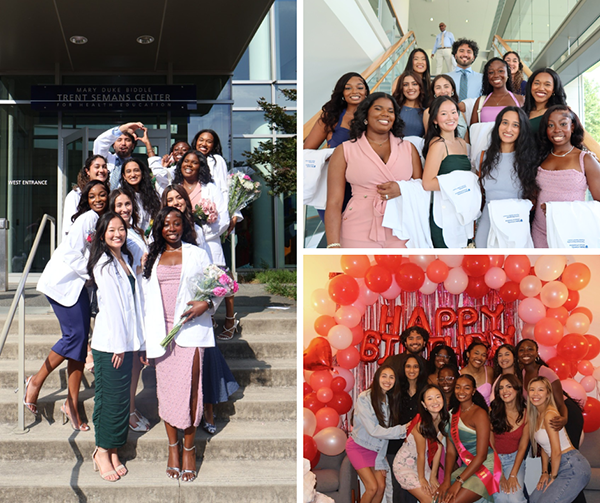
However, our next issue arose when we realized we didn’t have any time to get to know each other outside of class and studying. So, we decided to make our own study group! After long days of 8 am – 5 pm classes, you could find us in a study room in the DPAP building with a cornucopia of snacks, countless stories and lore to share, abdomens and cheeks sore from laughter, and hours of studying together. As we discussed topics together, we shared our questions with the group, and with my background in tutoring, I was able to help by breaking down some of the complex topics. I was surrounded by the most brilliant minds I have ever had the privilege of knowing, so I was afraid I would end up “mansplaining” everything, but my friends allowed me the privilege of inviting them to my mind and explaining the concepts the way I understood them. Soon enough, I was leading study sessions almost every day where we discussed the topics, reviewed where each of us struggled with the concepts presented, and shared each of our own perceptions of the topic to help each other. Although I was leading these sessions, what I gained is priceless, both in terms of understanding key concepts and being a part of a microcosm where everyone is genuinely looking out for each other.
Although I was able to do very well with this study method throughout my didactic year, there was unexpected beauty behind these sessions. I started to create unbreakable bonds with my study partners. These passionate, brilliant, and deeply caring women have become sisters to me through these sessions. In between crafting differentials for dyspnea and differentiating between atrial flutter vs. fibrillation, we would share our stories and current struggles. We have gone through tumultuous political events, heartbreak, family struggles, and medical scares together, and then jumped right back into the next topic! This type of emotional whiplash somehow bonds complete strangers into best friends quicker and stronger than Dermabond on a wound.
When looking back at my didactic year, I am filled with love, appreciation, and warmth. This group, along with the other friends I made along the way, have changed me for good, and I will forever be grateful for each and every one of them. I hope this story shows that PA school, especially the didactic year, can be both a great challenge and also two of the most important years of one’s life.
Hamed Akrami is a second-year student with the Duke Physician Assistant Program. Email ahmad.akrami@duke.edu with questions.
Editor’s note: Duke Physician Assistant Program students blog monthly. Blogs represent the opinion of the author, not the Duke Physician Assistant Program, the Department of Family Medicine and Community Health, or Duke University.