
Second Year Student Blog: Daren Solis

The clinical year can be tumultuous. I recall joyfully starting my first rotation, but by rotation six, burn out was undeniable. It had only been a couple of months into my training, and I had succumbed to a mindset of monotony, moving from one end-of-rotation exam to the next. By rotation seven, my global health elective in Tanzania, I had no expectations.
“We shoot in the dark,” one provider said.
Late evening heat pooled in the crowded air of the unlit classroom while the smell of methylated spirit spread. Phones being used as flashlights to view antecubital fossas, tourniquets, cotton balls, and tape moved through the classroom like a relay stick. This was nothing new to students of Machame Girls Secondary school as they laid on the exam tables eagerly donating blood. My task: moving across each partitioned donor station, holding hands, providing verbal reassurance, monitoring any vasovagal episodes, and gently agitating each collection bag.
Earlier that afternoon, my friend Kiera and I had given an unexpected talk to the school, highlighting the importance of donating blood. I recall the rush of anxiety pulsing through my body as I uttered the word ‘mambo’, or ‘hello’ in Swahili. The students responded with giggles, excited to meet the American foreigners. What drove their excitement the most was the opportunity to donate to their brothers and sisters across the region who needed it. We had no idea then that we would end up working in the dark when lightbulbs were nowhere to be found.

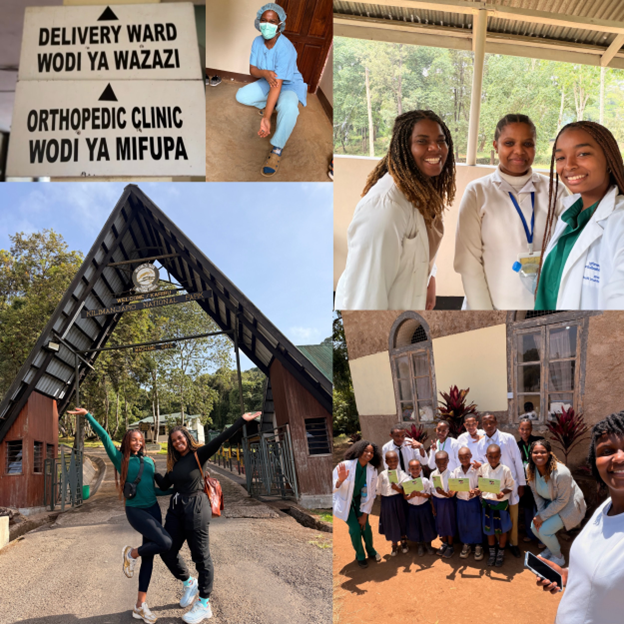
This experience, among many others, was not what I envisioned when I journeyed to the mountainous terrains of Kilimanjaro to Machame Lutheran Hospital in Tanzania.
One of the first things that called out to me was how ingrained faith is in their practice of medicine. We began each morning with worship in the chapel, which carried into the OR through prayers before major surgeries. It reminded me that medicine is not only about treatment plans and procedures, but also compassion, humility, and intentionality.
Each day we chose our own adventure working across different specialties: orthopedics, OBGYN, infectious diseases, internal medicine, dentistry, pediatrics, etc. This included being humbled by the language barrier and learning from amazing physicians who practiced medicine through a different lens. One physician told us during an ICU case involving mechanical ventilation, “When the best is not available, the available becomes the best.” It captured the reality of practicing medicine in a resource-limited setting and relying on strong clinical judgement.
Before PA school, I volunteered with Partners in Health Engage, a grassroots organization that fights for healthcare equity both locally and abroad. I saw the impact legislation and healthcare policies have on access to care, and that change is often incremental. I witnessed this intersection in Tanzania, where care did not end in the hospital. Providers engaged in community outreach following patients in their homes addressing barriers like transportation and medication access. This reinforced real change extends beyond the bedside or immediate clinical setting. It relies on policies that strengthen the healthcare workforce, support sustainable care, and address patient challenges. It also embodies the provider I have wanted to become: one who heals, meets patients where the system falls short, connects them to needed resources, and advocates for healthcare policies that shape the care they receive.
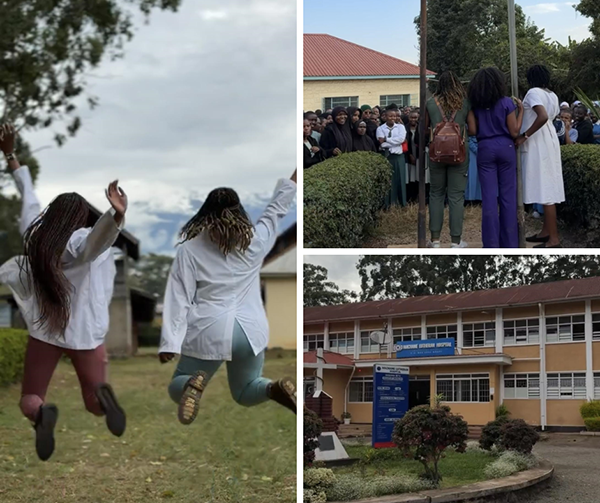
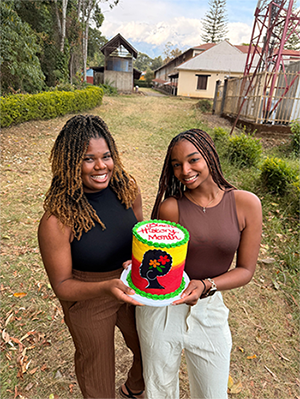
Uniquely, while my weekdays were spent in patient care, weekends allowed me to immerse myself in the culture. I won't forget celebrating Black History Month, which offered a deeper connection to our history and identity. I also spent time appreciating the beauty of the land while embracing ‘pole pole,’ a slower, more intentional pace of life. This moment to pause and reflect revealed that by getting wrapped up in the nature of exams, hard clinical schedules, a remediation, or simply moving from one rotation to the next, I had almost forgotten my why.
Thus, this experience has been a turning point in my PA school education, grounding me when I needed it most—for which I am eternally grateful. I encourage anyone interested in the slightest in global health or a non-traditional elective to apply for the global health elective. I promise you won’t regret it.
Daren Solis is a second-year student with the Duke Physician Assistant Program. Email daren.solis@duke.edu with questions.
Editor’s note: Duke Physician Assistant Program students blog monthly. Blogs represent the opinion of the author, not the Duke Physician Assistant Program, the Department of Family Medicine and Community Health, or Duke University.