
New leaders, shared vision: Building community and opportunity across Duke
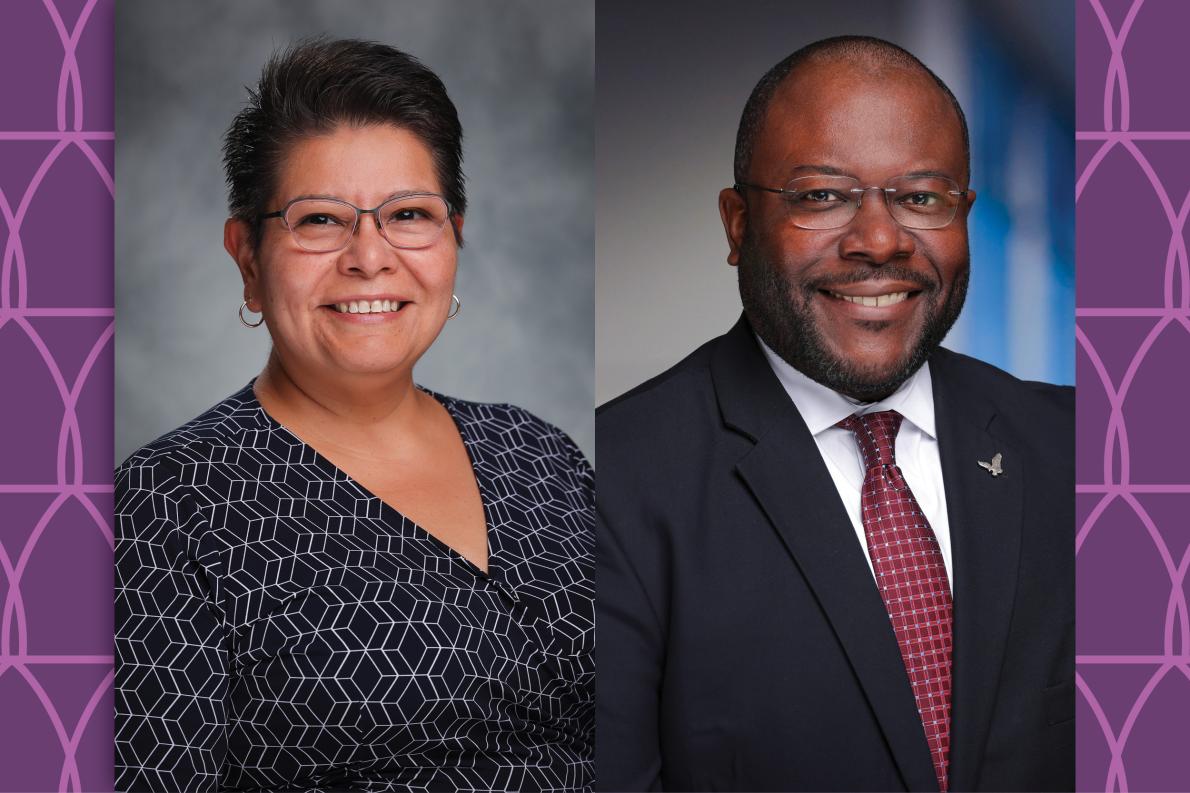
They may lead different employee resource groups (ERGs), but Magaly Guerrero and Antonio Jones share a similar vision for what belonging at Duke can look like. It’s a vision that will guide them as the newly named leaders of Duke University School of Medicine’s two ERGs: ¡DALHE! (Duke Advancing Latiné/Hispanic Excellence) and ME² (Motivate, Mentor, Educate & Empower) Black Employee Resource Group.
ERGs, which are open to all employees, are voluntary, employee-led groups that foster connection and a sense of belonging. Guerrero is the new lead for ¡DALHE!, and Jones now leads ME². While they’re new to their roles, they’re not new to what ERGs can offer.
Guerrero, a senior clinical research coordinator in the Department of Obstetrics and Gynecology, has been at Duke for more than 16 years and first got involved with ¡DALHE! in 2023. Jones, a financial management analyst at the Duke Clinical Research Institute, has been at Duke for 11 years and began engaging with ME² shortly after the group formed in 2021. Both say ERGs have been pivotal to their journeys, offering space for belonging, professional growth, and mentorship.
Below are a few ways they say ERGs — whether through ME2, ¡DALHE!, or any of the other groups across Duke — help employees thrive.
Communities of belonging
ERGs create places where titles don’t matter and people connect. Guerrero said ¡DALHE! brings colleagues together in an environment where everyone feels welcome. “What’s inspiring is that everyone is friendly and open,” she said. “Everyone's approachable, no matter what their role is within the Duke system.”
For Jones, belonging also means seeing the whole person — not just a job title, but the talents, histories, businesses, and community roles that employees bring with them. ERGs also allow people to show up as their full selves in the workplace.
“Everyone wants to belong to something,” Jones said. “Whether they belong to the local chess club, or they might go golfing with golfing buddies, everybody wants to belong to something. An ERG is another avenue for employees to belong in the workplace.”
Professional development
Professional development is a shared priority for both ME2 and ¡DALHE! ME² offers monthly events open to all, featuring speakers on topics ranging from financial literacy to mental health. ¡DALHE! frequently hosts networking events and informal gatherings called Virtual Cafecitos with guest speakers.
One of Jones’s first goals as ME²’s new leader is to re-engage employees. Staying connected to the ERG, he said, keeps members aware of opportunities, resources, and pathways for personal and career growth. He and the ME² leadership team regularly seek staff input to shape monthly topics around what employees want and need.
Guerrero emphasized the power of exposure: simply introducing employees to the work of colleagues they might not otherwise encounter can spark ambition and open doors. She has attended multiple Hispanic Heritage Month events hosted by ¡DALHE! showcasing staff and faculty across the university and health system.
“I've always found those inspirational,” Guerrero said. “I was just awed by the work that's being done that we don't know about.”
Jones said he was personally inspired by a candid conversation with Chancellor Emeritus A. Eugene Washington, MD, who spoke informally and candidly, without slides, at an ME² event about his journey, family, and lived experiences.
“He was very open and candid about his experience coming up through administration,” Jones said.
Moments like these reinforce the idea that, regardless of title, ERGs create space for honest conversation, learning, and connection.
Mentorship as a transformative force
Guerrero has seen the impact of mentorship firsthand. Mentors and supportive coworkers gave her the courage to apply for her current position, just six months after joining the Department of Ob/Gyn. Even after earning a master’s degree while working at Duke, she sometimes questioned whether she was “qualified enough.” A provider she worked with helped her see that she was indeed qualified.
“It’s that type of guidance, that type of support that has really pushed me to do better for myself, to think about possibilities,” she said. “Everyone has a different path. Mentors can present opportunities or paths that you didn’t realize were there.”
These lived experiences fuel her desire to help others overcome similar barriers. As ¡DALHE!’s new leader, mentorship is one of her top priorities.
Navigating a large, complex institution
Both Jones and Guerrero see ERGs as essential to making Duke feel smaller and more connected.
Jones said that in an institution as large as Duke, employees can often feel siloed. ERGs help colleagues meet face-to-face and build relationships that might not happen otherwise.
“You can email someone for years and never know what they look like,” he said. “ERGs give you that opportunity to meet people you might not otherwise meet or put a face to a name.”
Ultimately, Jones believes ERGs strengthen organizational culture.
“ERGs are important because they connect the humanity of organization,” he said. “It's easy to get tied up in tasks. People don't leave jobs because of the work. They leave because of the culture. ERGs allow organizations to break down some of the walls within an organization.”
Jones said research has shown that “employers that embrace ERGs will have better outcomes and better retention rates, and much happier employees.”
“I’m grateful to our outgoing ERG leaders, Raquel Ruiz from ¡DALHE! and Annise Weaver from ME², for their vision and dedication,” said Kevin Thomas, MD, vice dean for culture, engagement, and impact, and professor of medicine. “They built communities of belonging that uplift our colleagues and strengthen our culture. Their leadership created the foundation on which Magaly and Antonio will continue to help our employees thrive.”
Both leaders are also open to collaborating across ERGs. As they settle into their roles, they see natural intersections — especially around mentorship and professional development — that can benefit the broader Duke community.