
Kenneth Ferrell, a Pioneer of Duke’s Physician Assistant Program, Passes Away
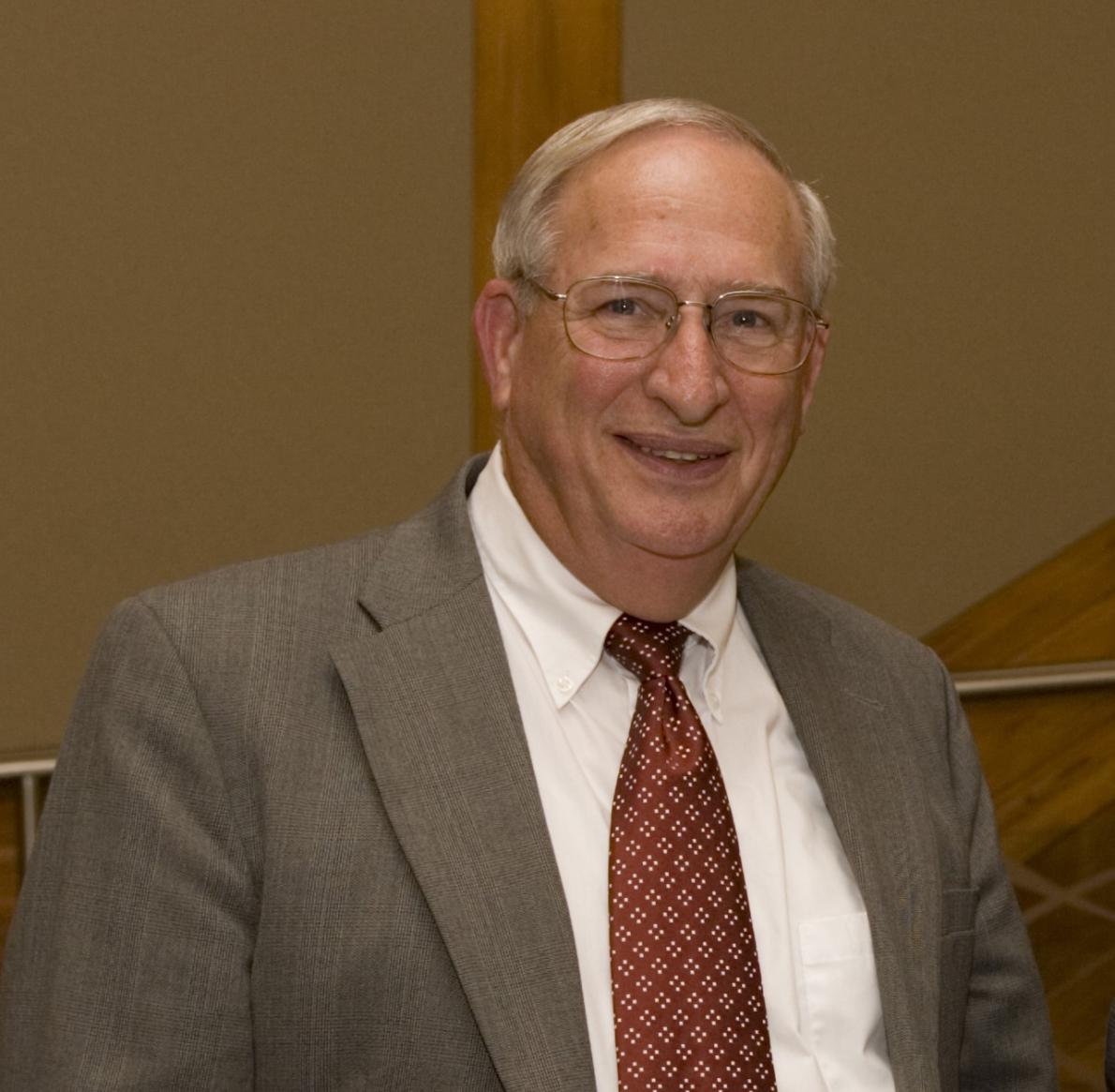
Kenneth Ferrell, PA, the last surviving member of the Duke University Physician Assistant Program's inaugural class, passed away earlier this year, leaving behind a remarkable legacy.
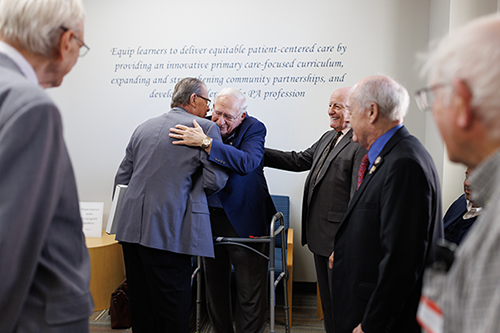
As one of the first students in the nation’s first PA program, Ferrell helped usher in a new era of health care delivery and shaped what is now one of the nation’s fastest growing medical professions.
Part of a speech he gave at the PA History Society’s annual conference in 2022 is typical of the advice he often gave to the next generation. “Every time I have an opportunity to speak to PAs or students, I challenge them to always remember that patients do not care how much you know until they know how much you care,” he said during the speech. “And resist becoming so busy that you do not have time to show compassion and to be a good listener.”
Ferrell said in 2022, “Being the first formally trained PA does not make me a better PA, I was just in the right place at the right time.”
“Ken was reserved, gentle, and humble,” said Reginald Carter, PhD, PA, former director of Duke’s PA Program and the Division for PA Education.
“Later in life, he was surprised by the recognition he received. I attended a meeting of Navy Physician Associates at the White House with Ken, where comrades and admirers gathered around him for photographs,” Carter said.
Eugene Stead, Jr., MD, launched the pilot physician assistant program at Duke in 1965 to address a growing shortage of physicians in the U.S. and to fill a gap between doctors and nurses. His vision was to tap corpsmen and medics to extend the arms and legs of the physician.
Stead recruited four former Navy hospital corpsman who wanted to advance their skillsets, including Ferrell, a Durham native.
“I might not be alive today if I had not been accepted into that first PA class,” Ferrell said. At that time, enlistments for many corpsmen were being extended due to the Vietnam War. “Many of those people who went to Vietnam did not make it back, so I’ve got many reasons to be thankful for the program,” Ferrell said during an interview with the Duke University School of Medicine.
A friend notified him about Stead’s plan to begin the Physician Assistant program at Duke while he was serving on the USS Ashland in the Caribbean. Ferrell asked him to arrange an interview with Stead, and shortly after, he was accepted to the program.
“When I received my letter of acceptance, my ship was in the Mediterranean. The Navy flew me back to the States and discharged me 30 days early so that I could start at Duke,” Ferrell said. At 21, he was the youngest corpsman admitted to the program.
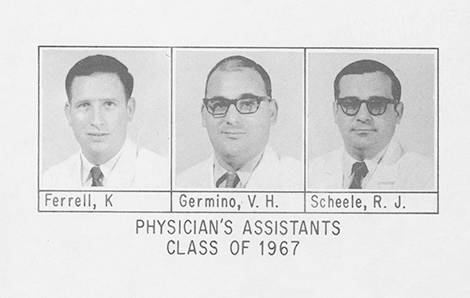
“We worked hard to inform patients and doctors and nurses as to what this new member of the health care team was all about,” Ferrell said. He graduated alongside Victor Germino and Richard Scheele in 1967. One year later, they partnered with first- and second-year students to launch what’s now known as the American Academy of Physician Associates.
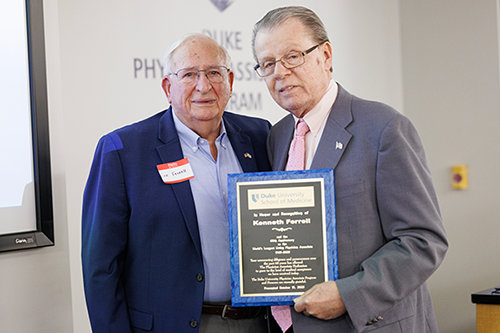
After graduation, Ferrell worked with Herbert Sieker, MD, a well-respected pulmonologist and cardiopulmonary physiologist in the Duke Department of Medicine, for the next 20 years.
When Sieker retired for medical reasons, Ferrell joined Duke’s Private Diagnostic Clinic (PDC) as an administrative manager, where he oversaw reimbursement, coding, and compliance regulations. He also served as the clinic’s medical auditor.
Ferrell retired in 2007 and was inducted into the PA program’s Alumni Hall of Fame in 2009.
“I will always remember seeing him at the Veteran’s Garden Dedication at the Stead Center, with pride on his face and tears in his eyes,” Carter said. The Garden honors PAs who have served or are currently serving in the uniformed services.
Duke’s PA program celebrated its 60th anniversary in 2025.
“I would be a PA all over again, but if my career could start over, I would never stop being a clinical PA,” Ferrell said.
Return to Duke Physician Assistant Program