
Topping Out of New Research Building Illustrates Significant Construction Milestone
Progress on Duke's newest research building was celebrated with the topping out of the final girder, which was signed by Duke Health and School of Medicine leaders, faculty, staff, and students.

McDonnell Receives Robert R. Ruffolo Career Achievement Award in Pharmacology
Donald McDonnell, PhD, the Glaxo-Wellcome Professor of Molecular Cancer Biology and chair of the Department of Pharmacology and Cancer Biology, has been named the 2017 recipient of the Robert R. Ruffolo Career Achievement Award in Pharmacology. The Ruffolo Award honors the scientific achievements of scientists who are at the height of their careers and who have made significant contributions to any area of pharmacology. Dr.
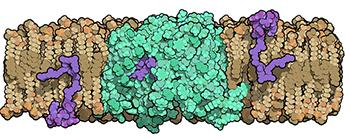
Bacterial Protein Could Aid Development of New Antibiotics
Scientists solve structure of sought-after bacterial protein
Bacterial cells have an added layer of protection, called the cell wall, that animal cells don’t. Assembling this tough armor entails multiple steps, some of which are targeted by antibiotics like penicillin and vancomycin.
Yet one step in the process has remained a mystery because the molecular structures of the proteins involved were not known.

Animal Study Shows Harmful Effects of Secondhand Smoke Even Before Pregnancy
Exposure to second-hand tobacco smoke -- even before conception -- appears to have a lingering impact that can later impair the brain development of a fetus, researchers at Duke Health report.
Using rats in experiments carefully designed to mimic the second-hand smoke exposures that humans encounter, the researchers found that the chemical components of tobacco smoke affect fetal brain development throughout pregnancy.

Jerry Tulis, former director of OEM's Biohazard Science Program, dies at 86
Jerry J. Tulis, Ph.D., 86, associate professor emeritus of community and family medicine, passed away Dec. 24. A funeral mass was held Dec. 30 in Greenville, N.C.
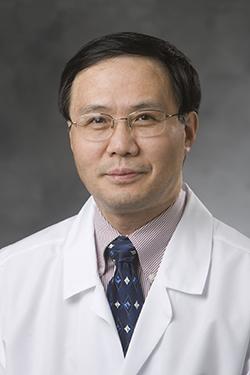
Potential Drug Appears to Ease Effects of Prader-Willi Syndrome
Duke Health researchers have identified a drug-like small molecule that, in animal experiments, appears to be an effective treatment for a genetic disorder called Prader-Willi syndrome.
Prader-Willi syndrome is characterized by poor feeding, growth and weak muscles in infancy, followed by excessive eating, obesity and behavioral problems in childhood. It occurs in about one of every 15,000 births and has no cure.
Common Breast Cancer Mutation Could Be Vulnerable to Drug Combination
Breast cancer cells that carry a certain gene mutation can be induced to die using a combination of an existing targeted therapy along with an investigational molecule tested by Duke Cancer Institute researchers.
When used together in preclinical experiments, the drugs shut down two of the key survival strategies these types of cancer cells use to evade treatment.

Two Duke Teams Tapped to Examine the Molecular Benefits of Exercise
Two Duke Health research teams will participate in a new, $170 million national initiative to delve into the intricacies of how exercise improves health and prevents disease.
Combined, funding for the two projects the Duke teams will be involved in could total as much as $11 million over six years. The National Institutes of Health has announced the grants as part of its Molecular Transducers of Physical Activity in Humans project.
Scientists Develop New Drug Screening Tool for Dystonia
Duke University researchers have identified a common mechanism underlying separate forms of dystonia, a family of brain disorders that cause involuntary, debilitating and often painful movements, including twists and turns of different parts of the body.
Described online Dec. 8 in the journal Neuron, the research has also led to the development of a new cell-based screening test that is being deployed on a large scale to identify new drug candidates to treat dystonia.

David Martinez is the 2016-2019 Recipient of the ASM Robert D. Watkins Graduate Research Fellowship
The American Society for Microbiology (ASM) has selected David Martinez from the Department of Molecular Genetics and Microbiology at Duke University as a 2016-2019 award recipient of the ASM Robert D. Watkins Graduate Research Fellowship.