

In varied roles, Duke Physician Assistant Program alumni answered the call during pandemic
Meet five Duke PA alumni who answered the call during the pandemic.

Duke-led team identifies new coronavirus threat to humans
If confirmed as a pathogen, the novel canine-like coronavirus could represent the eighth unique coronavirus known to cause disease in humans.

Dr. Priya Kishnani Works to Improve the Lives of Children with Genetic Diseases
Dr. Priya Kishnani grew up in a family of physicians, including her mother, a pediatrician, in Mumbai (then Bombay), India. “My mother ran a charitable program, caring for the underserved and indigent throughout her life,” Dr. Kishnani says. “I saw firsthand what it really meant to be a physician: to give hope to your neighbors, and make an impact on the rest of their lives. From then on, I knew this was what I wanted to do.”
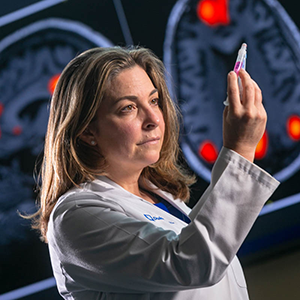
Harnessing the Body’s Ability to Heal Itself
What if we could disable the defense mechanisms that enable cancer cells to evade treatment, or even control their genes to prevent them from developing into tumors in the first place? Can we enhance our brain’s ability to forestall damage from Alzheimer’s disease and other neurodegenerative conditions? Is it possible to develop a vaccine for everything?
SoM Researchers Named Burroughs Wellcome Fund 2021 Investigators in the Pathogenesis of Infectious Disease
Three Duke University School of Medicine researchers were named Burroughs Wellcome Fund 2021 Investigators in the highly competitive Pathogenesis of Infectious Disease (PATH) program.

Into the Deep End
In January of 2020, Loren Robinson, MD’09, and the rest of the leadership at CHRISTUS St. Michael Health System, a 312-bed hospital in Texarkana, Texas, gathered to conduct an annual tabletop exercise in crisis management, mandated as part of the hospital’s regulatory requirements.

An Absolute Duty
When Thom Mayer, MD’77, enrolled at Hanover College in Indiana on a football scholarship, he had no career aspirations in medicine. In fact, he had no career aspirations at all, beyond riding football as far as it could take him.

Newly Identified Antibody Can Be Targeted by HIV Vaccines
Researchers describe an immune cell found in both monkeys and humans that produces a unique type of anti-glycan antibody that can attach to the outer layer of HIV.

Duke Clinical Research Update
Bi-weekly newsletter containing the latest updates from across the Duke clinical research community.

Duke Clinical Research Update May 19, 2021
Research Community News
iRIS/OnCore Updates
DOCR News
Recruitment Innovation Corner
Training Opportunities
Clinical Research Employee Highlights
Partner Resources