
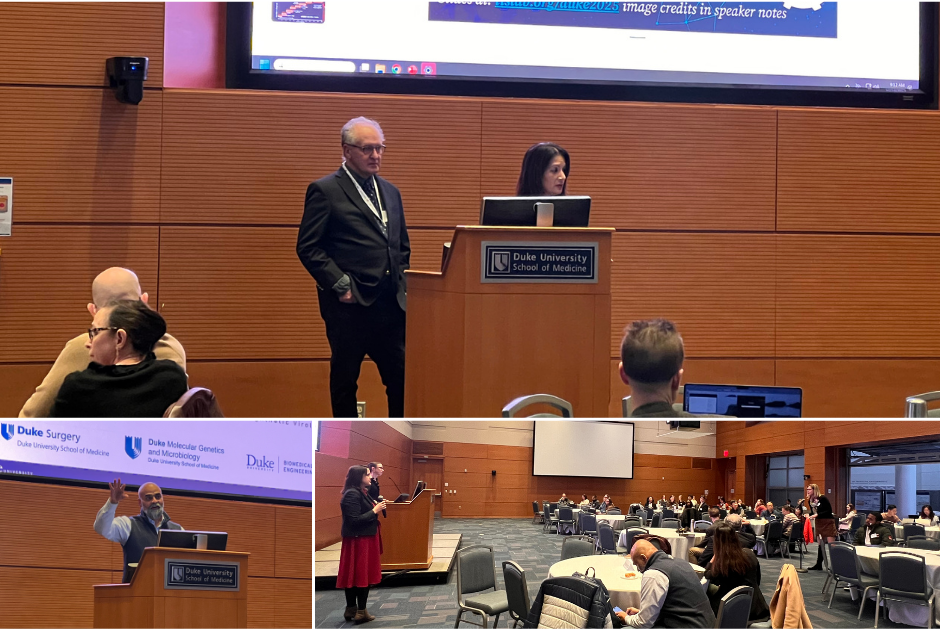
Highlights from the fifth annual Genomics Scientific Retreat
On December 12, the Precision Genomics Collaboratory convened its fifth annual Genomics Scientific Retreat in the Trent Semans Center Great Hall, bringing together faculty, staff, and trainees from across Duke University for a full day of discovery, dialogue, and connection. The retreat showcased the breadth of genomics research at Duke—from foundational science to clinical translation.
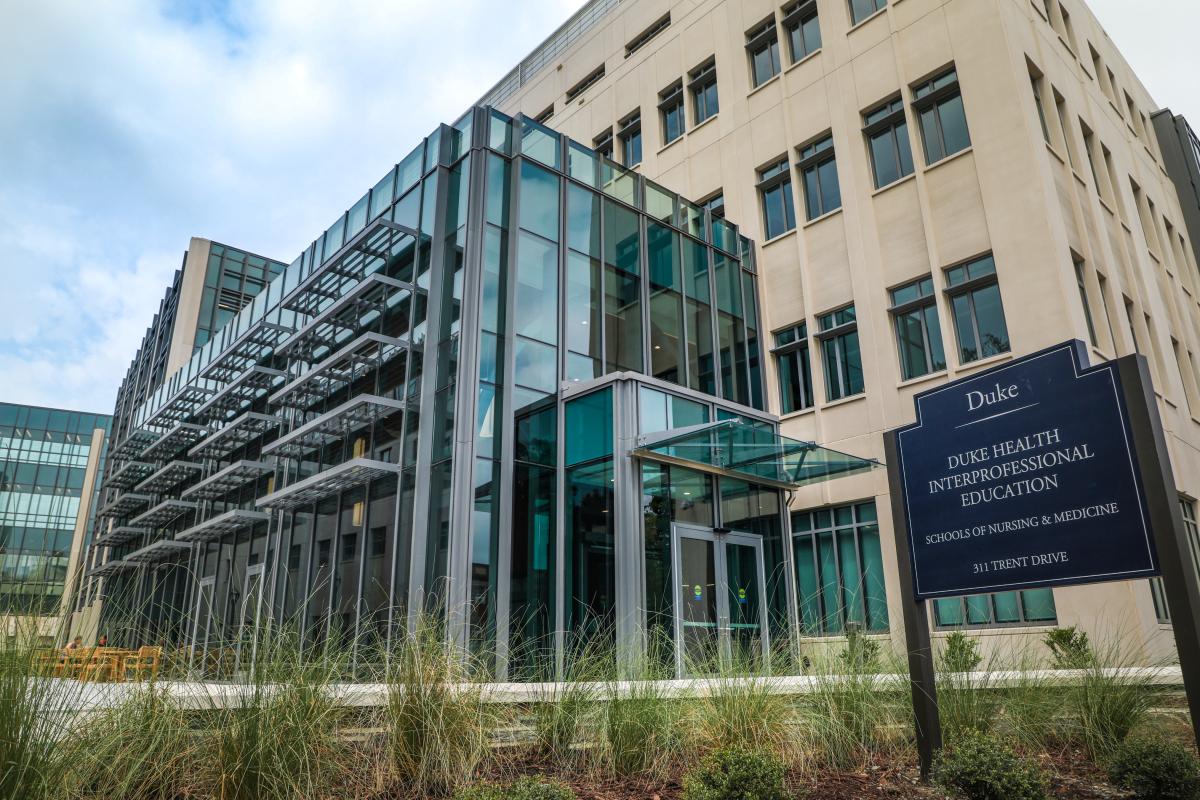
Duke University Joins Landmark NIH Study on Low Back Pain Treatment
A landmark NIH-funded randomized clinical trial published in JAMA provides new insights into managing acute and subacute low back pain (LBP)—one of the leading causes of disability worldwide. The study, titled "Spinal Manipulation and Clinician-Supported Biopsychosocial Self-Management for Acute Back Pain: The PACBACK Randomized Clinical Trial," investigated whether spinal manipulation and clinician-supported self-management are more effective than guideline-based medical care for adults at increased risk of chronic disabling back pain.

Duke OTD Kicks Off 2026 With an Energetic Open House
The Duke Occupational Therapy Doctorate (OTD) program opened the new year with an energetic and well-attended Open House on Saturday, January 3, welcoming admitted and prospective students and their family members to campus for an immersive look at the Duke OTD program.

Empowering Students to Navigate Financial Challenges with Confidence and Innovation
Tiffany Adams, PT, DPT, MBA, PhD, and Tomeico Faison, OTD, OTR/L, FAOTA—both assistant professors of Orthopaedic Surgery—are transforming how Duke DPT and OTD students approach the financial realities of graduate education through the Duke OTD & DPT Financial Leadership Series. Since its launch in 2021, the program has provided students with practical tools for budgeting, debt management, loan forgiveness, and long‑term financial planning.

First Year Student Blog: Nikki Baran
How does one go from rappelling and ascending in and out of crevasses and flying in a helicopter over glaciers as part of their commute to work, to sitting in lecture for eight hours/day at Duke University’s Physician Assistant Program? The journey was far from linear, but I think that’s what I’m most proud of. It is truly my own.

Empowering students to lead financially
In 2021, Tiffany Adams, PT, DPT, MBA, PhD, and Tomeico Faison, OTD, OTR/L, FAOTA, partnered to create an initiative to empower future health professionals with skills to make informed financial decisions.

Jacquetta Melvin Promoted as Associate Program Director of the Duke Physician Assistant Program
Jacquetta Melvin, MPH, PA-C, has been promoted to associate program director of the Duke University Physician Assistant Program. She steps into this role following the transition of April Stouder, EdD, MHA, PA-C, to program director and division chief in November. Alongside her new role, Melvin continues to serve as director of clinical education and is an assistant professor in Family Medicine and Community Health.
PGC Announces Student Pilot Grant Awardees
The Duke University School of Medicine Office of Biomedical and Graduate Education (OBGE) and Precision Genomics Collaboratory awarded 11 pilot grants of $2,000 each to SOM Biomedical PhD students. The goal of these grants is to support our students in scientific and educational efforts to bolster their graduate training experiences.

Le Well December 15, 2025 Newsletter
Our mission is to provide centralized services to support SOM students and others involved in the healthcare learning environment. Check out our website.
Support and Connection
