
Some tissues, like liver and skeletal muscle, can regenerate after injury and can go back to functioning normally. Heart tissue, though, typically scars after injury.
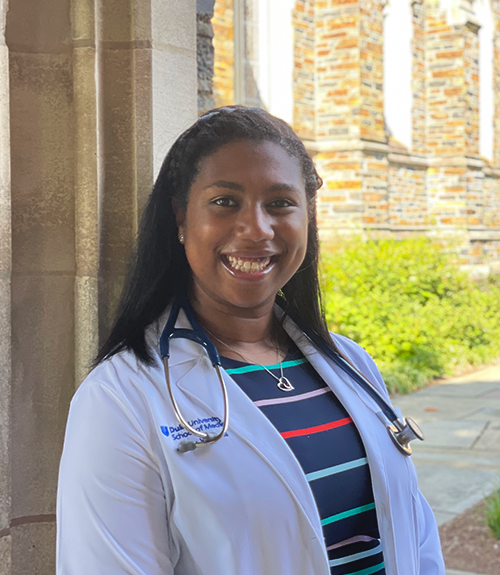
Ashley Williams, a fifth-year MD PhD student, is not only working to understand why heart tissue doesn’t regenerate on its own but also if there is a way to make it regenerate. Her research has helped her receive a highly competitive American Heart Association predoctoral fellowship that supports collaborative research, which went into effect on January 1.
“When the heart scars,” Williams said, “it’s like putting a really stiff patch over the heart, and eventually, that makes other parts of the heart have to work harder.” Over time, the heart can no longer keep up and begins to fail.
During development, heart muscle cells can proliferate, a key process for tissue regeneration, but they largely lose that ability shortly after birth. While this is true for mammals, including humans, it’s not true for everything. Zebrafish, for example, can continue to regenerate heart muscle tissue and fully restore heart function without permanent scarring throughout their lifespan.
“This opened up a realm,” Williams said, “that maybe human hearts could regenerate tissue instead of scar, which could help prevent heart failure or potentially reverse some of the damage.” This has now become the focus of her research – understanding how to promote cardiomyocyte proliferation to enable regeneration in the human heart.
She’s pulled together the laboratories of Ravi Karra, MD, associate professor of medicine and pathology, and Yarui Diao, PhD, associate professor of cell biology. The Karra lab uses stem cell derived models, which allows Williams to study human cardiac muscle cells at different stages to see when they can proliferate and when they lose that ability. Then in the Diao lab, Williams is able to use some of the technologies and genomic tools Diao has developed to see if she can understand how heart muscle tissue proliferates in the first place and how that changes over time.
Williams is hoping her research could help figure out how to reactivate or reintroduce developmental pathways, which are genes and proteins that are active in early periods of development and then shut down. “If you reactivate the developmental pathway in the human heart, you may be able to promote new heart tissue growth” Williams said.
But it’s a tightrope to walk. Too much proliferation of these cardiomyocytes could have unintended consequences, such as tumors. “The goal is: when the heart is injured, can we shift the response toward regeneration by promoting cardiomyocyte proliferation instead of cardiomyocyte loss and scar formation?” Williams asked. “Can we fine tune it and turn it on temporarily?”
Understanding that mechanism could allow for new drug or therapeutic designs.
Bringing researchers together
During Williams’ lab rotations as part of her PhD, she already knew she was scientifically interested in regeneration and genomics and clinically interested in working with and treating patients with heart failure.

“Williams came to us with this idea and was brave enough to take on an extremely complex experimental system,” Diao said. “Very few trainees — even postdocs — can do this kind of work. She learned it, and she made the collaboration work.”
That collaboration has since expanded beyond a single project. Williams’ work helped catalyze ongoing partnerships between the Karra and Diao labs, multiple joint grant submissions, and the formation of a cardiac functional genomics group involving seven labs across campus.
“What’s remarkable is that this all started with a student,” Karra said. “Ashley really is the catalyst.”
“I had this idea, and instead of being told it wouldn’t work, people leaned in,” Williams said. “My mentors were open-minded, invested, and willing to build something new. That spirit of collaboration has been essential to the project’s success.”
For Diao, Williams represents the kind of trainee who defines the next generation of biomedical research. “She’s not only a promising scientist,” Diao said, “she’s also an amazing person — generous with her time, committed to mentorship, and driven by a desire to help others succeed.”