
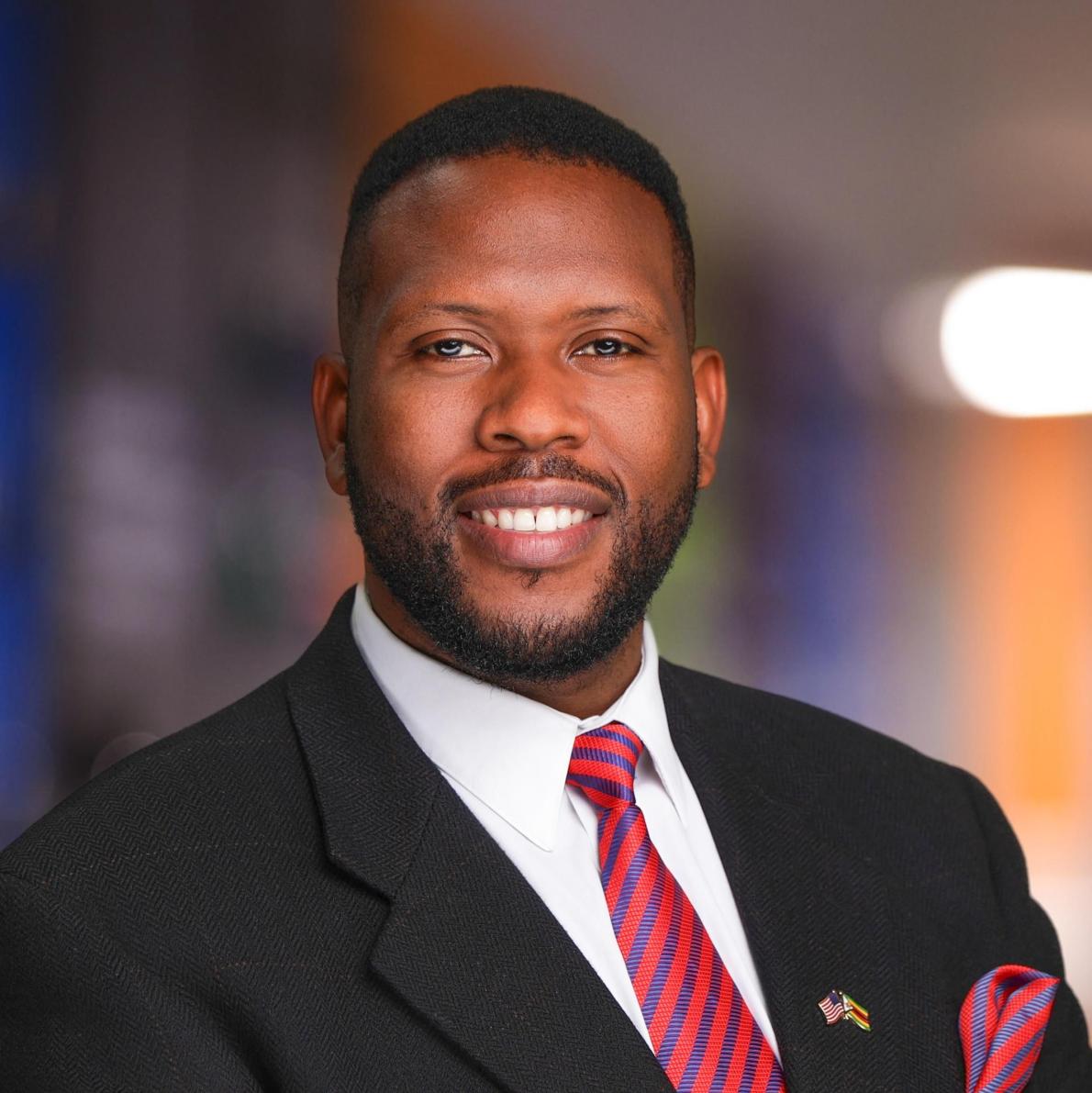
Several years ago, after his father faced health challenges that required care outside their home in Zimbabwe, Ben Ncube realized something startling: there was no men’s health clinic in the entire country. He was determined to change that — despite having no background in health care and no roadmap for how to begin.
Ncube was 23 years old at the time and had just started his career as a lawyer. But his father’s experience compelled him to shift his focus to establishing a men’s health clinic in Zimbabwe. Ncube — now a master’s student in Duke’s Department of Population Health Sciences — made it his mission to create a safe, stigma-free space for men to seek care.
Once the clinic opened in 2018, he thought men would flock to the clinic. Turns out, it wasn’t quite so simple.
“Within the first three months of operation, not a single man walked into the clinic,” Ncube said.
He admits denial may have been the only reason he didn’t give up. He quit his law firm job and pared down the clinic’s staff to just himself and an on-call doctor.

A Personal Turning Point
A turning point came when the sign outside the clinic that read “Men’s Clinic” fell over one day. What seemed like an unremarkable accident turned out to be transformative.
Ncube took the sign falling as a signal it was time to call it quits, so he took it inside, ready to ask for his old job back. However, that same day their first patient walked in. And to his surprise, it was because of the fallen sign.
The patient told him: “When the sign was outside it was embarrassing for me to be seen coming in because everyone would know that I'm sick.”
“That was the aha moment for me,” Ncube said.
The moment sparked Ncube’s commitment to better understanding men’s health-seeking behaviors. He went on to create outreach programs and started asking men in rural and urban areas what they needed.
Through his grassroots efforts, Ncube reached more than 13,000 men, and to date, more than 24,000 men have been treated at the clinic. He’s now expanding the initiative into Men’s Clinic Africa, a telehealth platform aimed at reaching one million men across the continent. The platform will offer privacy, affordability, and accessibility — key factors in overcoming stigma. Once the app is ready, men will be able to receive their care from the convenience of their phones.
Entrepreneur by Necessity
Starting a clinic and launching a telehealth app might make Ncube an entrepreneur, but it’s not a title he readily embraces. After his father’s illness, and later, while navigating the challenges of running a clinic, it became obvious to him that he needed more formal training and a business mindset.
“I don't feel like an entrepreneur,” he said. “I happen to do the work that I love, and it happens to make sound business sense.”
Now, not only does Ncube hold two Global Master of Business Administration degrees in Impact Entrepreneurship, but he also has won multiple awards for his entrepreneurial work. In April 2025, he won the grand prize for graduate and professional student pitches at the Duke Innovation and Entrepreneurship Startup Showcase for his startup, Men’s Health Clinic Zimbabwe.
He recently enrolled in the Graduate/Professional Innovation & Entrepreneurship Certificate program at Duke. He also was accepted into the 2025-2026 cohort of Duke Innovation & Entrepreneurship’s Melissa and Doug Entrepreneurs Program, a year-long intensive program designed for current Duke students committed to launching and growing their ventures.
Fostering Community at Duke
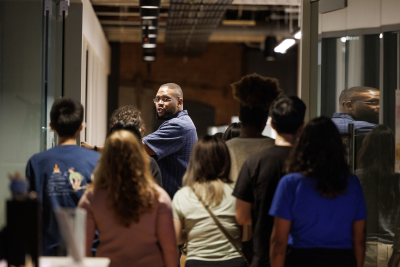
In addition to his efforts in Zimbabwe, Ncube is working to foster community at Duke as well. Recently, as a participant of Duke’s Emerging Leaders Institute (ELI), he co-created Duke Tribe, a digital handbook designed to connect graduate students and postdocs with community-building resources. The interactive toolkit helps graduate students and postdocs navigate Duke’s numerous — and at times, overwhelming — resources and build community.
Ncube said that making friends as an adult is hard, but it's even harder in graduate school. “Yet making those kinds of friends and connections is how you build your network for the future.
“Duke has so much to offer — it's like a restaurant menu with 60 items. So, what if we curated them and put them all in one space?”
Expanding the Vision
While he has never had a problem coming up with ideas and making them happen, Ncube said the Population Health Sciences program made him realize his dreams were far too small. He hopes to make a difference globally.
“There are only seven countries globally with dedicated policy on men's health. I am uniquely placed to hopefully change that with the knowledge that I'm getting in population health sciences.” — Ben Ncube
He hopes to help double the number of countries with male-specific health policies — from seven to at least 14.
“Because when men get health, they prioritize it for the women in their lives, and they prioritize it for children. It just gets so much better for everyone.”
He is currently conducting research on fathers’ influence on child health outcomes and is considering a PhD to deepen his impact.
Ideas That Inspire
When he’s not busy with his studies and running the men’s clinic, Ncube finds joy bringing to life what he calls his “crazy ideas.” He recently organized the Suit Run, an event that will take place later in November, when men will run in suits through downtown Durham to raise awareness of prostate cancer.
He also cherishes his role as an uncle to two nieces and five nephews — a role that inspired his upcoming book, Pocket Uncle, a pocket-sized guide for young boys navigating puberty.
Whether through research, entrepreneurship, or community building, Ncube is committed to making a meaningful difference. He credits Duke’s Population Health Sciences program and its faculty and staff for fueling his drive to create change.
“The Population Health Sciences program has fed a part of me which is the most important — the one that strives to want to create a lasting impact.”