
Spotlight on Omar Mohiuddin, OTR/L, MS, MPH, CLVT
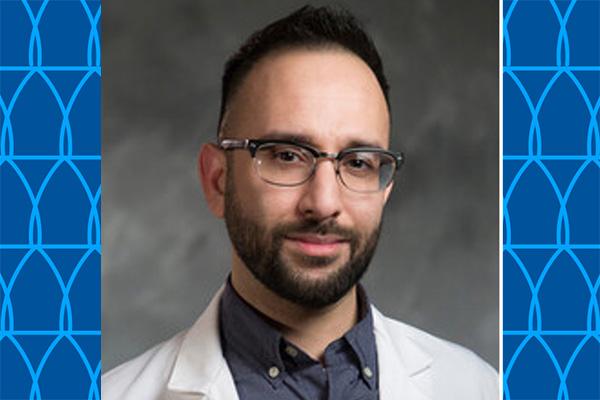
Over the years as an occupational therapist, Omar Mohiuddin, OTR/L, MS, MPH, CLVT, came to realize that many accessibility issues often go unaddressed, even in spaces originally designed with older adults and persons with visual impairment in mind. That realization fueled his passion for accessibility and drives his devotion to improving the day-to-day lives of persons with blindness and low vision.
In this month’s spotlight, Mohiuddin tells us about his work as an occupational therapist specializing in low vision rehabilitation at the Duke Eye Center. He also shares how he is working to make a difference through accessibility advocacy and as a volunteer with a nonprofit that serves young people with visual impairment and blindness.
What is your current position with the Duke Eye Center? What does a typical day for you look like?
I am an occupational therapist specializing in low vision rehabilitation. I work in the Vision Rehabilitation & Performance service at the Duke Eye Center as part of a multidisciplinary care team, where we evaluate and treat clients of all ages experiencing vision impairment and provide them the tools necessary to help compensate for their vision loss, maximize the use of their remaining vision, and educate them on local and national resources. A large part of my day is spent educating and training clients in the use of different adaptive techniques as well as assistive and access technologies for the visually impaired.
You have a keen interest in accessibility. How did you first become passionate about accessibility and why does accessibility matter?
As an occupational therapist, I am trained to identify different barriers that may impact a person’s ability to access environments, activities, and services. While the presence of railings and curb cuts, the widths of doorways, and height of signage are obvious to most people familiar with the Americans with Disabilities Act (ADA) — there are numerous other barriers that persons with visual impairment face and little to no guidance on how to address them.
My interest in low vision accessibility was piqued several years ago while providing low vision rehabilitation services through a home-based occupational therapy contractor group. I worked with clients in their homes, oftentimes in 55+ neighborhoods, assisted and independent living facilities, and other continuing care retirement communities (CCRC). When it came to helping them to adapt and safely navigate their living environments, participate in group activities, and take advantage of dining and recreation options, I found there were a myriad of accessibility issues that were keeping them from being successful and thriving in places that were designed, ironically, for older adults and persons most likely to experience multimorbidity and impairment. Unfortunately, many older adults move to these communities because their own homes have become inaccessible or hard to maintain but end up in situations where they cannot see their food on their plate in the dining hall due to poor lighting and unable walk around their communities in fear they may fall or trip over things they cannot see.
I started advocating by speaking to facility management about the need for changes to address access and falls prevention but found that making large-scale changes at the individual level was met with resistance, largely due to lack of knowledge about the issues across their facilities and how they can address them. Over the years, I have developed a systems-based approach to my accessibility advocacy and now conduct full-scale low vision accessibility audits for CCRCs that go beyond the bare minimum standards set out by ADA, conduct stakeholder surveys asking low vision residents about what barriers they are regularly confronted by, and present my findings to management on how to improve access to dining, living, recreation, library services, and overall facility wayfinding and navigation.
In addition to working at Duke, you are involved with different local groups that help persons with blindness and low vision be successful in their day-to-day activities and in social settings. Can you tell us a little more about your work with these groups?
I serve on the board for Eye Shine Foundation, a local nonprofit organization here in the Triangle for youth with visual impairment and blindness. Often, children with visual impairment face social and environmental barriers to participating in sports, group and other leisure activities. As a result, they may not have the same opportunities to build social connections or explore different social and recreational pursuits that can have a positive impact on their identity, sense of self and overall wellbeing. I help with planning monthly events focused on breaking down barriers and creating these opportunities. Past events included a visually impaired prom, where we brought in ballroom dance instructors and hikes lead by orientation and mobility specialists. This January, we will be taking the train from Durham to the Greensboro Science Center so kids can explore what it’s like to take public transportation with their peers, navigate new environments, and hopefully explore some accessible science exhibits!