
ON THE SCENE WITH THE ASSOCIATE DEAN: THE HIDDEN CURRICULUM
The SOM 1st year biomedical students and those students taking BIOTRAIN 720 Grant Writing class were introduced in the fall semester to the “hidden curriculum”. But everyone – students, faculty, staff – should be aware of the invisible skills that students are expected to acquire while in graduate school.
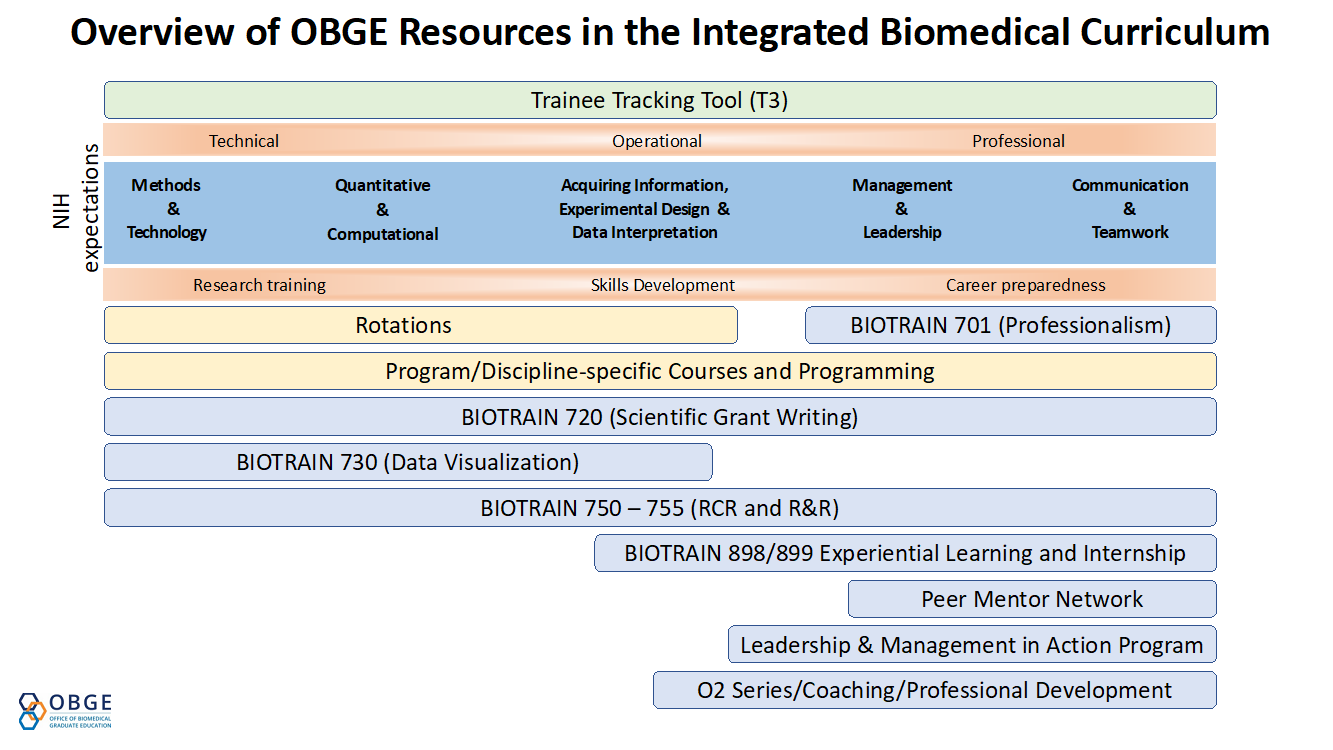
Graduate programs, future employers, and funding bodies assume students will become proficient in technical, operational, and professional skills. NIH, for example, assumes that graduate training will produce critical thinkers and accomplished writers who give clear scientific talks and do evidence-based, reproducible research. And indeed, the biomedical formal curriculum is firmly grounded in training students in technical and operational skills such as experimentation, problem-solving, critical thinking, and scientific writing.
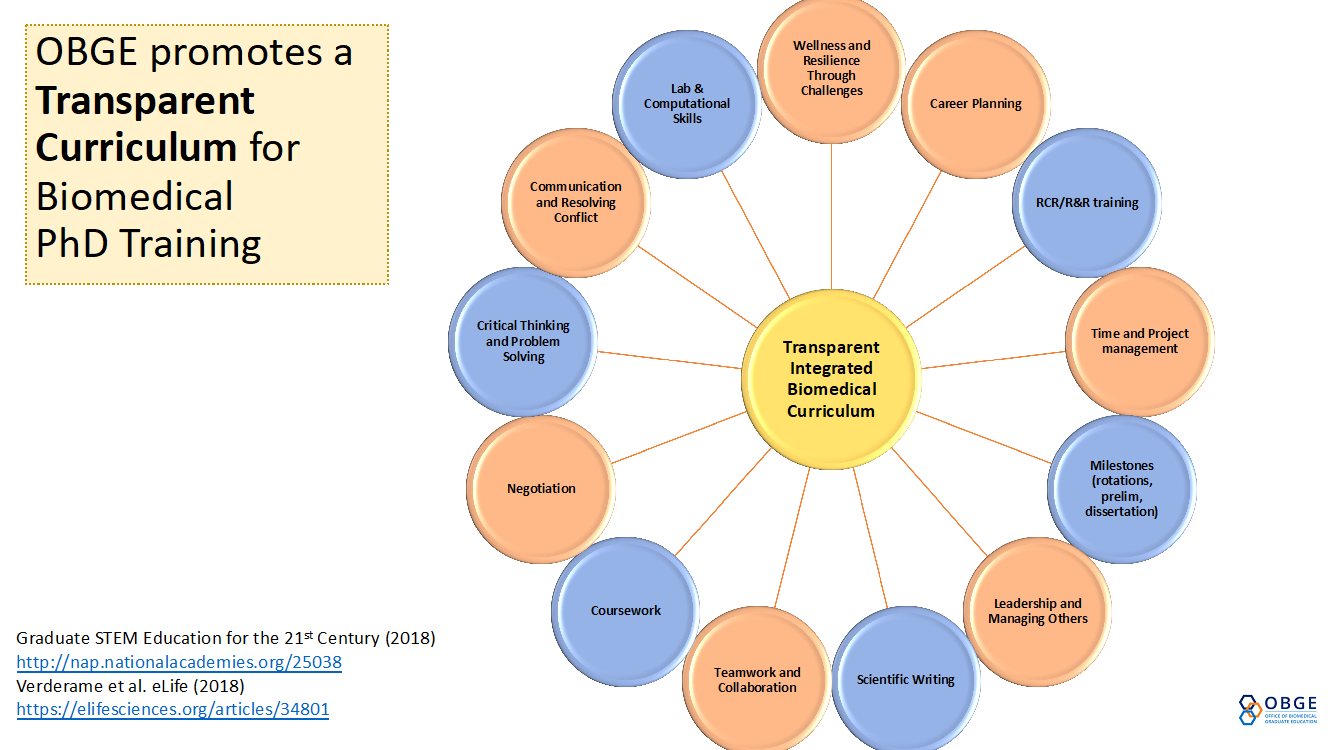
Students are also expected to acquire competencies within the hidden curriculum. This less visible program that is not part of most formal or structured scientific training frameworks centers around professional “soft” skills, norms, and knowledge that influence learning outcomes and success. These competencies include effective communication and conflict resolution, negotiation skills, career exploration, time and project management, working in teams, and cultivating resilience.
I contend that these competencies should not be viewed as “soft skills” but instead as critical professional attributes that lend to success in any occupation and should be relevant and available to all trainees. In a 2018 survey of >650 employers, ~75% indicated it was difficult to identify applicants with desired uniquely human skills (versus those accomplished by artificial intelligence). Newly graduated job seekers were most lacking in listening, attention to detail, communication, critical thinking, and interpersonal skills1.
Moreover, studies indicate that the invisible nature of the hidden curriculum reveals profound inequities in trainee experiences that are amplified in women and under-represented students who have decreased access and opportunity to engage. Such barriers can affect research productivity, interpersonal interactions, and career competitiveness2.
What is the solution? Can SOM graduate students feel confident that they will develop these skills while at Duke?
OBGE’s goal is to merge the Formal and Hidden Curricula into a single Transparent Integrated Biomedical Curriculum that assists the 17 SOM PhD programs in ensuring all graduate students have opportunities and resources to acquire these uniquely human skills. Thus, OBGE has developed several courses as well as the O2 series to offer ongoing training and engagement in the hidden curriculum.
BIOTRAIN 701 (Professionalism for Biomedical Scientists), for example, is PhD students’ initial foray into the Integrated Curriculum. BIOTRAIN 701 was co-designed by former biomedical PhD student Calla Telzrow and OBGE to give incoming 1st year students an introduction to skills development in communication, networking, and working in teams.
The O2 (OBGE Offerings) Series includes workshops, career talks, leadership training, cohort catch-ups, and personalized coaching, all geared toward a trainee’s self-defined values and professional goals. BIOTRAIN courses and the O2 Series encourage students to practice the learned concepts within their individual programs and labs as they move on the path to their PhD. Students can also document their professional growth in T3, under the “Professional Development” tab.
BIOTRAIN offerings are as relevant to PhD training as discipline-specific courses. The topics introduced in the 1st year were identified by alumni and external employers as essential for success beyond the PhD. The courses, offerings, and resources developed in OBGE are part of a broader mission to encourage modern, consistent, and equitable graduate training experiences that coordinately prepare students for a variety of careers and align with data-driven national training norms.
Trainees, I encourage you to think about your professional and scientific development holistically, as complementary areas of development during your graduate training. Start now to explore what OBGE, The Graduate School, and your PhD programs offer in the career preparedness and professional skills space. As always, if you identify a gap in your training experience, please let OBGE know, as we are continually looking to develop resources that best serve our trainees and PhD programs.
- https://www.shrm.org/resourcesandtools/hr-topics/employee-relations/pages/employers-say-students-arent-learning-soft-skills-in-college.aspx
- Subramanian S, Hutchins JA, Lundsteen N (2021) Molecular Biology of the Cell 33:pe1, 1-4.