
A resident’s mission to serve beyond the clinic fuels community connections
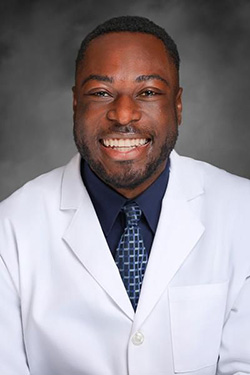
Victor Ayeni, MD, a rising third year resident in Duke’s Internal Medicine Residency Program, is the bridge that connects fellow residents to new experiences and communities. “Relationships and service are just who I am, and that is a fundamental part of being a physician,” he said.
Since arriving at Duke in 2024, Ayeni has immersed himself in the beauty and breadth of the Bull City. “I made a bingo card full of activities to help me, and others, get to know our communities,” he said. Going to a place of worship, a community event, or the library are all included on the card, but so are things like striking up a conversation with an elderly person.
“By doing stuff like that, you will naturally find yourself learning about the community. Within a month, I learned a lot about Durham and its history. Then through those connections, I found interesting activities that I invite co-residents to,” Ayeni said.
It’s how he began volunteering with Sembrando Raices, a group of Hispanic and Latino families that meets once a week to manage the community garden at Club Boulevard Elementary School. “It led me to use my role as a physician in a way that I wouldn’t have anticipated,” Ayeni said.
He gave a presentation about heat stroke, hypoglycemia, and anaphylaxis after they notified him that someone once passed out from the heat in the garden and didn’t know how to help.
“It wasn't necessarily something I was looking for, but I was happy to do because we built that relationship first. I enjoy being with them, they enjoy being with me,” he said.
Growing the opportunities for connection
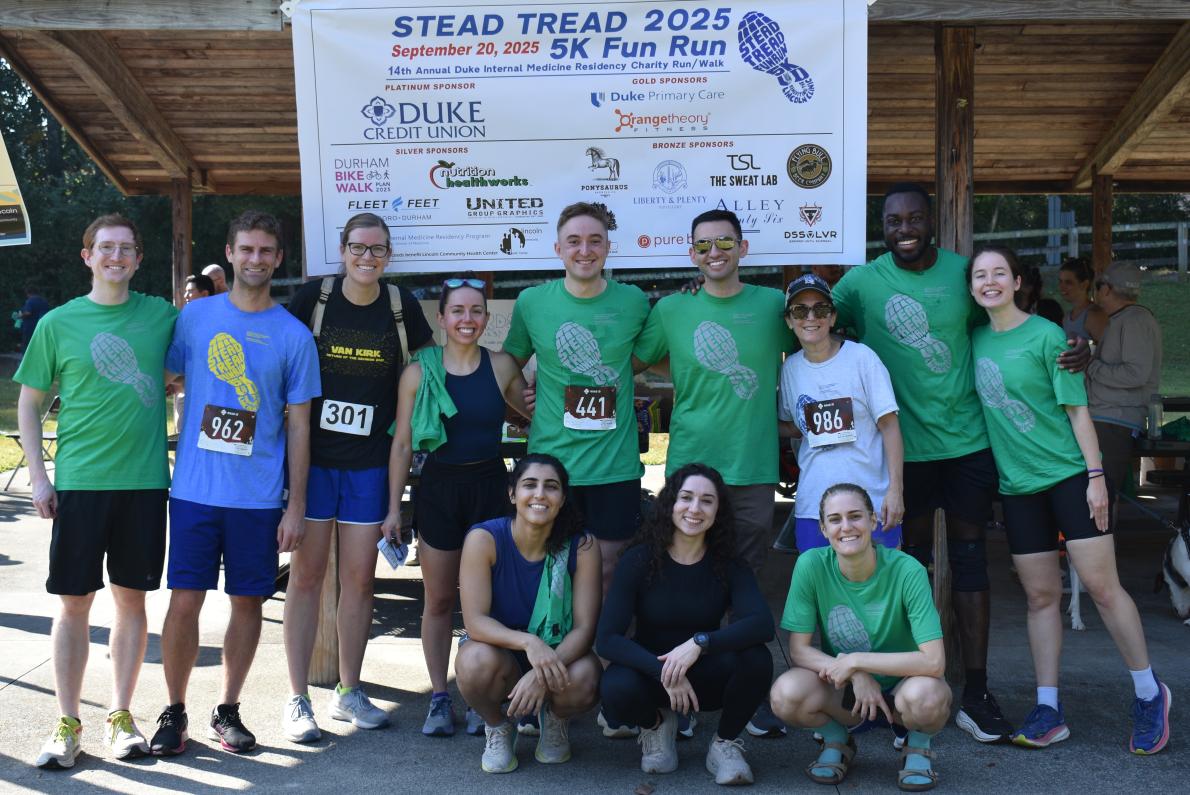
This approach helped him excel as the chair of the Internal Medicine Residency Community Engagement Program, a role he revived in 2025 after a two-year vacancy. By reinstating past partnerships and organizing unique, monthly events, Ayeni led the program in creating a wave of new opportunities for residents to bond with community members.
“It takes a little creativity, but we start by figuring out what people care about and then use that as way to get them involved,” he said, recalling the advice he was given by his mentor, Camille Frazier, MD, Duke professor of medicine. That concept is what sparked the formation of a new collaboration with the City of Medicine Academy.
Ayeni rekindled the relationship between the residency program and the magnet school, which prepares students for careers in healthcare science. “Knowing the youth is a good way to learn about a city,” he said.
Duke medical professionals, trainees, and students are invited to give presentations to the academy’s students once a month. “A lot of my coworkers meet the kids and had a blast with them every time,” he said.
Ayeni spoke several times about healthcare, being a doctor, and college applications. He got to know both the students and teachers well.
“I was really inspired by how warmly the kids saw me, how much of an impact I made, and how much it meant to them to have a doctor from Duke spend so much time with them and invest in them, and then watch them realize how special they were,” Ayeni said.
Residents can now spend one clinic half day presenting at the academy. “It's a really great example of how these small scale, natural interactions can turn into something bigger and more structured,” he said.
While another resident is picking up the reigns and taking on the role of community engagement chair, he is eager to see the program touch even more lives.
Service as a calling
Unifying people through service is a longstanding passion for Ayeni. He volunteered for the Sound the Alarm event, hosted by the Red Cross in college at Yale University. As he installed fire alarms in homes around New Haven, Connecticut, Ayeni got a glimpse into the lives of those living just minutes away from his school. He listened to their stories and learned about their loved ones.
“That visceral experience taught me that I really enjoy service and engagement with my community,” Ayeni said, who soon created a program of his own. As a medical student at the University of Pennsylvania, he launched the ‘NEIGHBORS’ initiative, to expose his peers to the realities, including the hardships and the joys, faced by people in west Philadelphia.
He guided them through the city and the more they saw, the more their empathy grew. “It taught me how to know a people first in the mundane, small ways of life and how that can naturally lead to meaningful community engagement,” he said.
Ayeni carried those lessons with him to Duke. He used the foundation he built in Philadelphia to hit the ground running in Durham. “I’m frequently energized by this work,” he said. “Community is a health intervention.”
Leading by listening
Driven by faith, and with the ultimate good in mind, Ayeni has been able to thrive as a leader in this space. “Leadership itself is a service sport. I walk into new experiences asking, ‘how can I know you, how can we work together, and how can I help?’” he said.
In addition to working 70 hours a week, he leads the healthcare taskforce for the mayor of Durham’s Hispanic/Latino Committee (MHLC) where he advocates for the needs of those communities. Ayeni also serves on the leadership councils for Duke’s Outpatient Clinics and volunteers at Samaritan Health Center in Durham. And he helps lead his primary care clinic’s mobile health initiative that provides primary care services to homebound patients.
“There are times in life where you can tell things are just right. It may not always feel easy or natural, but you know that what you’re doing is good, and that’s empowering. That’s how I feel about community engagement. It can be difficult, but it’s right,” Ayeni said.