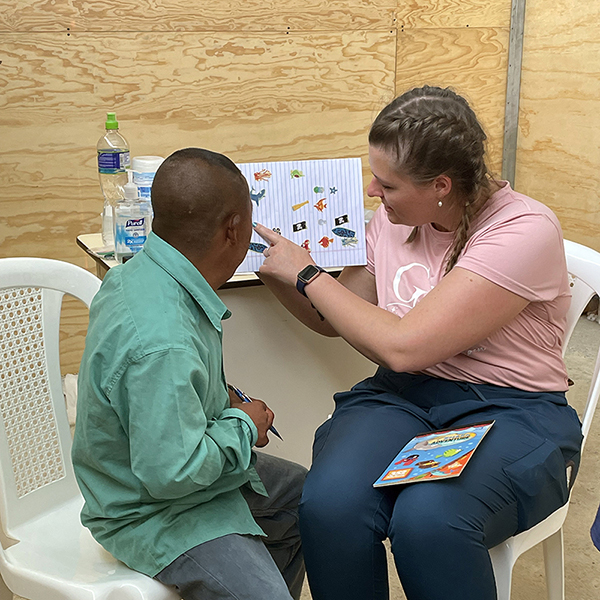
Providing Care for Communities in Honduras
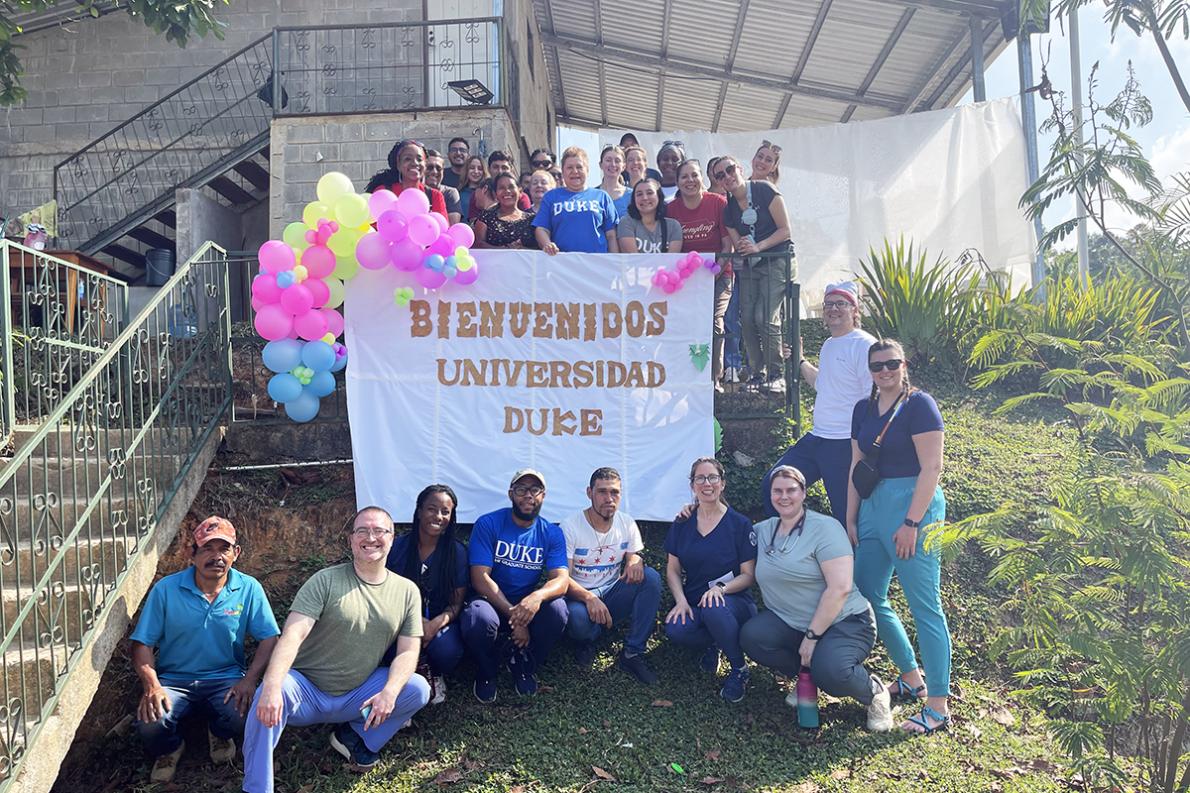
I recently had the opportunity to travel to Honduras with an interprofessional team of healthcare providers to work with patients in underserved areas.
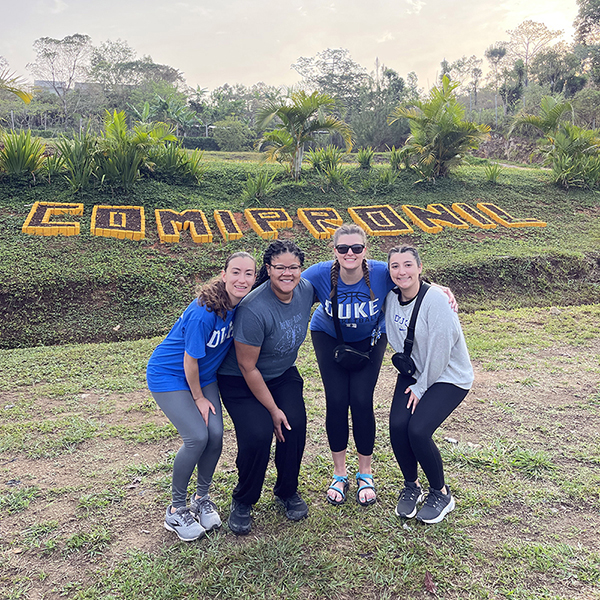
I was one of three Duke Doctorate of Physical Therapy (DPT) second-year students on the trip supervised by Faculty Development Resident Courtney Jeffries, PT, DPT, NCS. We were welcomed into the mountain community of El Naranjo and a more centrally located community near Copan, La Laguna. The nursing and MD students evaluated and treated patients as they could and referred patients with pain to us for physical therapy.
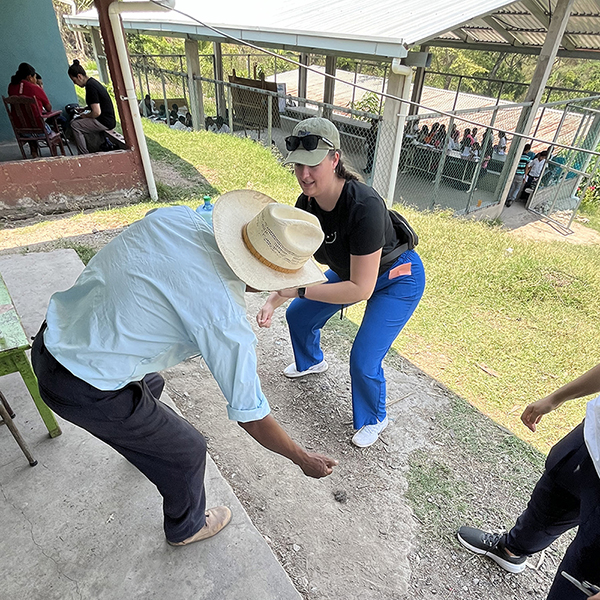
Many people in Honduras work physically demanding jobs, including fieldwork using machetes, lifting in agricultural employment, lifting their children in the home, and doing laundry by hand. We educated them on safe lifting and body mechanics while working and provided exercises to decrease pain from poor posture. Many patients experienced orthostatic hypotension, so we explained why it occurs and taught them methods to reduce their symptoms.
People walked from hours away to receive care before we started in the mornings, and would stay all day, hoping to be seen. Their trust in us and patience were touching! During our time there, I connected with many children. I discovered that laughter and smiles can bring people together. I've always wanted to work with patients, but experiencing the need firsthand deepened my passion significantly. I'm thankful to Duke University and the Duke DPT program for this fantastic opportunity.