
Paying it forward through advocacy and service
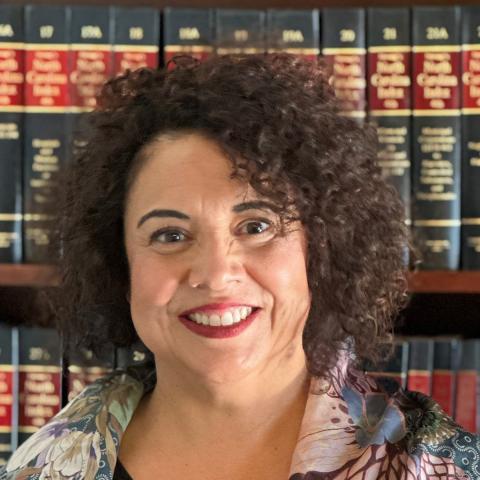
While growing up in Texas, Elizabeth Ramirez-Washka, JD, spent every summer with her grandparents. Those summers had a major impact on both her career and personal life. Her grandparents were Spanish-speaking housekeepers at a local university whose hard work, commitment to education, and openness toward others greatly influenced her.
She said they taught her simple, but profound lessons. “My grandparents showed me you work hard. Education's important. Pay it forward. And be open to any type of experience. Be open to all people.”
Inspired by her grandparents
One summer was particularly impactful. Her grandparents were injured and in need of workers’ compensation. They spoke little English, which made it difficult to find lawyers who could help them. Because of the language barrier, Ramirez-Washka helped them find lawyers and accompanied them to appointments, serving as their translator. Most importantly, she became their advocate, speaking on their behalf when they could not.
Watching her grandparents navigate legal challenges underscored for her the importance of being able to access legal guidance from someone who understands a person’s language and experiences. She began to recognize a need for attorneys who could connect with families like hers. Those experiences planted the seeds for a career in law and advocacy.
“Without the lawyers’ help, my grandparents would have lost their jobs,” she said. “That solidified my decision to become an attorney.”
She said she attended law school with other first-generation attorneys who had the same motivation. “We wanted to help others, to be advocates.”
The desire to advocate for others has shaped both her professional and volunteer work ever since. Today she is an associate general counsel for Duke University and Duke University Health System. Her community service roles include serving on the Board of El Futuro, a nonprofit providing mental health services to the Latino community.
Creating opportunities for others
At Duke, Ramirez-Washka has found a way to help her peers and those who have come behind her by serving as an executive sponsor for Duke University School of Medicine’s employee resource group ¡DALHE! The advisory role, which she shares with Roberto Campos-Marquetti, JD, includes offering advice, connecting members with resources, and being the group’s cheerleader.
She said ERGs offer a space where people can build community around shared interests and support one another. In her view, the groups are most effective when they foster connections across communities rather than operate in isolation.
That emphasis on building connections across communities traces back to another lesson passed down from her grandparents: success is rarely achieved alone.
The power of sponsorship
She credits mentors and sponsors for helping shape her own career and encourages others to seek both. While mentors provide advice and encouragement, sponsors use their influence to open doors, advocate for talent, and help others advance.
“A mentor's there to help you, give you advice,” she said. “A sponsor's there to advocate.”
Having benefited from sponsors who opened doors and helped advance her career, she now seeks opportunities to do the same for others.
Ramirez-Washka said one thing to note about sponsors is that they aren’t always people within your department or even at your workplace. Her advice: look for sponsors at places where you volunteer or worship.
However, she cautions against treating mentorship and sponsorship as items on a career-development checklist.
“If you look at it as a checklist, it's not going to get you anywhere,” she said. “For a mentor, you need to make sure there's something about them that you admire. For sponsorship, it's understanding your next goal. A sponsor can only help you if you know what you want to do next.”
Growth beyond your comfort zone
One lesson Ramirez-Washka carries from her grandparents is the importance of learning from people whose experiences differ from your own. It's advice she now shares with colleagues, mentees, and her two daughters, who followed her into the legal profession. She recognizes the importance of getting out of your comfort zone, having spent all her life in Texas before leaving the state for the first time to take her job at Duke three years ago.
“I always say, be in environments you've never been in, because that's how you grow and understand people from a different perspective,” she said.