
Honoring Visionaries Who Transformed the OT Profession
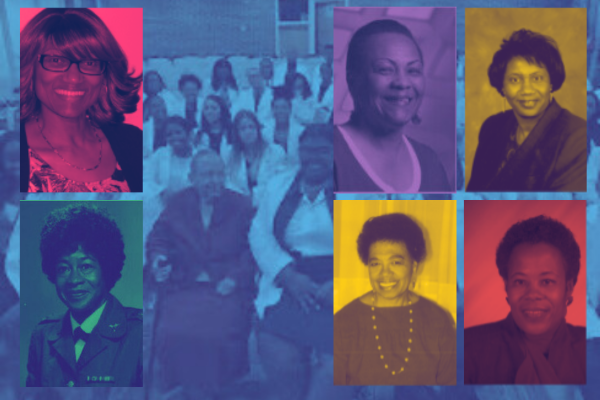
Black History Month is a moment for our profession to honor Black leaders whose vision, scholarship, and service have shaped occupational therapy. The individuals highlighted here represent a legacy of insight and innovation that continues to influence the field today. Their work strengthens our shared commitment to ensuring that occupational therapy grows in ways that welcome, reflect, and serve every community.
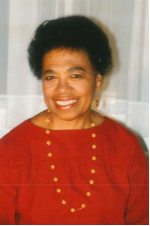
Lela Llorens, PhD, OTR, FAOTA
Dr. Llorens held a far-reaching vision for occupational therapy. Active in both the Civil Rights and Disability Rights movements, she became the first African American to receive the AOTA Award of Merit and the Eleanor Clark Slagle Lectureship.
When she delivered her 1969 Slagle Lecture—Facilitating Growth and Development: The Promise of Occupational Therapy—she stood at a centrally placed podium in a segregated hall. Her presence alone signaled a call to build a more unified profession.
Throughout her career, she championed rigorous scholarship and theoretical clarity, urging the field to ground its practice in strong evidence:
"It is the responsibility of the field to describe, delineate, define, and verify (a) the conceptual knowledge of the academic discipline and (b) how the practice of occupational therapy is essential to society. The study and verification of the premises of occupational therapy are imperative to undergird our avowed commitment to advance occupation as a therapeutic measure and to study the effect of occupation on human beings. The development of the science of occupation and the study of its application in the art and science of occupational therapy must be considered a priority for research in the field."
Her message remains as relevant today as in 1987.
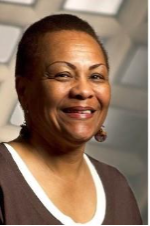
Jerry Bentley, MS, OTR, FAOTA
Jerry Bentley envisioned a profession strengthened by advocacy and active engagement with society. She co-founded AOTA’s Black Occupational Therapy Caucus in 1974 while still a student completing Level II fieldwork. Her leadership influenced the development of strategies to expand the profession’s reach and ensure that its language and recruitment efforts welcome a broad community of future practitioners.
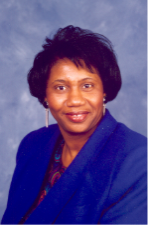
Shirley Jackson-Jackson, PhD, OT/L, FAOTA
Dr. Jackson emphasized excellence in teaching, research, and service as essential for occupational therapy to fulfill its responsibilities to society. As early as the 1980s, she highlighted access-to-care gaps and underscored the need for full participation.
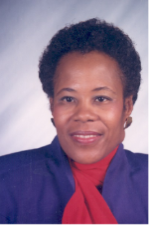
Panelpha (Penny) L. Kyler, ScD, OT, FAOTA
Dr. Kyler founded and led AOTA’s ethics office, raising expectations for accountability and professional conduct across the field. She also demonstrated OT’s leadership in emerging areas, contributing to conversations on translational genetics and the implementation of major health policy shifts such as the Affordable Care Act
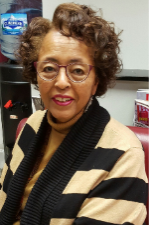
Joyce Lane, PhD, OTR, FAOTA
Dr. Lane advocated for addressing societal barriers that affect health and participation. Her co-founding of the Black Occupational Therapy Caucus helped establish other affinity groups that continue to strengthen the profession today.
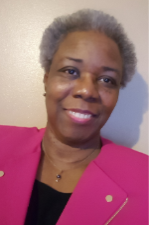
Letha J. Mosley, PhD, OTR/L, FAOTA (1957–2017)
Dr. Mosley was an early voice emphasizing the importance of addressing health disparities and building community-based programs that promote wellness. Her work broadened the understanding of how occupational therapy can support people in the places where they live, learn, work, and thrive.
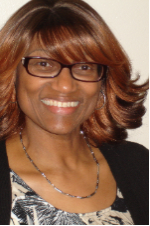
Shirley A. Wells, DrPH, OTR, FAOTA
For more than 40 years, Dr. Wells has written, taught, and served as a cultural liaison for AOTA, encouraging practitioners to deepen their understanding of the communities they serve and to approach this work with humility and openness.

Tomeico Faison, OTD, OTR/L, FAOTA
Visit Dr. Faison’s website to explore her books, leadership initiatives, and entrepreneurial guidance. Her podcast, Therapy Entrepreneurs and Leaders of Color, is being adapted into a book. She also leads the Occupational Therapy Entrepreneurs Facebook group of more than 13,000 members.
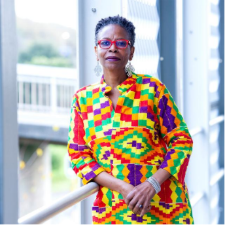
Professor Elelwani Ramugondo, PhD
Professor Ramugondo writes extensively on decolonizing occupational therapy and has delivered influential invited talks worldwide, including her 2018 WFOT Opening Keynote (video and transcript available on YouTube).

Kalilah Johnson, PhD, MS, OTR/L, FAOTA
Visit Dr. Johnson’s website to learn about her current projects and media appearances. Her podcast, Dr. ThOTs, co-hosted with Dr. Ryan Lavalley, features faculty members, including Dr. Tomeico Faison from Duke OTD.
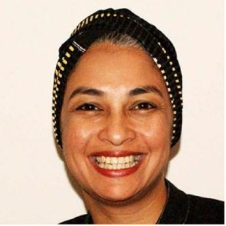
Professor Roshan Galvaan, PhD
For upcoming conferences, think about reviewing Professor Galvaan’s contributions in the Journal of Occupational Science, such as “Promoting Critically Informed Learning and Knowing About Occupation Through Conference Engagements” and “Generative Disruption Through Occupational Science: Enacting Possibilities for Deep Human Connection.”
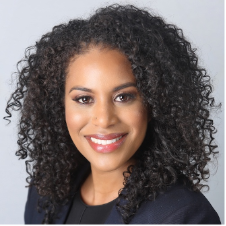
Arameh Anvarizadeh, OTD, OTR/L, FAOTA
Dr. Anvarizadeh made history as the youngest—and first African American/Iranian—vice president of AOTA and is now serving as its president. In 2024, she published chapters in Kielhofner’s Model of Human Occupation and Willard and Spackman’s Occupational Therapy (with co-author Dr. Kalilah Johnson).
Thank you for joining us in celebrating these transformative leaders. There are many more whose work continues to strengthen and expand the profession. We invite you to participate in this month’s events and to learn more about the Black leaders, educators, authors, and students shaping OT today.
Additional Resources
- AOTA Podcast: A special episode highlighting Black women occupational therapy practitioners and scholars whose work continues to shape the profession.
- National Black Occupational Therapy Caucus
- North Carolina Black OT Caucus (Tomeico.faison@duke.edu)
- OT Leaders & Legacy Society: Selected readings on occupational therapy’s evolution and its relationship to justice across the profession’s history