
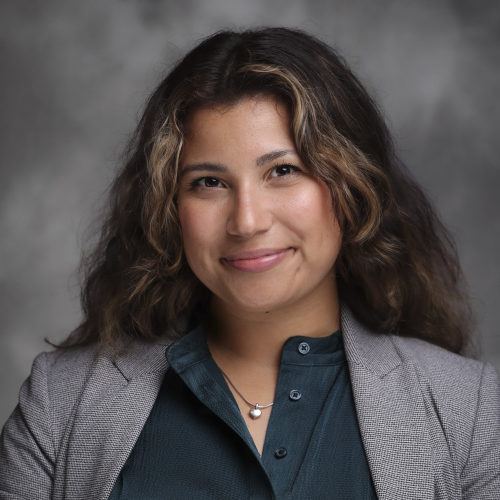
Fatima Al-Sarakbi Hernandez, Occupational Therapy Doctorate
Hometown, State
Redondo Beach, California
What inspired you to pursue this degree?
I have always been drawn to spaces where people are navigating barriers. Occupational therapy gave me a way to formalize that instinct. It provided me with the tools to do what I was already passionate about — helping people engage in meaningful occupations in ways that restore dignity, independence, and a sense of identity.
Why did you choose Duke?
I chose Duke because of the faculty. They are innovators and leaders within the profession, and it felt like an incredible opportunity to learn from them and be part of the important conversations they are leading through their teaching, research, and practice. I was especially drawn to being in an environment where inclusivity, equity, and culturally responsive care are not only valued but actively integrated into the work. I wanted to be part of a community that is shaping the future of the profession in meaningful and impactful ways.
Do you have a favorite memory from your program?
One of my favorite memories comes from our formation course, where we focused on reflecting on our professionalism and developing our sense of identity and work ethic. What made this experience so meaningful was the space for creativity — we were encouraged to express ourselves in different ways while learning from one another. I really valued hearing my peers’ perspectives and seeing the unique ways each person was growing and shaping their professional identity. It created a supportive and engaging environment that made the learning experience both impactful and memorable.
How do you hope to make an impact with your career?
Growing up across Syria, Mexico, and the United States gave me a deep awareness that people experience the world differently depending on culture, language, and access. Because of this, I strive to provide culturally responsive and curious care — always approaching others with openness and a willingness to learn. Through my career, I hope to create spaces that prioritize inclusivity and diversity, where individuals feel seen, valued, and supported.
What was the most important thing you learned at Duke?
The most important thing I learned at Duke is that opinions alone are not enough — they are the starting point, not the endpoint. I came to understand that when sharing ideas, especially with a broader audience, it is important to ground them in evidence, research, and diverse perspectives. Duke challenged me to move beyond forming opinions based on a single viewpoint and instead build well-informed perspectives through engaging with different voices, communities, and experiences. This process not only strengthens the credibility of what we say but also ensures that our ideas are more inclusive, thoughtful, and meaningful