
Duke OTD Advances Planetary Health Through Campus Partnerships
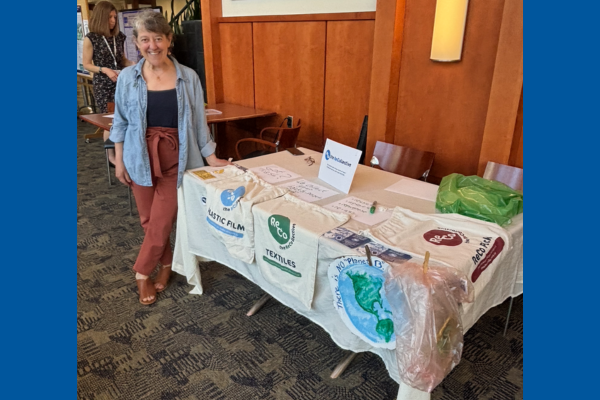
The Duke Occupational Therapy Doctorate (OTD) program contributed to campus-wide planetary health efforts by participating in the second annual Planetary Health Fair, held on April 1 in the main atrium of the School of Nursing’s Pearson Building.
The event gathered members of the Duke community—including faculty, staff, students, and alumni—to focus on the expanding links between climate, environmental justice, biodiversity, and human health. Co-hosted by the School of Nursing, Duke University Health System (DUHS), and the Duke Climate Commitment, the Fair showcased interdisciplinary approaches to education, community engagement, and clinical practice related to planetary health.
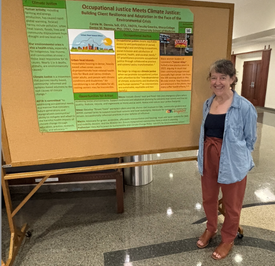
Representing Duke OTD, Denise Nepveux, PhD, OTR/L, associate professor of orthopaedic surgery, contributed scholarly work and leadership emphasizing occupational therapy’s role in tackling climate-related health issues. Nepveux displayed a poster titled “Occupational Justice Meets Climate Justice,” created with Carole W. Dennis, ScD, OT/L, FAOTA, a faculty emerita at Ithaca College. The poster examined how occupational therapy can aid client resilience and adaptation amid environmental disruptions, especially considering how climate change affects participation in daily activities, care for all, and access to care.
“For OTD students, climate change isn’t just a distant concern—it’s already influencing the environments where people live, work, and care for themselves,” Nepveux stated. “As occupational therapists, we must understand how environmental factors impact participation and health, and be ready to help clients build resilience, adapt effectively, and succeed despite these challenges.”
The Fair included interactive exhibits and learning opportunities from Duke programs and regional partners like the Eno River Association and the Triangle Chapter of the North Carolina Native Plant Society. Attendees explored topics such as microplastics and waste in clinical settings, joined the Roots and Remedies Planetary Health Book Club, and made native flower seed sachets, highlighting the importance of local action for environmental and human health. They also discovered ways to engage with planetary health locally through Duke Campus Farm’s community-supported agriculture, ReCollective’s recycling pick-up service, and Merrick-Moore’s community garden and food forest.
Nepveux’s involvement in the Planetary Health Fair exemplifies Duke OTD’s broader role in campus environmental initiatives. She is also a co-author of a Duke-developed online course on climate change and health, designed to provide healthcare professionals with foundational knowledge and practical strategies to address climate-related health issues in clinical and community settings. This course demonstrates how Duke OTD faculty bring occupational therapy expertise into cross-disciplinary efforts to advance climate-aware healthcare education.
This aligns with Duke’s aim that all learners—including students, faculty, staff, and alumni—become climate-literate and ready to participate in solution-focused discussions on climate and health. These initiatives rest on the understanding that human health, mental and physical, is inherently connected to planetary health.
In recognition of her leadership and ongoing advocacy, Nepveux received the Climate Commitment Leadership Award in 2024 at the Duke Climate Commitment Celebration for her efforts to integrate climate considerations into the pursuit of health and well-being across disciplines.
Through scholarship, education, and campus collaboration, Duke OTD continues to highlight the vital role of occupational therapy in promoting planetary health, justice, and preparing clinicians for the complex health challenges posed by a changing environment.