Duke Advances Global Health Training in Peru

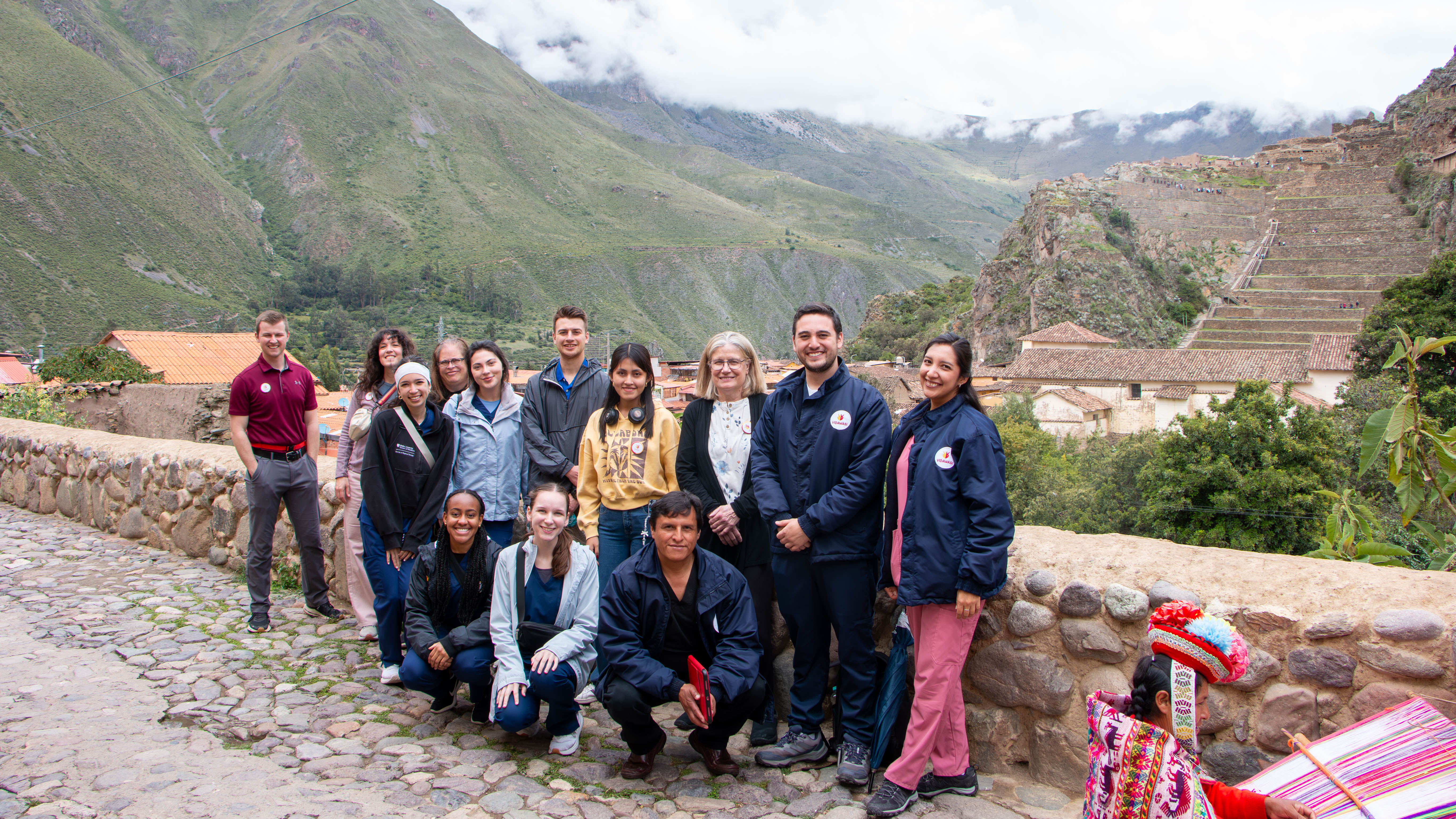
Faculty, staff, and students from Duke University School of Medicine traveled to Peru this March to advance a growing global health partnership with Vidawasi Children’s Citadel in the Sacred Valley. The effort represents Duke’s second visit to Vidawasi, further strengthening a collaboration that blends shared expertise with immersive, hands‑on clinical training for Duke trainees.
Building on initial work launched in 2024, the weeklong visit (March 8–14) focused on pediatric physical therapy, community health, and capacity building in a rural Andean setting. Duke faculty participants included Ernesto Ortiz, MD, MPH, affiliate faculty at the Duke Hubert–Yeargan Center for Global Health and senior manager at the Duke Global Health Institute; Laura Case, PT, DPT, MS, PhD, PCS, C/NDT, associate professor of Orthopaedic Surgery; Blake Boggess, DO, FAOASM, FAMSSM, FAAFP, professor of Community and Family Medicine; Todd Cade, PT, PhD, FAPTA, professor of Orthopaedic Surgery and chief of the Doctor of Physical Therapy Division; Lisa Massa, PT, WCS, OncCS, CLT, assistant manager and program coordinator for the Women’s Health Physical Therapy Residency Program; Jennifer Thornton‑Jones, PT, WCS, OncCS, CLT, assistant manager, senior physical therapist, co‑coordinator of the Women’s Health Physical Therapy Residency Program, and clinical faculty member; Tiffany Hilton, PT, PhD, associate professor of Orthopaedic Surgery, program director, and director of Professional Education; and Amelia Boggess.
Together, the Duke team worked alongside Peruvian clinicians to provide care at Vidawasi’s outpatient clinic, lead educational workshops, and engage with local families and community health leaders.
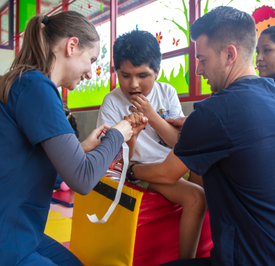
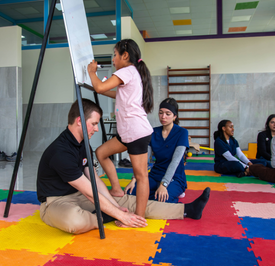
Duke Doctor of Physical Therapy (DPT) students Aaron Fillmore, Megan Kimmel, Christina Manna, Reid Newey, Ezi Ozoma, and Miko Rodriguez participated directly in patient care under faculty supervision, gaining firsthand experience adapting treatment plans in a resource‑limited environment while working closely with children, caregivers, and interdisciplinary teams.
“This partnership is about learning together,” said Ortiz, a longtime leader of the collaboration. “Our team had the privilege of sharing pediatric physical therapy techniques with Vidawasi’s clinicians while supporting sessions that brought joy, movement, and progress for children and their families. The exchange of ideas goes both ways—and that’s what makes this work impactful and sustainable.”
Building on a First‑Year Foundation
Like last year’s inaugural visit, the second Duke trip emphasized pediatric physical therapy and community‑based care in a rural Andean environment. Returning to Vidawasi allowed Duke faculty and students to maintain continuity with patients, reconnect with local clinicians, and refine their teaching and clinical approaches based on lessons learned during the first visit.
“We were able to build on our experiences and the connections we established last year,” said Case. “Because this was our second trip, we could quickly move into meaningful collaboration in the advancement of clinical care, responding to local needs, and providing training that was directly informed by what we learned last year. Our ability to include DPT students this year offered the opportunity to support the commitment of future generations of health care professionals to global health.”
Throughout the week, Duke DPT students participated in supervised clinical care at Vidawasi’s outpatient clinic, adapting treatment strategies using locally available resources and following up on therapy plans initiated during prior visits. The ability to observe progress over time further reinforced clinical reasoning, ethical global health practice, and the value of sustained engagement.
Collaborative Teaching and Capacity Building
In addition to direct patient care, Duke faculty led educational workshops for clinicians from Vidawasi and other institutions across the Cusco region. Topics covered common pediatric conditions, including cerebral palsy, neuromuscular disorders, adaptive equipment, orthotic intervention, and orthopedic impairments—areas identified in collaboration with Peruvian partners.
Case led a regional workshop for physical therapists that was especially well received for its practical, hands‑on approach.
“The real strength lies in collaboration, with shared goals and values," Case stated. “It’s about blending our expertise with that of our colleagues in Peru to create more impactful, adaptable, respectful, and sustainable solutions for children in Peru, tailored to the local context—and to learn together in pursuit of health equity and global partnership.”
The visit also enhanced interdisciplinary collaboration. Lisa Massa and Jennifer Thornton-Jones from the Duke Department of Rehabilitation donated postpartum supplies and started planning upcoming maternal health programs. Massa mentioned, “Collaborating and learning from the midwives was a great experience. We share a strong dedication to delivering the best patient care. We are excited to support our Peruvian colleagues and offer a valuable educational experience for future Duke DPT students.”
Meanwhile, Ortiz and Boggess, led a Point‑of‑Care Ultrasound (POCUS) workshop at Universidad Científica del Sur (UCSUR) in Lima, combining a focused lecture with hands‑on ultrasound training in the university’s cadaver laboratory, in preparation for upcoming international sports medicine events.
A Long‑Term Commitment
Ortiz emphasized that Duke’s return to Vidawasi reflects a long‑term commitment to health equity and global partnership.
“This second trip underscores that we’re invested in something larger than a single experience,” Ortiz said. “Our work with Vidawasi continues to grow across education, training, capacity building, and service—always centered on children and families who deserve access to high‑quality care.”
Looking ahead, Duke and Vidawasi plan to expand clinical rotations, faculty exchanges, and collaborative projects, ensuring future learners and partners benefit from a partnership rooted in continuity, mutual learning, and shared goals.
-
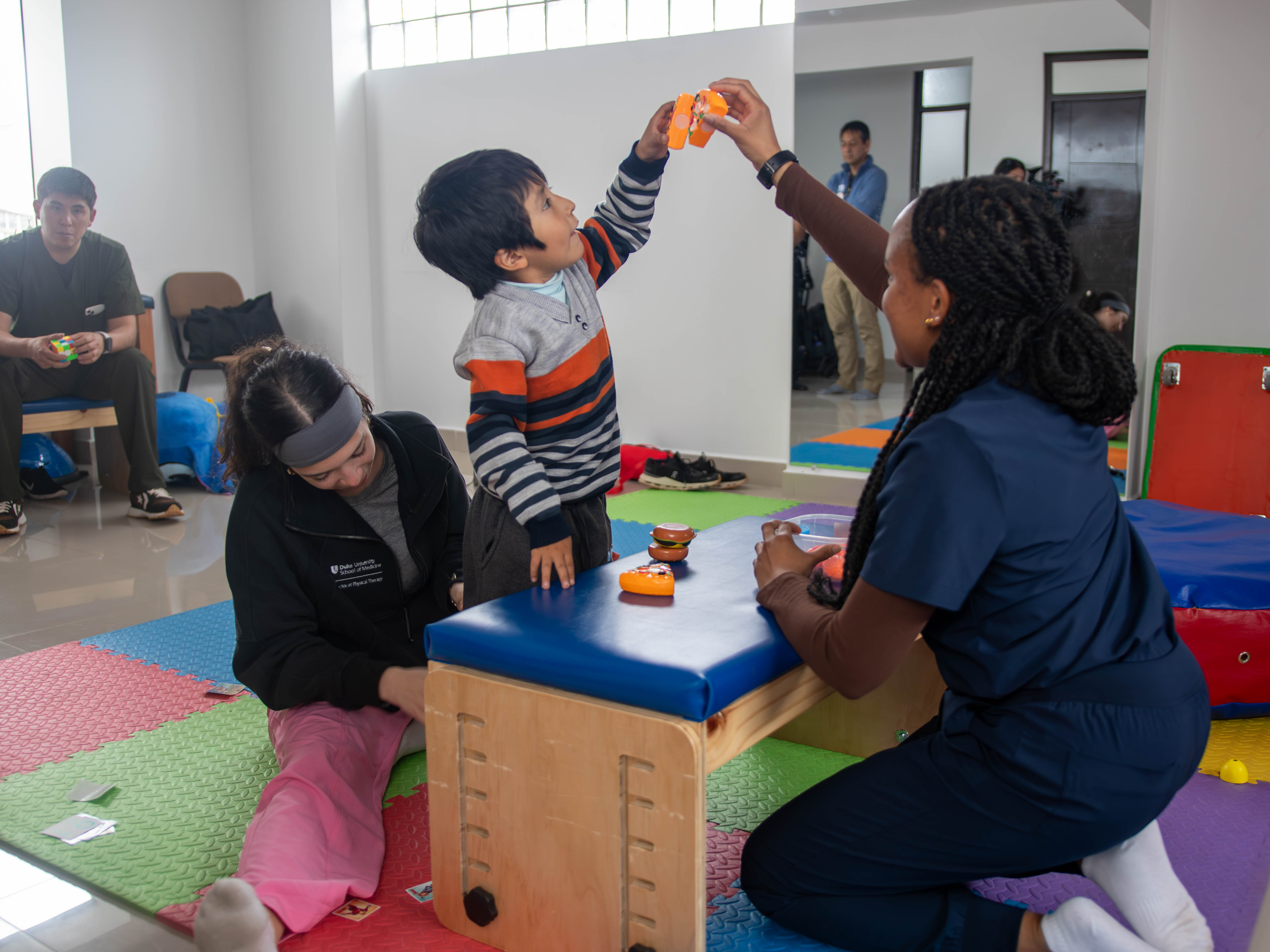 DPT students, Miko Rodriguez and Ezi Ozoma, work with a patient.
 -
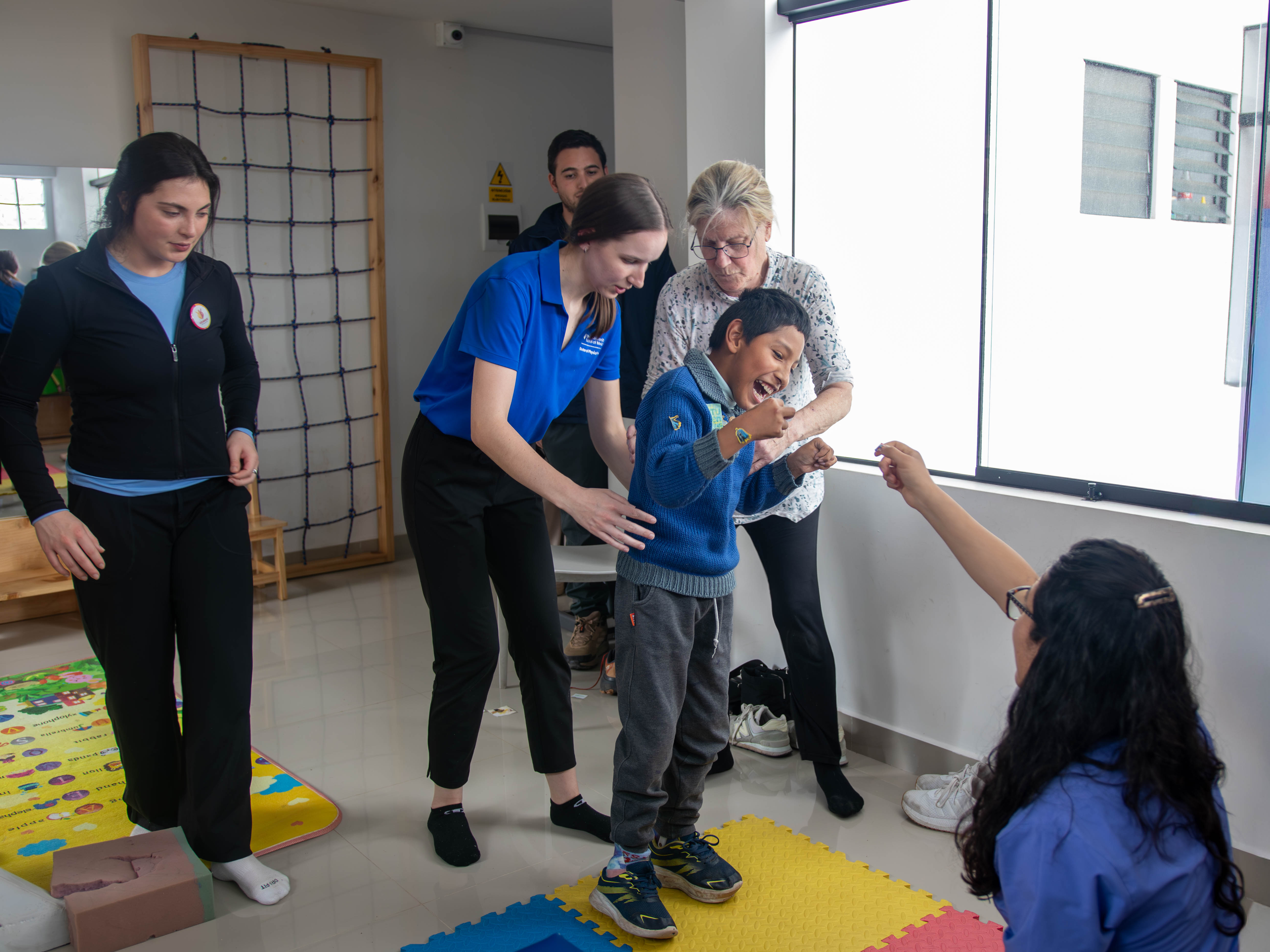 DPT students, Christina Manna and Megan Kimmel, work with a patient.
 -