
Culinary Medicine Workshop
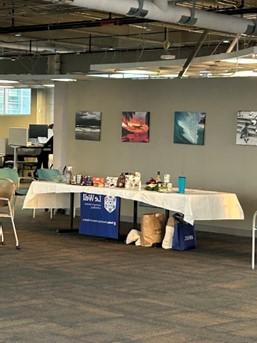
A group of students and faculty gathered on February 10 to learn from Victoria Yunez Behm, a registered dietician, bioethicist and advocate with expertise in nutrition and a passion for “food as medicine.” Recognizing that simple instructions to “cut back fat” or “increase protein” or “eat more healthfully” can be challenging for patients and health professionals alike, Yunez Behm conveyed simple messages while teaching participants to make low-cost, high-impact, nutrient-dense snacks.
- “Eat the rainbow” (candy not included) – eating food that comes naturally in a variety of colors (think: a salad packed with red tomatoes, orange bell peppers, yellow squash, green broccoli, blueberries, purple onion) is a great way to diversify and improve the health of your daily intake.
- Mindful eating can be a valuable way to promote mini-breaks. While many of us may wolf down protein bars while working through traditional lunch time, a healthier approach may be to pause, notice the food we are eating, and give ourselves the gift of a bit of mindful time.
- Eating healthily does not need to cost lots of money.
- Energy-packed bite-sized snacks are easily created from nut butters, whole grains, cocoa nibs, coconut flakes, honey, dried fruit, and other nutritious additives. Consider making a batch and freezing.
- Just like we have our own individual cultures and food preferences, so do our patients! Taking time to understand your own and others’ backgrounds, interests, tastes, and practices can help you connect more deeply and forge a collaboration to promote health.
Many thanks to Victoria Yunez Behm for volunteering her time and expertise.