

Alumni Celebrate: 2017 MAW Weekend
Last November, 240 Duke University School of Medicine alumni, along with more than 260 family members, arrived in Durham for the annual Medical Alumni Weekend. Attendees traveled from as far away as Costa Rica to reconnect with friends, marvel at the changes unfolding on Duke’s campus and in Durham, and dive headlong into an event-filled weekend celebrating their connection to the school and to each other. And, as part of their celebration, they gave. The reunion classes demonstrated tremendous generosity, giving more than $4 million to support Duke Medicine.

The Future of Regenerative Medicine
Someday, waiting lists for organ transplants will be a thing of the past.
“One day, patients will have access to regenerative medicine treatments that will circumvent the complications of organ donation,” says Sharlini Sankaran, PhD, executive director of Duke’s Regeneration Next Initiative. “We will be able to use our bodies’ own innate repair mechanisms to eliminate the wait time, cost, and limited supply of organ transplantation. Instead of transplanting organs, we will know how to repair our own.”
MEDx: Collaboration Writ Large
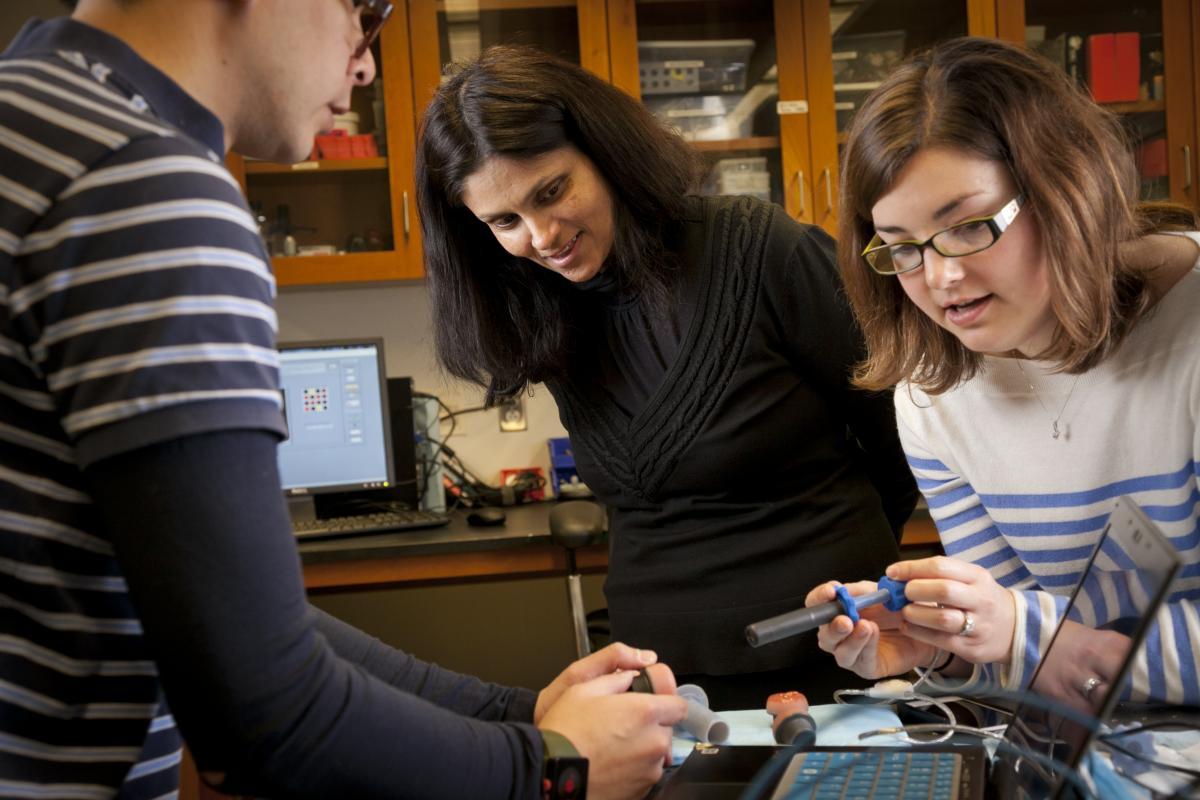
With the establishment of one of the world’s first biomedical engineering departments in 1967, Duke University‘s preeminence at the intersection of medicine and engineering a half-century later could be considered inevitable.
It’s All About Gratitude
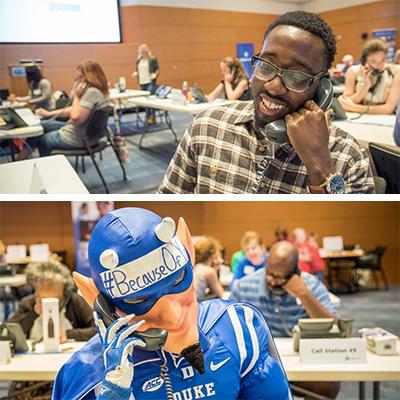
How often do you receive a call just to hear the voice on the other end say, “Thank you”?
Well, that’s exactly what 728 Medical Annual Fund donors heard when they picked up the phone on Friday, October 13, as part of the 5th annual Thank-A-Thon. The calls were made by 19 School of Medicine student ambassadors and volunteers, and were part of a much larger coordinated display of gratitude that involved representatives from eight units of Duke Health.

Students Volunteer in Durham
Sorting sweet potatoes into food boxes for families in need is not exactly how medical students typically spend a Saturday morning, but for the Duke University School of Medicine students who signed up to volunteer for Duke in Durham Day this past November, they didn’t want to be anyplace else. “They loved it,” says Julia Salinaro, MSIII, vice president of service for the Davison Council.
INVENTED @ DUKE
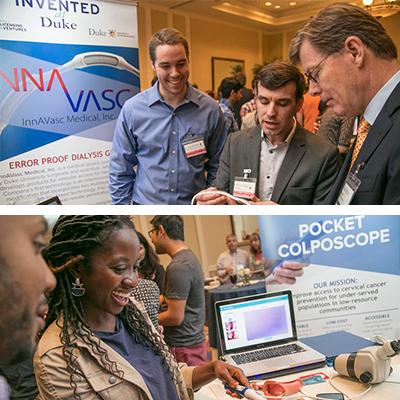
Entrepreneurism is in the air.
The qualities of a successful entrepreneur typically include discipline, creativity, high risk tolerance, and flexibility. What may not be exactly second nature are the skills to develop a network, the legal expertise to patent a discovery, or an understanding of how to secure funding to launch a start-up.

A Mutational Timer is Built into the Chemistry of DNA
If you had to copy billions of letters from one sheet of paper to another, you’d probably make a few mistakes. So it might not come as a surprise that when DNA makes a copy of its three-billion-base genetic code, it can slip up too.
The human’s excuse could be fatigue or boredom, but scientists have long wondered how DNA’s nearly infallible replication machinery makes the mistakes that it does. Now, they think they may know a big part of the answer.

PCLT Student Research Spotlight
One of the greatest benefits of being a PCLT student is the connection we get to outstanding mentors who not only care about our learning but who also truly care about us as people and guide us toward discovering the leaders within ourselves. I was very fortunate to have received great advice from within the PCLT family on finding my wonderful research mentor, who is a nationally-known expert clinician and researcher in childhood obesity.
Responsible Conduct of Research (RCR) Training Program
The School of Medicine is launching a new Responsible Conduct of Research (RCR) program for faculty and staff engaged in research.
As part of this initiative:
Free or Low-Cost Social, Family, and Wellness Events at Duke
Are you searching for family friendly events on or around Duke campus? Look at this list on our resources page or use this link. This list is complied monthly by the Duke Office of Postdoctoral Services.